The great Spanish playwrights and their outstanding works | donQuijote
Submitted by admin on Fri, 02/26/2016 - 13:20
The great Spanish playwrights and their outstanding works The dramatic literature of Spanish theatre has a long history, with authors who have marked an era and have influenced Spanish society over the centuries. Moreover, it has provided hundreds of very interesting characters, who belong to the imagination of Spaniards and of many foreign readers and spectators, who have helped generations and generations of people to enjoy and better understand life. Spanish theatre has made a definitive contribution to world literature and is the subject of study in schools and universities all over the world. Theatres

The dramatic literature of Spanish theatre has a long history, with authors who have marked an era and have influenced Spanish society over the centuries. Moreover, it has provided hundreds of very interesting characters, who belong to the imagination of Spaniards and of many foreign readers and spectators, who have helped generations and generations of people to enjoy and better understand life. Spanish theatre has made a definitive contribution to world literature and is the subject of study in schools and universities all over the world.

Medieval theatre

The theatrical production of the Golden Age was so great and so outstanding that we often forget that there was also theatre before that time. During the Middle Ages, there was religious drama (some plays are still performed today); court theatre, whose plays were performed by the king himself and his court as a pastime; or university theatre, written by students as an exercise in understanding classical plays. Another problem with this type of theatre is that there is no record of authors. Some would say that we would have to wait for the Celestina to know an outstanding author; but we must bear in mind that the name of Fernando de Rojas was not known until 1632.

The Golden Age

The Spanish Golden Age, the period of maximum apogee of Spanish Art and Literature, around the 16th and 17th century, which saw an impressive theatrical production, is especially well known and studied all over the world.

The best-known author of the Spanish theatre developed in the Golden Age is Lope de Vega, surely the most dazzling genius of those times. So much so that he was known in his time as "the phoenix of wits". He wrote thousands of works, novels and poems, including the plays Fuenteovejuna, La dama boba and El Perro del hortelano.

Calderón de la Barca is another of the great examples of that century of cultural flowering. His most outstanding and internationally best-known work is La vida es sueño (Life is a Dream).

One of the most outstanding names in classical Spanish theatre is Tirso de Molina. El burlador de Sevilla - the clear predecessor of the romantic "Don Juan Tenorio" - is his greatest work. The famous Miguel de Cervantes also wrote brilliant plays, such as El cerco de Numancia. Curiously, Cervantes' facet as a playwright is unknown to many.

The Enlightenment

The Golden Age was followed by a certain decline in dramatic art. The great playwrights had passed away and, although their continuators strove to keep the style alive, they did not achieve the greatness of their predecessors. The great renewal was influenced by the French Enlightenment movement. Reason, harmony and sobriety prevailed. The greatest exponent of Enlightenment theatre was Leandro Fernández de Moratín and his play El sí de las niñas. Less well known is the prolific work of the author Ramón de la Cruz, perhaps because of his dedication to more "popular" themes.

Romanticism

Another boom period of Spanish theatre is to be found in the age of Romanticism. A play from this period that has been performed millions of times is Don Juan Tenorio, by José Zorrilla. Another good emblematic example is Don Álvaro o la fuerza del sino, by Ángel de Saavedra. The works of this period are characterised by their high dramatic tone, their passionate themes and even the incorporation of supernatural elements. These works are still very popular today.

20th century

During the 20th century, the theatre of Jacinto Benavente stood out with plays such as Los intereses creados. The versatile writer Federico García Lorca offered some of the great works of this century, such as Yerma, Bodas de sangre or La casa de Bernarda Alba. For his part, Ramón María del Valle Inclán is another of the best exponents with titles such as Luces de bohemia and Divinas palabras. The 20th century also saw a vindication of humour through the theatre of the absurd, as demonstrated by the success of authors such as Miguel Mihura, author of Tres sombreros de copa or Maribel y la extraña familia; or Enrique Jardiel Poncela, author of Usted tiene ojos de mujer fatal or Las cinco advertencias de Satanás.

And with these we have practically reached what the textbooks give about Spanish theatre. What does the future hold for us? Theatre continues to be produced in Spain and of very good quality; but it is still too early to analyse. So the best thing to do is to experience it for yourselves.

Literature Spain The dramatic literature of Spanish theatre has a long history, with authors who have marked an epoch and have influenced through the centuries. Spanish playwrights, Spanish theatre, Spanish authors Off <!-- Revive Adserver Etiqueta JS asincrónica - Generated with Revive Adserver v5.0.2 --><ins data-revive-zoneid="7" data-revive-id="ec923599c3fad9b044f22a6a73433428"></ins><script async src="//ads.iegrupo.com/www/delivery/asyncjs.php"></script> Diego

Oscar Dominguez is a Spanish Surrealist Painter

Submitted by Anonymous (not verified) on Thu, 09/24/2015 - 02:00
Oscar Dominguez – Spanish Surrealist Painter Oscar Dominguez. The Spanish artist, although having a relatively short painting career, became renowned for painting surrealist and avant-garde pictures. Oscar Dominguez – Spanish Surrealist Painter

A keen user of the painting technique decalcomania Oscar Dominguez was a surrealist painter in the early 20th Century. Heavily influenced by Pablo Picasso and Yves Tanguy, Domínguez died at the age of 51 in 1957, and despite his relatively short career, he enjoyed much success with several of his paintings selling for thousands of dollars.


  • Before moving to Paris in 1927 at the age of 21, Oscar Dominguez was brought up by his grandmother in the town of Tacaronte in Tenerife
  • This Spanish painter, although having a relatively short painting career, became renowned for painting surrealist and avant-garde pictures


Oscar Dominguez spent his early years in Tenerife with his grandmother, having been born in the city of San Cristóbal de La Laguna that also sits on the island. Dominguez became interested in painting from a young age as an outlet to the severe illness he had that slowed his growth and provoked a gradual deformation of his limbs and face. Following his move to Paris when he was 21, Dominguez spent time working in the Les Halles market in the centre of the city, and passed much time in cabaret bars. His interest in art increased while in Paris, as he was to be found on many occasions in museums and galleries, as well as occasional attendance at various art schools.


Towards the end of his twenties Dominguez spent time developing his Surrealist preferences. He became close with artists such as Man Ray, Yves Tanguy and André Breton who were leaders in Surrealism at the time, who also introduced Oscar Dominguez to the Parisian avant-garde scene. He began making more prominent artwork and had his first solo exhibition in 1933 at the Fine Arts Circle (Círculo de Bellas Artes) of Tenerife.


The 1930s were an incredibly important period for Surrealism, and this is when Dominguez really made a name for himself. He adopted the technique of decalcomania when thick oil paint – known as gouache – is spread on paper or, on occasion, glass and other materials, before being pressed onto a canvas, for example. This technique was especially popular in Russia at the time, and Dominguez successful created several paintings using this unusual method. During this period as well Dominguez became internationally famous, with exhibitions in Tokyo, London and Paris.


During the 1940s, and following the Nazi invasion of Paris, Dominguez moved to Marseille, when he worked underground with several other surrealists. He spent time with Pablo Picasso between 1944 and 1948, who influenced Dominguez’ work hugely; indeed, much of Doninguez’ early work also contained influences from Picasso, while his bohemian lifestyle could be seen to be modeled on Picasso as well. After World War II, Dominguez saw his work travel to New York, Milan and Prague, and he had a career highlight when he was asked to paint the set for Jean Paul Sartre’s play “The Flies”.


Oscar Dominguez’ career, took a downturn in the 1950s, alternating between successes when his work was sent abroad for exhibitions, to nervous, psychotic outbursts. His deformity that he had been suffering since childhood was becoming too much for Dominguez to cope with, and that – along with other factors – led him to suicide in December 1957. Tauromaquia (1951) and Composición con Fondo Azul (1949) are some of his most famous paintings. Dominguez indeed has a legacy thanks to these paintings, and there was a film made in 2008 called Óscar: Una pasión surrealista (Oscar: The Colour of Destiny), directed by Lucas Fernández commemorating his life and the Surrealist movement in France. 

Spain Oscar Dominguez. The Spanish artist, although having a relatively short painting career, became renowned for painting surrealist and avant-garde pictures. oscar dominguez,óscar domínguez,surrealism,spanish art,spanish artist,spanish painter Off <!-- Revive Adserver Etiqueta JS asincrónica - Generated with Revive Adserver v5.0.2 --><ins data-revive-zoneid="7" data-revive-id="ec923599c3fad9b044f22a6a73433428"></ins><script async src="//ads.iegrupo.com/www/delivery/asyncjs.php"></script> laurence

Javier Bardem. Spanish actors | donQuijote

Submitted by Anonymous (not verified) on Mon, 08/24/2015 - 02:00
Javier Bardem Javier Bardem is one of the most famous Spanish actors and very important in Spanish film history. Javier Bardem spanish actor

Javier Bardem is one of the most famous actors in Spanish film history. Born into a family with many film writers, directors and actors, this Spanish actor has become a world-class movie star. Bardem has also won several awards: five "Best Actor" awards and an Oscar nomination for "Best Actor.

  • Javier Bardem is one of the most famous Spanish actors and very important in Spanish film history. He has won numerous awards including an Academic Award, a Golden Globe, a BAFTA and five GOYA awards.
  • Actually, Bardem's dream was to become an artist, so he did a four-year course in painting at the "Escuela de Artes y Oficios" in Madrid. To pay for this, Bardem took any acting job he was asked for.
  • Javier Bardem and Penelope Cruz starred together in the 1992 film "Jamón, Jamón. Now they are married and have two children.

Javier Bardem was born on the island of Gran Canaria in 1969. Because his parents divorced shortly after his birth, Bardem was raised by his mother who worked as an actress. His grandparents, Matilde Sampredo and Rafael Bardem were also both actors and his uncle Juan Antonio Bardem worked as a screenwriter and director. With such a family, it is no surprise that Bardem rolled into the film industry. Yet a career as an actor was not his dream, and despite his success, he did not give up on his dream of becoming an artist. He trained at art school in Madrid before still focusing on acting.

Bardem began acting at age six, with a role he had in the film 'El Picaro' in 1974. After his role in Bigas Luna's film "The Ages of Lulu," the director made the decision to cast Bardem for the film "Jamón Jamón" in 1992. This proved to be a good decision, as the film became a great international success after which Bardem also got a role in Luna's next film, "Golden Balls. In 2004 he starred in the moving film Mar Adentro "The Sea Inside," in which he played a man paralyzed from the neck down who had to live with it for 29 years, while wishing for euthanasia himself. For this film, Bardem was honored with the Award for Best Actor at the Venice Film Festival. Of all the films Javier Bardem has played in, two stand out; 'No Country for Old Men,' for which he won the Oscar for 'Best Supporting Actor' in 2007 by playing a psychopathic killer, and secondly one of the greatest film productions in history 'Skyfall.' His 2012 portrayal of the "badass" Raoul Silva in the James Bond film "Skyfall," earned Bardem a BAFTA, an award from the British Academy of Film and Television. Skyfall is considered by many to be the best film in the Bond series.

The Spanish actor has received almost every possible award and continues to be involved in highly successful film projects. He even received a star on the Hollywood Walk of Fame in 2012. In his private life, he is known to be a big fan of heavy metal music and is fluent in English. In 2007, Bardem began dating Penelope Cruz during the filming of the movie "Vicky Cristina Barcelona," in which they both starred. The couple married in 2010 and have a son and a daughter. 

Source cover image: Wikipedia

Spain Javier Bardem is one of the most famous Spanish actors and very important in Spanish film history. javier bardem, spanish films, spanish actor, best actor Off <!-- Revive Adserver Etiqueta JS asincrónica - Generated with Revive Adserver v5.0.2 --><ins data-revive-zoneid="7" data-revive-id="ec923599c3fad9b044f22a6a73433428"></ins><script async src="//ads.iegrupo.com/www/delivery/asyncjs.php"></script> Tessa

Alejandro Amenábar. Spanish film director

Submitted by Anonymous (not verified) on Thu, 08/06/2015 - 02:00
Alejandro Amenábar Alejandro Amenábar is a widely respected Spanish film director and prominent artistic personality in the Spanish speaking world. Alejandro Amenábar

Alejandro Amenábar is a widely respected film director and prominent artistic personality in the Spanish speaking world; over the span of his career in the film industry, Amenábar has been the recipient of multiple awards, including a European film award and 8 Goya Awards. His passion for film manifests in the personal edge Amenábar brings to his works, having composed nearly every soundtrack to each of his 6 Spanish films, and having written the screenplays himself in addition.

  • Amenábar, one of the most talented and diverse Spanish film directors in modern times, has dual nationality; his mother is Spanish and his father Chilean.
  • Between the years 1991 and 1994, Alejandro made 4 short films which laid the foundations for the full length films which were to follow.

Alejandro Amenábar’s interests in culture and narrative can be traced back to his childhood; it is said he dedicated much of his leisure time to reading stories, writing his own, going to the cinema or composing his own music. These experiences no doubt heightened his thirst for a creative outlet, and sharpened an already expansive imagination. The initial short films Alejandro produced were Himenoptero, La Cabeza and Luna. Indeed, it was one of these short films which sparked a series of events propelling Amenábar onto the landscape of Spanish film; on receiving a copy of the script for Himenoptero, Jose Luis Cuerda became interested in Alejandro’s work, and this quickly led to him taking on the role of producer for the 1996 film Thesis, undoubtedly one of his most famous and iconic films. His next film was Abre los Ojos in 1997, which enjoyed particular success at both the Tokyo film festival and that in Berlin. However, this film is known to most film fans as Vanilla Sky, with Tom Cruise having adapted and produced it after purchasing the rights on noting its potential.

Amenábar showcased his diversity as a film producer when he directed the iconic horror film The Others, which starred internationally renowned actress Nicole Kidman. This film was extremely successful in Spain, being the most watched film of the year, and similarly in the USA, where it remained amongst the top few films at the Box Office for a period of several weeks. The Others had its premiere in 2001 at the Venice Film Festival, winning a grand total of 8 Goya awards, including Best Director and Best Movie. Another of Amenábar’s most famous, and certainly most touching, pieces is known in English as The Sea Inside or Mar Adentro, which narrates the moving story of quadriplegic Ramón Sampedro, and addresses polemical issues including abortion and the film’s most prominent theme: euthanasia. Amongst an extensive list of Goya awards, Mar Adentro also claimed the Academy Award in 2004 for Best Foreign Language Film. 4 years later in 2008, Amenábar released the most expensive piece in Spanish film history, Agora, which had a budget of 50 million Euros. Aside from his own works, Alejandro is also known for his composition of the soundtrack for La lengua de las mariposas or Butterfly’s Tongue

Culture Art Spain Alejandro Amenábar is a widely respected Spanish film director and prominent artistic personality in the Spanish speaking world. amenabar,alejandro amenabar,alejandro amenábar,spanish film Off <!-- Revive Adserver Etiqueta JS asincrónica - Generated with Revive Adserver v5.0.2 --><ins data-revive-zoneid="7" data-revive-id="ec923599c3fad9b044f22a6a73433428"></ins><script async src="//ads.iegrupo.com/www/delivery/asyncjs.php"></script> laurence

La Lengua de las Mariposas | donQuijote

Submitted by Anonymous (not verified) on Thu, 07/09/2015 - 02:00
La Lengua de las Mariposas - Spanish Movie La Lengua de las Mariposas. Released in 1999 but set in pre-Civil War Galicia in 1936, La Lengua de las Mariposas - Spanish Movie

Butterfly's Tongue

Known in English as Butterfly’s Tongue or more simply Butterfly, La Lengua de Las Mariposas focuses on life in Galician Spain just prior to the Spanish Civil War. Although not one of director’s, José Luis Cuerda, most famous films, this film, which is portrayed through the eyes of a young child, depicts the events while showing the struggles that families were faced with at the time.

  • Released in 1999 but set in pre-Civil War Galicia in 1936, La Lengua de Las Mariposas is still a very popular Spanish film today, constantly provoking much discussion
  • José Luis Cuerda’s film is based on several short stories by Manuel Rivas; this Spanish movie received critical acclaim and won a Goya Award in 2000 for best adapted screenplay

José Luis Cuerda based his film on Manuel Rivas’ short stories "Carmiña", "Un saxo na néboa", and "A lingua das bolboretas" from the book Qué me quieres, mi amor? Rivas is one of the most prolific authors in Galicia and Spain as a whole, and his book Qué me quieres, mi amor? enjoyed much success and has been translated into nine languages.

The story of La Lengua de Las Mariposas follows Moncho, a young boy, and how he grows up and matures, all set against the back-drop of the impending Civil War between the Republicans and the Nationalists. At the start of the film the audience learns that Moncho has been unable to attend school due to an illness, and he is incredibly anxious about his impending attendance. The first day is not successful, and ends with him running into the woods in fright. Nevertheless, throughout the rest of the film we see Moncho mature as he builds a relationship with his teacher, Don Gregorio.

The audience sees Don Gregorio telling Moncho things about the world and imparting his Republican ideals on the boy, albeit indirectly. Moncho’s father is strongly Republican as well, while his mother worries about the impact that that may have in light of the upcoming war, especially as she has more Nationalist tendencies. The end of the film shows Don Gregorio being taken away by the Nationalists, while Moncho’s mother implores her family to shout at the Republicans in a bid to prevent them from being taken away too. While Moncho’s father breaks down crying because he is disregarding his beliefs, he shouts in accordance with his wife and Moncho throws stones at the retreating van. He does, however, shout espiritrompa, meaning butterfly’s tongue – a world he learnt from Don Gregorio, to show that he does not truly believe in what he is yelling.

Many critics believe that this Spanish film is significant in several ways. Firstly, although there is no violence throughout the film, the presence of Nationalist soldiers in several scenes, as well as the numerous allusions to Republican ideals, show that the threat is imminent, yet life must go on. Secondly, critics suggest that this film is important in showing the strength and importance of family, as the mother does all she can – including asking her husband to contradict his beliefs – in an effort to keep the family together. Whatever varying critics say, La Lengua de Las Mariposas is a thought-provoking film, and the Best Original Screenplay Goya Award in 2000 is testament to this.

Spain La Lengua de las Mariposas. Released in 1999 but set in pre-Civil War Galicia in 1936, butterfly movie,la lengua de las mariposas,spanish movie,film in spanish,butterfly's tongue,jose luis cuerda Off <!-- Revive Adserver Etiqueta JS asincrónica - Generated with Revive Adserver v5.0.2 --><ins data-revive-zoneid="7" data-revive-id="ec923599c3fad9b044f22a6a73433428"></ins><script async src="//ads.iegrupo.com/www/delivery/asyncjs.php"></script> laurence

The Guggenheim Bilbao, Spain | donQuijote

Submitted by Anonymous (not verified) on Mon, 06/22/2015 - 02:00
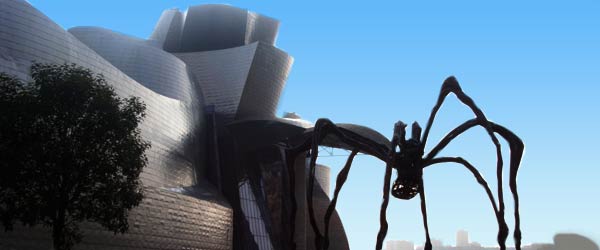
The Guggenheim Museum in Bilbao The Guggenheim in Bilbao is among Spain's most famous museums, along with the Prado in Madrid and the Picasso Museum in Barcelona. Guggenheim Museum

In northern Spain lies the Basque city of Bilbao, the capital of the province of Biscay. The city is known for being one of the pilgrimage routes to Santiago de Compostela, but mostly because it boasts one of the world-famous Guggenheim museums. 'Museo Guggenheim de Bilbao' belongs to the famous Solomon R. Guggenheim Foundation alongside the Peggy Guggenheim Collection in Venice, the Guggenheim in New York and the Guggenheim in Abu Dhabi. According to many, the Guggenheim museums are the most important museums for modern art and are often at the top of art lovers' lists.

  • The so-called "Bilbao effect" represents the fact that one building can attract so many visitors to a somewhat less popular city.
  • The Bilbao Guggenheim Museum is the most famous building in the Basque Country in Spain.
  • From the city side, the building looks like a silver flower, but from the other side it looks like a large sailing ship.

In 1997, the Guggenheim Bilbao opened its doors to the public. The works of art exhibited range from pop art to Pablo Picasso. The permanent Guggenheim collections are most focused on the modern art and plastic art of the 20th century such as Salvador Dalí, René Magritte and Andy Warhol and are spread throughout the four museums.

Guggenheim museums are known for their impressive architectural buildings. For example, the Guggenheim in New York resembles a futuristic teacup with one big long spiral upward where you can occasionally take a turn to a room, rather than changing floors by stairs. The building in Bilbao resembles a large sailing ship and was designed by Canadian-American architect Frank Gehry, who represents deconstructivism. Deconstructivism is modern architecture that assumes that modern society is confusing and uncertain and shows this in its structures. The Guggenheim Bilbao certainly shows this as well. The building is composed mostly of scaly titanium plates that allow the building to shine for up to 100 years due to the reflection of sunlight. To still protect the many works of art from the heat and sunlight, numerous glass walls have been constructed. The building also gives the impression that it could collapse at any moment - the effect of deconstructivism.

The Guggenheim in Bilbao is among the most famous museums in Spain, along with the Prado in Madrid and the Picasso Museum in Barcelona. The Guggenheim Bilbao is a great success and can be seen as the proof that a building is capable of putting an entire city on the map. This is also known as the "Bilbao effect. Bilbao as a city itself is not a tourist attraction, but because of the Guggenheim Museum, it still attracts very many visitors. For modern art lovers, the Guggenheim in Bilbao is one of the more important and interesting museums in Europe, and the building outside alone is breathtaking.

Spain The Guggenheim in Bilbao is among Spain's most famous museums, along with the Prado in Madrid and the Picasso Museum in Barcelona. bilbao, guggenheim bilbao, frank gehry, guggenheim museum bilbao Off <!-- Revive Adserver Etiqueta JS asincrónica - Generated with Revive Adserver v5.0.2 --><ins data-revive-zoneid="7" data-revive-id="ec923599c3fad9b044f22a6a73433428"></ins><script async src="//ads.iegrupo.com/www/delivery/asyncjs.php"></script> Tessa

Churches of Spain | donQuijote

Submitted by Anonymous (not verified) on Mon, 06/08/2015 - 02:00
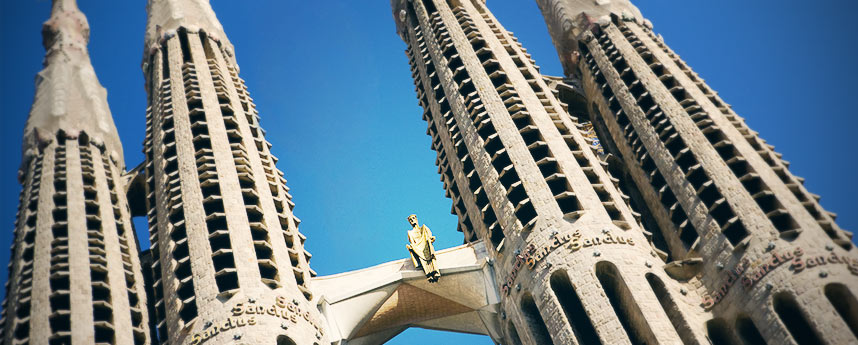
Churches of Spain Spain's Greatest Churches. The "Sagrada Familia" is likely to be one of the tallest churches in the world when construction is completed. sagrada familia

When it comes to culture, Spain's greatest churches are definitely among them. Spain has a rich religious history. The deep-rooted Catholic faith prevailed for centuries and this caused many churches to be constructed. Today, these churches are the most special sights and monuments in Spain. Spain possesses some very special churches, "La Giralda" and "La Sagrada Familia" are just a small sample of these....

  • 'La Giralda' in Seville is the third largest and the largest Gothic church in the world.
  • The ninth largest church in the world is 'La Catedral-Basilica de Nuestra Señora del Pilar' in Zaragoza.
  • The 'Sagrada Familia' is likely to be one of the tallest churches in the world when construction is completed.

Seville: La Giralda

The very largest church in Spain is located in the city of Seville, in southern Spain. The church called 'La Giralda' has an area of up to more than 11,000 m2 and also ranks third among the largest churches in the world. The name 'La Giralda' stands for turning and is derived from the statue that sits atop the church. When it is windy in Seville you can sometimes, with luck, see this statue spinning. The style in which the church was built is Gothic. You can tell by the many arches and the somber character on the outside, due to the use of dark color bricks. It is also the largest Gothic church in the world.

Zaragoza: La Catedral-Basílica de Nuestra Señora del Pilar

This Roman Catholic church is number nine in the world ranking of largest churches and has a total area of more than 8,000 square meters. Its architectural style is baroque. In the interior of the church is the fresco painting "Adoración del nombre de Dios," by the famous Spanish painter Goya. The sacred chapel is composed of jasper (speckled stone derived from quartz), marble, bronze and silver. On the outside, the church is characterized by four large towers placed on each side.

Barcelona: La Sagrada Familia

'La Sagrada Familia' has a total area of more than 4,000 m2. The Sagrada also has a distinctive Gothic appearance. However, this is only on the outside of the church, as the inside again has Romanesque influences. The colorful reflection of light entering through the stained glass creates a true work of art an sich. On either side of the church, four meter-high towers stand stately in the urban landscape of Barcelona. When construction is completed, this could possibly be the tallest church in the world. Until then, though, it is the tallest church in Spain, followed by "La Catedral Vieja de Santa María" in Salamanca.

Now the question can also immediately be asked whether the Mezquita in Cordoba does not also belong to this list of the largest churches in Spain. With more than 23,000 m2, one could say that this would otherwise have been the largest church in the world. However, every list has some exceptions. Namely, these are real churches, something that is just a little different for this mosque-cathedral. Even though its use now seems to be entirely as a Catholic church, the "Mezquita-Catedral" does not fall under this list. Nevertheless, it is definitely worth a visit.

Spain Spain's Greatest Churches. The "Sagrada Familia" is likely to be one of the tallest churches in the world when construction is completed. sagrada familia barcelona, la giralda spain, churches of spain Off <!-- Revive Adserver Etiqueta JS asincrónica - Generated with Revive Adserver v5.0.2 --><ins data-revive-zoneid="7" data-revive-id="ec923599c3fad9b044f22a6a73433428"></ins><script async src="//ads.iegrupo.com/www/delivery/asyncjs.php"></script> Natasja Baas

Famous Talent Shows in Spain

Submitted by Anonymous (not verified) on Thu, 04/16/2015 - 02:00
Talent Shows in Spain Spain´s talent shows allow and allowed participants to showcase a wide variety of skills in areas such as gastronomy, singing, dancing and writing Talent Shows in Spain

When discussing the topic of talent shows in Spain, perhaps our thoughts turn to international franchises such as Masterchef or La Voz. However, this article will aim to go back to the beginning of this television genre in Spain looking at its origins, its development and its success nowadays.

The talent show format appeared in Spain around the same as Televisión Española (TVE), the Spanish national, state-owned, public television channel first broadcast regular programs. Hacia la fama, which could be considered to be one of the first examples of this style of entertainment, emerged onto Spanish television screens in 1957. In this competition, presented by the journalists Ángel de Echenique and Blanca Álvarez, young, talented writers and later musicians, mimes and dancers pitted their skills against each other. Viewers then voted by mail for the person who they thought should win the first prize.

While this program was still running, TVE released another talent show called Cara nuevas (1957).  It involved contestants completing a series of trials with the winner obtaining a job at the aforementioned broadcaster. This contest helped to launch the careers of some of Spain´s most highly regarded television presenters including Miguel de los Santos and José Luis Uribarri. After these two programs were taken off the air, several other series replaced them offering hopefuls the opportunity to demonstrate a wide variety of different skills from singing with Salto a la fama (1963-1965)to dancing with Danzas de España (1966), a show where couples from each of Spain’s provinces competed in elimination rounds introducing the public to their regional dances. All of these shows were aired for varying amounts of time with Spain’s longest running one so far being Gentejoven (1974-1987), a musical program which helped artists such as the Sevillian singer María del Monte and the pop group Mecano become successful.

It was, however, in the 2000s that this type of entertainment started to gather momentum with a notable program being Operación Triunfo (2001-2011).This competition, which gained immediate popularity among Spanish viewers, combined elements of Pop Idol and Big Brother as participants took part in live shows while the audience got to see them interacting during their daily lives. The winner received a recording contract while in the first three seasons, they also had the chance to represent Spain at the Eurovision song contest.

In addition to having their own homegrown talent shows, Spanish channels have also adapted international franchises for their audiences.  For example, in 2007 and 2008 the private television channel Cuatro produced the program Factor X which is based on the British X Factor series and which aims to find the next big singer with a recording contract at stake. Masterchef, which originated in Britain, has also enjoyed and is enjoying success in Spain with adult and junior versions being made by TVE in collaboration with Shine Iberia.  The cooks take part in several different, individual and team challenges inside and outside the studio, with the victor getting 100,000 euros, a recipe book deal and the opportunity to attend the prestigious le Cordon Bleu Madrid cooking school.

One other show which is worth mentioning is La Voz, the Spanish adaptation of the original Voice of Holland. It includes three stages starting with the blind auditions where the judges choose singers for their teams, moving to the battle phase where two members of the same team battle against each other in duets with one advancing into the next round and finishing with the live performances. As in aforementioned musical shows the singers compete for a record deal.

In conclusion, if after reading this article you have been inspired to share a talent you have, just go and do it. You can either apply for a talent show in your own country or look at competing in one abroad. Don’t hide your light under a bushel. Let the world know about your cooking, singing, dancing and writing abilities or any other skills you might have and who knows, one day you might become famous.

Spain Spain´s talent shows allow and allowed participants to showcase a wide variety of skills in areas such as gastronomy, singing, dancing and writing talent shows,spanish shows,spanish channels,spanish tv channels,spanish television,televisión española Off <!-- Revive Adserver Etiqueta JS asincrónica - Generated with Revive Adserver v5.0.2 --><ins data-revive-zoneid="7" data-revive-id="ec923599c3fad9b044f22a6a73433428"></ins><script async src="//ads.iegrupo.com/www/delivery/asyncjs.php"></script> John Bascombe

The Mezquita of Córdoba | donQuijote

Submitted by Anonymous (not verified) on Mon, 04/13/2015 - 02:00
The Mezquita of Córdoba Tegenwoordig wordt dit wel gezien als hét toeristische aanzicht van Córdoba en als één van de meest bezochte toeristische bezienswaardigheden van Spanje. cordoba-spain

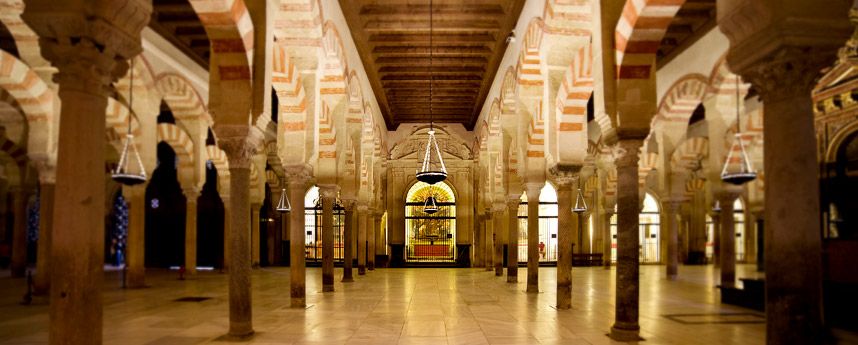
In the middle of the city of Cordoba in Spain, among all the other monuments of Cordoba, stands a veritable mosque-cathedral called: "Mezquita-catedral". Today, this is also considered the tourist sight of Córdoba and one of the most visited tourist sights in Spain. It has as rich a history as the city itself and with a total area of more than 23,000m2, it is the third largest mosque in the world. In addition to Cordoba's historic center, then, the Mezquita is included in UNESCO's Cultural World Heritage List for good reason. Gilded bronze doors, mosaics, symmetry and wooden decoration characterize this special place. Diving into this fascinating history is therefore extremely noteworthy.

  • The cathedral in Cordoba is located in the center of the city and has a Renaissance architectural style.
  • Influences of the Moors and Christians are still visible.
  • The columns in the prayer hall shape the space and create a timeless symmetry.

Construction of the mosque began around the year 786 AD. In total, it took more than two centuries to finish and was therefore built over the centuries by several architects: Hernán Ruiz I, II and III, Diego de Praves and Juan de Ochoa. The mosque was built on the spot where an ancient basilica previously stood and is located right in the center. The style in which it was built can be seen as Renaissance. In its first years, the Mezquita, which is Spanish for mosque also served as a mosque. At the beginning of its foundation, it was the largest in Europe and the second largest in the world after Mecca. Over the years, the mosque went through quite a few renovations. For example, it received a new minaret (tower to call the faithful to prayer).

After the Spanish conquest ("Reconquista") of the Christians from the Moors, the Mezquita served as a cathedral in the year 1236. However, renovations were only done much later in the year 1523 after permission from Emperor Charles V. Space was made in the middle of the immense hall for a Baroque cathedral in the shape of a large cross. As a result, as many as around 400 pillars had to give way for the arrival of the cathedral. In addition, several chapels were added to the sides of the prayer hall. Upon seeing the rebuilding and the change in construction, the emperor regretted it and said to the architect, "Something was built that is unique in the world, but you destroyed it by (re)building something that could have been anywhere.

Today it serves as a Roman Catholic church, but still reflects the influences of the Moors and the Christians. Despite the renovation that did not go to the Emperor's liking, it does send an important image and message to humanity: an interweaving of cultural and artistic styles that blend in harmony. As a result, it is considered one of the most impressive Spanish cathedrals in Spain.

Before entering the cathedral, you first enter a beautiful courtyard called "Patio de los Naranjos. The name derives from the many orange trees neatly lined up next to each other. When you then walk into the mosque you first enter the prayer hall; a hall with as many as 800 pillars neatly placed symmetrically next to each other. These pillars are each connected by white and red colored columns that shape the space. Surrounding this immense open space are several chapels. Between the chapels is an angular dome, which is also better known as 'Mihrab.' The 'Mihrab' is a prayer niche in the wall that indicates the direction of prayer. At the exit, you walk through an immense bronze door and close this history again. However, not forever, for the memory of this visit remains....

Spain Today, it is considered the tourist sight of Córdoba and one of the most visited tourist sights in Spain. reconquista, mezquita cordoba, cordoba spain, córdoba Off <!-- Revive Adserver Etiqueta JS asincrónica - Generated with Revive Adserver v5.0.2 --><ins data-revive-zoneid="7" data-revive-id="ec923599c3fad9b044f22a6a73433428"></ins><script async src="//ads.iegrupo.com/www/delivery/asyncjs.php"></script> Natasja Baas

Jazz in Spain | donQuijote

Submitted by Anonymous (not verified) on Thu, 03/12/2015 - 01:00
Jazz in Spain: From the Golden Age to Nowadays Although Spain is perhaps not renowned for its jazz music, it does have some important jazz festivals such as Barcelona´s International Jazz Festival. Jazz in Spain: From the Golden Age to Nowadays

Versión española

“Spain, a desert for jazz.”

This quote by the famous British jazz composer Leonard Feather, paints a rather gloomy and unprofitable picture of the state of jazz music in Spain. It also justifiably raises the question why is it worth writing a whole article about this genre? I think the answer to this question lies not only in the past but also in Spain´s current musical scene.

In this article I aim to look at what Spain has and had to offer in this style of music reflecting on three main questions: How did jazz develop in Spain? What characterized this development? And finally what is the state of jazz music nowadays?

  • Jazz in Spain has undergone a roller-coaster ride throughout Spain´s political history.
  • This genre can be seen as an important part of Spain´s current musical culture

Spain´s first major contact with this genre can partly be attributed to western influences. In 1929 Samuel Wooding, a famous American jazz conductor, and his “Chocolate Kiddies” performed concerts in Barcelona, Madrid and San Sebastián. However, it was not only this performance but their subsequent recording of discs in Barcelona which gave Spain a real taste of this American music. Another notable musician responsible for increasing the Spanish public´s awareness of this form of music is Jack Hylton who performed, with his British Orchestra, in the Barcelona Universal Exhibition in 1930.

Although these musicians increased the popularity of jazz and revolutionized the public´s perception of this genre, Spain´s indirect contact with jazz can actually be traced back to the 1920s. In ballrooms, in cities such as Barcelona, jazz originally appeared in the form of African-American and Afro-Cuban dances such as the foxtrot, ragtime, rumba and habanera. Famous composers like Debussy further increased the importance of this primitive style of jazz by incorporating it into their pieces. After the introduction of this musical genre, it increased in popularity with Barcelona becoming the Spanish hub for this type of music. Indeed in 1934 the first jazz club opened its doors in this city.

However this so-called “golden age of jazz” music was not to last and with the start of the Spanish Civil War in 1936 and Franco´s reign in 1939 jazz music started to be suppressed. Franco´s “Hispanization” of Spain aimed to get rid of western ideas and influences which included jazz replacing them with Spanish traditions such as folk songs. This censorship of jazz led to the closure of clubs and many jazz musicians left the country.  However, Franco´s reign did not lead to the complete disappearance of jazz music. In fact, in the 1940s and 1950s the jazz industry underwent a partial revival with the opening of a “Hot Club” in Barcelona in 1946 and then one in Madrid two years later.

The focus on folk songs such as flamenco and the comeback of jazz led to a new fusion style called “Jazz-Flamenco.” Pedro Iturralde, a Spanish jazz saxophonist, is considered to be the progenitor of this style. One of his notable works is his collaboration with the flamenco guitarists Paco de Algeciras, the pseudonym of Paco de Lucía and Paco de Antequera. Mention must also be made of Jorge Pardo, a famous jazz flautist and saxophonist, who recorded with the flamenco guitarist Paco de Lucía and the American jazz pianist Chick Corea.

Considering jazz´s chequered past what is the state of this musical genre nowadays? Although Spain is perhaps not renowned for its jazz music, it does have some important yearly jazz festivals which attract artists from around the world including Jazzaldia in San Sebastián, Barcelona´s International Jazz Festival and Vitoria´s Jazz Festival.

In conclusion, in view of the above is Spain as much as a desert for jazz as suggested by Leonard Feather? In the past there were certain moments where this genre did not flourish but its roots were never completely destroyed and talented musicians nourished them and gave jazz a new Spanish identity by combining it with traditional musical styles. If you like this genre do not miss out on Spain´s jazz festivals and you could even combine them with a Spanish course in an exciting city like Madrid or Barcelona.

Spain Although Spain is perhaps not renowned for its jazz music, it does have some important jazz festivals such as Barcelona´s International Jazz Festival. paco de lucia,jorge pardo,leonard feather,spanish jazz,barcelona jazz festival,jazz-flamenco Off <!-- Revive Adserver Etiqueta JS asincrónica - Generated with Revive Adserver v5.0.2 --><ins data-revive-zoneid="7" data-revive-id="ec923599c3fad9b044f22a6a73433428"></ins><script async src="//ads.iegrupo.com/www/delivery/asyncjs.php"></script> John Bascombe
Subscribe to Spain

Manage cookie consent

Cookies on this website are used to personalize content and ads, provide social media features and analyze traffic. In addition, we share information about your use of the website with our social media, advertising and web analytics partners, who may combine it with other information you have provided to them or that they have collected from your use of their services. You can learn more in our Cookies policy

Always active

Necessary cookies help make a website usable by enabling basic functions such as page navigation and access to secure areas of the website. The website cannot function properly without these cookies.

Statistical cookies help website owners understand how visitors interact with websites by gathering and providing information in an anonymous form.

Preference cookies allow the website to remember information that changes the way the site behaves or looks, such as your preferred language or the region you are in.

Marketing cookies are used to track visitors on web pages. This is used to show ads that are more relevant and attractive to the individual user, and therefore more valuable to publishers and third-party advertisers.