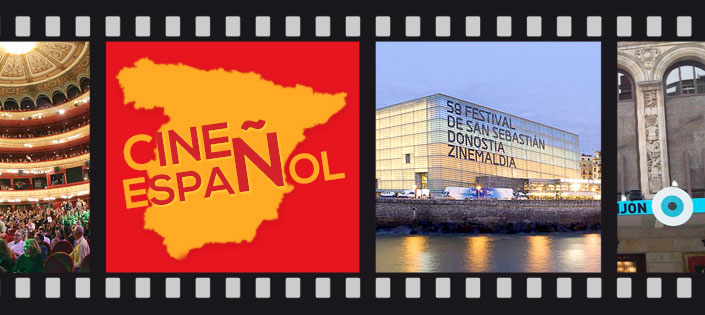
What's wrong with the Spanish cinema? | donQuijote

Submitted by Anonymous (not verified) on Thu, 03/05/2015 - 01:00
What's Wrong With Spanish Cinema? With Spanish television networks becoming increasingly more important in financing films, their objectives are very different from traditional producers. What's Wrong With Spanish Cinema?

Spanish cinema has just had its best year ever with record attendance and box office earnings. So what can go wrong? With films like Spanish Affair and El Niño generating millions at the box office and delighting Spanish filmgoers, it is hard to believe that anything can be wrong. But to some people in the film world, all of this success hasn't translated into recognition or invitations and nominations to the most important film festivals or major film awards. (The last Spanish film to be nominated for an Oscar was The Sea Inside, which also won the award in 2004) According to some, it appears that in the industry's attempt to raise flagging attendance, they have sacrificed some of the elements that captures the attention of serious film lovers and critics.

The only film to achieve some sort of success among film cognoscente in 2014 has been La Isla Mínima or Marshland as it is called outside of Spain. Is the only movie to have been received into the European film festival circuit of Venice, Berlin, and Cannes. Of course there is San Sebastian also, but since this is a homegrown festival there is always ample Spanish presence, in fact Spanish-Franco film Magical Girl won the Golden Shell award. But why is it that Spanish movies have such a hard time breaking through the selection process to the major festivals?

Looking back, the last Spanish film to appear in the official selection of Berlin was Dictado or Childish Games by Antonio Chavarrías. In Venice, Alex de la Iglesia's 2010 Balada Triste de Trompeta (The Last Circus) was the last Spanish film to appear there. Almodóvar's 2011 film La Piel Que Habito (The Skin I Live In) appeared in Cannes and since then no other Spanish film has been part of the official selection there. There have been some Spanish co-productions present like last year's Relatos Salvajes (Wild Tales) or No Llores, Vuela (Aloft) but these were films partially financed from Spain but didn't count on a large participation in the cast or crew.

Independent film producer, Álvaro Longoria from Morena films (Che), believes that the Spanish industry's attempt to capture more audience together with the growing participation of Spanish television networks bankrolling major films are having a negative effect on independent film production. Movies like El Niño highlight this trend with its slick eye-candy cinematography, similar in look to Michael Mann's Heat, is becoming more and more common.

With Spanish television networks becoming increasingly more important in financing films, their objectives are very different from traditional producers. Maximizing audiences on the big screen and later reaping profits on the small, the order of the day for the networks is making Hollywood blockbuster-like movies and if it's not pulse thumping action then simple, yet entertaining stories will suffice. Taking a look at the types of movies that dominated the box office in 2014 as our reference, it appears as though 2015 will continue with this trend.

Longoria believes that Spanish language productions from Spain will have a more difficult time finding space in more important film festivals and independent Spanish movies will be made in other languages, like English, in an effort to get the funding necessary to film and subsequent box office. Right now in Spain according to certain people in the industry is that there are two types of movies being produced here: very commercial or very small scale independent productions.

But what's the problem if Spanish films are breaking records? For most films, the Spanish market is a small part of their overall income and for many, finding distribution in other countries is the key for the financial success of most films. For many, Film festivals are the ideal place for films to find distribution—especially if a film is among the 20-30 films in the official selection. Even if a movie makes it to a film festival that alone doesn't guarantee it distribution in other countries. Since there are over 300 films on the program of a large festival; if a film is not part of the official selection it will be very hard to get noticed.

While Spanish film is living a golden moment it is important to note the difficulty some producers and directors  are having in getting their works filmed and hopefully a balance will be reached in guaranteeing the continuance of Spanish independent film—in Spanish.    


Spain With Spanish television networks becoming increasingly more important in financing films, their objectives are very different from traditional producers. spanish movies,wild tales movie,spanish films,aloft movie,spanish television,spanish cinema,spanish film Off <!-- Revive Adserver Etiqueta JS asincrónica - Generated with Revive Adserver v5.0.2 --><ins data-revive-zoneid="7" data-revive-id="ec923599c3fad9b044f22a6a73433428"></ins><script async src="//ads.iegrupo.com/www/delivery/asyncjs.php"></script> John Bascombe

Goya's Los Caprichos in NYC | donQuijote

Submitted by Anonymous (not verified) on Thu, 01/15/2015 - 01:00
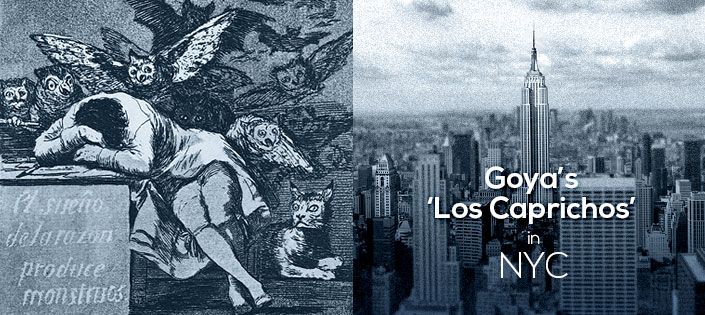
Goya's Los Caprichos in NYC To see Francisco Goya's Caprichos in the National Arts Club in New York you will need to hurry since this exhibit will only last for the month of January. Goya's Los Caprichos in NYC

Francisco José de Goya y Lucientes or simply "Goya" (1746-1828) is one of Spain's most famous and recognized artists. His mastery of art allowed him to bridge the romantic with the modern; considered the last of the Old Masters, he was able to change his style with the times in a way that few other artists have been able to accomplish. Today, the National Arts Club in New York is showing one of his seminal works, the Los Caprichos (Caprices) series of prints in its entirety.  Subversive and critical, Goya was never afraid to air his opinion through his art and deftly aired his feelings through his work—even as court painter—and with Los Caprichos we can see how he pushed the limits (and buttons) of Spanish society in an era of instability and unrest.

Goya was a skilled at expressing criticism through his art subtly employing details and references offering the viewer the possibility to choose between different interpretations. This skill is best demonstrated in his portrait Charles IV of Spain and His Family  (1801). Goya uses Velazquez's immortal "Las Meninas" as his model but in this painting there is a claustrophobic feeling as we see Goya smothered, in the background, by the royal family. Goya pulls no punches in dressing the family in extravagant clothing and, most notably, places the queen in the center of the image since it was believed that she was the real power behind the throne.

One aspect of his work that is lesser known (along with his work in tapestries) is what he accomplished in etched works. There are two series of prints which are the most well known: Los Caprichos (1797-1799) and the Disastres de la Guerra (1810-1820). In the Disasters of War, a series of 82 prints, Goya protests against the violence of the Peninsular War; he even illustrates the reverses of the liberal cause in Spain due to the restoration of the Bourbon monarchy. Incredibly, this was accomplished while still exercising his role as court painter producing many memorable portraits during this time.

Los Caprichos

His other series, which is now on display at the National Arts Club in New York City, Los Caprichos  or "Caprices" is a damning view of what he considered to be the follies of Spanish society. The idea for this project originated in the 1780s thanks to his relationship with some of Spain's most important Enlightenment influenced intellectuals of the day like Fernández de Moratín y Juan Agustín Ceán Bermúdez. As part of this group Goya was able to share is ideas with other like minded thinkers on subjects that were driving Spanish society like religious fanaticism, the prevalence of superstitions and the continued use of the Inquisition as method of control.

With the coronation of Carlos IV in 1788 and the French Revolution on the other side of the Pyrenees, Spain became a more intolerant place and Goya would not begin his etchings due to tension of the time and the sensitive nature of his material. During this time many of his friends, like Gaspar Melchor de Jovellanos, were exiled and others imprisoned. Because of these happenings, Goya withdrew to the Court not willing to take a chance to stand out too much.

In 1793, is is believed that Goya suffered a stroke while travelling to Seville and his physical condition suffered greatly as a result. Now deaf, he also had problems walking and maintaining his balance. Having come close to death and now suffering the physical effects of his illness, Goya's life and work would forever be changed. He became more in touch with himself and more determined than ever to point out the wrongs of society as a way of creating change.

His experiments with aquatinted etchings produced the 80 illustrations known as Los Caprichos: 80 bitter, dark and critical images that take on Spanish society—this series would also foreshadow the style and tone of his Black Paintings at the end of his career. The illustrations do not follow any particular order but there they do appear to go from theme to theme. The first part of the Los Caprichos is dedicated to erotic satire while the second part criticizes the social conventions of the day. The second half of the Los Caprichos is also the most expressive and haunting.

It is in the second half that we begin to see Goya's extravagant  and sometimes grotesque allusions to the inequalities of Spanish society. In one print, #42 Tú que no puedes (You Who Cannot Do It), shows two farmers  each carrying donkey on their back. The title of this print comes from a popular saying that goes: Tú que no puedes, lleváme a cuestas (You who cannot do it, carry me on your shoulders) which is used with someone asks for help from someone in the same situation or worse. This print is an allegory of how the peasant population must carry the burden of supporting the Spanish nobility (the two donkeys) and clearly illustrates the inherent unfairness of society. In the latter part of Caprichos, known as Brujerías (witchcraft) or Sueños (dreams), we see the full force of Goya's imagination and vision. From his romantic beginnings, Goya shows us a new and grotesque conception of his art. Using these illustrations he gives form to his repulsion of the evil that he perceives in the world employing monsters, deformed fairies and tormented faces.

Goya began to sell this series in Madrid on February 6, 1799 in a perfume shop since traditional book stores and galleries didn't want to have anything to do with this controversial work. Their worries would soon be shared by Goya himself due to threats of having to go before the Spanish Inquisition. After only 14 days of being on sale, he withdrew his book of prints only selling 27 of the 300 copies printed. Goya, now fearing for his well being, sought a way out of his predicament.

As an artist moving between the worlds of the Enlightenment and the nobility, his artistic freedom had reached its limits with the threat of having to go before the inquisition hanging over his head. As a way of saving his work (and himself) he sought the help of his patron, King Carlos IV to who Goya offered to turn over all of the unsold copies and plates. Amazingly, in exchange for this, Goya was still able to negotiate a lifetime pension for his son, Javier. Since then, there have been limited editions printed with last one done during the Republican period in 1937 for a total of 20 editions since their original publication in 1799.

The Caprichos exhibited today in New York is a copy that was donated to the National Arts Club in 1994 by an heir of artist Robert Henri. This copy is a ninth edition that was printed between 1908 and 1912. The last time the the complete Caprichos series was seen in New York was in a 1994 exhibition held by the MOMA. To see the Caprichos you will need to hurry since this exhibit will only last for the month of January—a wonderful opportunity save yourself a trip to the Prado Museum in Spain to view the complete series. Los Caprichos is open to the public at the National Arts Club in the exhibition "Francisco de Goya y Lucientes: Los Caprichos" until January 31 and, best of all, admission is free.   

Spain To see Francisco Goya's Caprichos in the National Arts Club in New York you will need to hurry since this exhibit will only last for the month of January. goya,francisco goya,spanish artists,spanish painters,spanish art,los caprichos,goya los caprichos Off <!-- Revive Adserver Etiqueta JS asincrónica - Generated with Revive Adserver v5.0.2 --><ins data-revive-zoneid="7" data-revive-id="ec923599c3fad9b044f22a6a73433428"></ins><script async src="//ads.iegrupo.com/www/delivery/asyncjs.php"></script> John Bascombe

Spanish Photography | donQuijote

Submitted by Anonymous (not verified) on Mon, 12/15/2014 - 01:00
Spanish Photography Photography in Spain. Spain is a true source of inspiration for photographers and those interested in photography. spanish fotography

Art and culture abound in Spain. However, photography is still sometimes forgotten. This is a pity since Spanish photography possesses some exceptional photographers as well as an internationally recognized photo exhibition called "PhotoEspaña. Tourism-wise, photography is also very popular in Spain. This is partly due to the many views and varied landscapes that make photography so interesting. Spain is a true source of inspiration for photographers and those interested in photography.

  • Spanish photography began on Nov. 10, 1839 when 'Ramón Alabern y Casas' took the very first photograph in Barcelona, Spain.
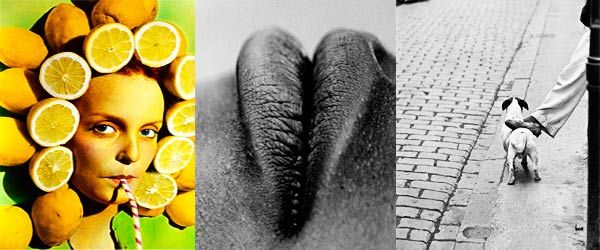
  • 'Chema Madoz' is a well-known Spanish photographer of this century. His style is characterized by surrealistic black and white photographs of everyday objects that he tries to capture in a curious and amazing way.
  • 'PhotoEspaña' is one of the most famous international photo exhibitions in the world with more than 600,000 visitors each year.

To fully understand the photography of Spain requires a dive into history. This begins early in the year of1826 when Frenchman "Joseph Nicéphor Niépce" invented the process of heliography. Heliography means drawing with the sun. It is a process in which a copper plate is smeared with light-sensitive asphalt in a camera obscura that then captures sunlight and projects it onto the plate. This produced the very first photograph in history. This photograph was taken from the window of his study and has an overall exposure time of up to 8 hours! In the year 1829, 'Joseph Nicéphor Niépce' came into contact with 'Louis Daguerre' and from then on photography made real leaps and bounds.

t is therefore safe to say that the beginnings of photography are due to them. When 'Joseph Nicéphor Niépce' died in 1833 'Louis Daguerre' continued his experimentation and with success! So in August of the year 1839 he presented his invention for the first time: daguerreotype. Daguerreotype is a method in which you have developed a photograph within only half an hour. Using this method, "Louis Daguerre" also created his first self-portrait. The daguerreotype method was first used in Spain on November 10, 1839 by 'Ramón Alabern y Casas' in Barcelona. It is a photograph depicting the buildings 'La Lonja' and the house 'Xifré'. Eight days later, a second daguerreotype was made in Madrid of the Royal Palace.

Over the years, thanks to many developments in photography, several styles of photography have emerged. These developments have also come through in Spain. An example of a photography style of the last century can be seen in the well-known Spanish photographer Chema Madoz. His photography style is best known for his surrealistic black and white photographs and focus on photographing objects from everyday life. His photographs are original and give the viewer a curious and amazing look at these objects. One of his most famous photographs is that of a spoon from which the shadow of a fork is visible. In addition, the photograph depicting a burned match as a liquid thermometer is also very well known.

Besides 'Chema Madoz,' there is another well-known Spanish photographer who takes almost exclusively black and white photographs. Her name is 'Isabel Muñoz' and she mostly represents bullfighters, dancers and parts of the human body in her photographs. Other well-known photographers are "Ramón Masats," "Ouka Leele" and "Kike Calvo," each of Spanish descent and the recipient of several photography awards.

PhotoEspaña

Some of these awards are presented at the international festival "PhotoEspaña. For example, in recognition of the contribution and development of photography by Spanish photographers, there is the "Bartolomé Ros Award. This festival annually showcases photography and fine art. It takes place in Madrid during the months of June and July and attracts more than 600,000 visitors each year. The festival is known as one of the most prestigious international venues for the representation of photography. The heart of the exhibition is located around "Paseo de la Castellana," but there are exhibits throughout the city. In total, more than 74 exhibits can be found during this period in various museums such as 'Museo Nacional Centro de Arte Reina Sofía,' 'Museo Thyssen-Bornemisza' and 'Círculo de Bellas Artes. 'PhotoEspaña' has an overarching theme each year in which all the exhibitions together showcase the latest trends in the world of photography and visual arts to the public and to subject matter experts.

Spain Photography in Spain. Spain is a true source of inspiration for photographers and those interested in photography. chema madoz, spanish art, spanish artist, festival madrid, spanish photographer, photoespana Off <!-- Revive Adserver Etiqueta JS asincrónica - Generated with Revive Adserver v5.0.2 --><ins data-revive-zoneid="7" data-revive-id="ec923599c3fad9b044f22a6a73433428"></ins><script async src="//ads.iegrupo.com/www/delivery/asyncjs.php"></script> Natasja Baas

Architecture of Valencia | donQuijote

Submitted by Anonymous (not verified) on Mon, 12/01/2014 - 01:00
Architecture of Valencia Architecture of Valencia. Valencia's modern architecture is visible in all its glory in the city of arts and sciences. Architecture of Valencia

For centuries, Valencia has managed to construct exceptional buildings that are a clear part of its history. Valencia is characterized by its mix of ancient and modern architecture that blends beautifully without losing its folklore. The city was really put on the map when the City of Arts and Sciences, ´Ciudad de las Artes y de las Ciencias´ was born. As such, Valencia is frequented by those who are interested and lovers of architecture. The Gothic building ´La Lonja de la Seda´, a 15th-century silk fair has even won a place on the World Heritage List. Now and in the future, Valencia will continue to pursue modern architecture. This will continue to change the image of Valencia and amaze people.

  • Valencian architecture is best known for its mix of various architectural styles.
  • Santiago Calatrava is an architect and engineer from Valencia. Much of his work is visible around the world. He draws inspiration from organic and human forms.
  • The City of Arts and Sciences is one of Valencia's main tourist attractions.

Valencia 's architecture and growth is in constant flux. This is reflected in the wide variety of architectural styles. From the historic downtown to the hip cosmopolitan neighborhoods. Throughout the city are buildings of Modern, Romanesque, Gothic,- Renaissance, Baroque, and many other architectural styles. The city is a mix of modern and futuristic styles such as the Bioparc zoo and the Valencia street circuit; these are paragons of modern architecture. These styles blend seamlessly with the combination of classical architectural styles such as Valencia City Hall. The best way to see these designs is to explore the city on foot. This way you can easily find the hidden gems in Valencia's small streets as well.

Spanish architecture is extraordinarily rich and distinctive. Therefore, Spain is also home to a number of great and famous architects. After Gaudí, the designer of the ´Sagrada Familia, comes Valencian architect and engineer Santiago Calatrava, the creator of the city of arts and science in Valencia. Calatrava was born July 28, 1951, in Benimàmet, formerly a municipality now fully integrated as an urban part of Valencia. He began his career by studying architecture at the Technical University of Valencia. He then moved to Zurich where he studied civil engineering at the Federal Institute of Technology Zurich.

Calatrava first received international acclaim through the bridge ´Bac de Roda´ in Barcelona. This was part of the 1992 Olympic Games. His designs are visible and recognizable all over the world because of his contemporary style. A style inspired by organic and human forms whose materials are selected with extreme care.

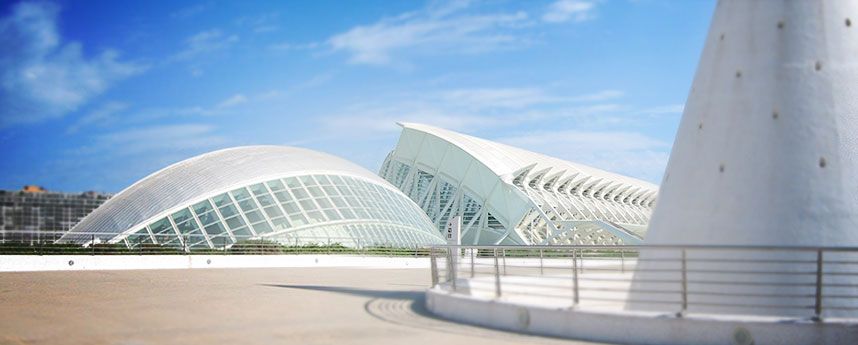
Valencia's modern architecture is visible in all its glory in the city of arts and sciences. Here there is a gigantic cultural center for culture and science that today is one of Valencia 's most spectacular sights. It is home to six unique and eccentric buildings designed by Santiago Calatrava. Entirely dedicated to the arts and sciences, it also functions as a stimulus for visitors' minds. They can thus learn more about the various aspects associated with science in a fun way. For example, here stands the center for music and drama, better known as ´Palacio de las Artes´. A building 75 meters high and 40,000 square meters wide that houses four different spaces for opera, music, ballet, and theater performances. It was built in the year 2005. This striking building is characterized by the different staggered heights of the floors, which are reunited by an enclosure of two symmetrical concrete shells. In addition to the center for music and drama, it houses a science museum, the largest oceanographic park in Europe and much more. Today the City of Arts and Sciences is one of the most famous places in Valencia and is largely the sight of innovation in architecture in Valencia.

Spain Architecture of Valencia. Valencia's modern architecture is visible in all its glory in the city of arts and sciences. valencia, santiago calatrava, city of arts and sciences Off <!-- Revive Adserver Etiqueta JS asincrónica - Generated with Revive Adserver v5.0.2 --><ins data-revive-zoneid="7" data-revive-id="ec923599c3fad9b044f22a6a73433428"></ins><script async src="//ads.iegrupo.com/www/delivery/asyncjs.php"></script> Natasja Baas

The Guernica Painting. Picasso | donQuijote

Submitted by Anonymous (not verified) on Mon, 11/17/2014 - 01:00
The Guernica Painting The Guernica Painting by Pablo Picasso. It is named after the Spanish town of Guernica in the Basque Country, where a bombing took place. guernica painting

It is named after a Spanish place and it is huge. Picasso' s "Guernica" painting is considered a very impressive painting. There is a story behind it, as well as in it. The painting holds you and makes you feel what the painter is trying to convey. 'Guernica' is different.

  • Picasso's painting makes a lot of sense to you. It not only tells the story behind it, but makes you feel it. 'Guernica' by Picasso has traveled a lot but now hangs in the 'Museo Reina Sofia' in Madrid.
  • The story behind it is about a bombing during the Spanish Civil War. It was the first terror bombing in Europe where the fascists wanted to break the resistance of the Republicans in this way.
  • The painting is not realistic and has many underlying thoughts. Picasso mainly wanted to express different feelings with this.
  • Picasso's real name is Pablo Ruiz Picasso, but he became famous only by the name Picasso. He lived to be 91 years old.

Pablo Picasso created "Guernica" in 1937. The painting is a whopping 3.49 meters high and 7.76 wide and is made of oil paint, which Picasso used to create most of his paintings. 'Guernica' is considered the most controversial and impressive work of all Picasso's paintings. It is named after the Spanish town of Guernica in the Basque country (Basque: Gernika), where a bombing took place. This was the trigger and story for the painting.

During a major conflict in Spain (Spanish Civil War July 17, 1936 - April 1, 1939) between the Fascists and the Republicans, the Fascists sought to break their enemy's resistance through a series of bombings of the Basque town of Guernica. On April 26, 1937, one bomb was dropped by the German Luftwaffe close to the town's weekly market. People fled and took cover in shelters. When after a while everything was calm again, everyone came out to help the wounded and at that moment the entire squadron arrived to bomb Guernica. There was complete chaos and panic. Those who tried to flee through the fields were shot at by single-seater planes, shelters were not sheltered from the 250-kilogram bombs, and the bombing took no less than two and a half hours. All the panic and chaos of that day is reflected in Picasso's painting. And that is exactly what he wanted to achieve.

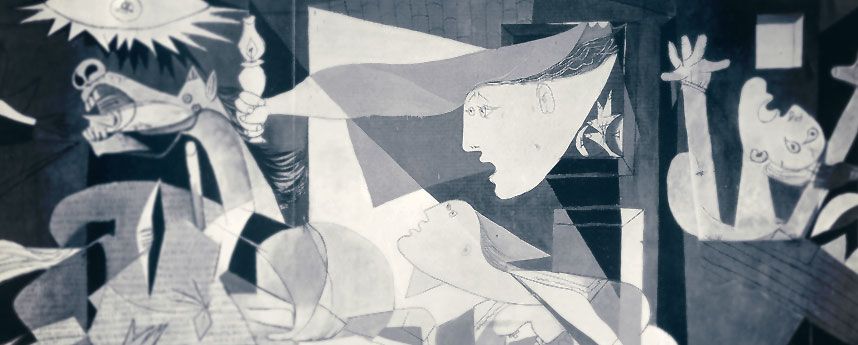
Pablo Picasso wanted to convey the feeling of the bombing, rather than just the image. The key words of the painting, as well as the bombing, are: panic, fear, death, sadness and, above all, chaos. It had to be felt when looking at the work. The surrealist painting consists of only black, white and gray to express the war and a background of lines and planes mixed together to emphasize the chaotic. The man with the broken sword represents a dead soldier and indicates death. The horse is the symbol of innocent casualties in war and shows how much fear there is at such a time. The mother with her dead child shows the grief for the victims of the war and the bombing, and the burning lamp at the top of the painting represents the explosions of the bombs.

Pablo Ruiz Picasso, that's the official name of the famous Picasso. So, according to the Spanish naming system, he had two surnames: Ruiz from his father and Picasso from his mother. Why he became famous only under the name Picasso is probably because at some point he started putting only this part of his name under his works. He was a painter, sculptor, graphic artist, draftsman and ceramicist. Pablo Ruiz Picasso had mistresses all his life, including alongside his wife or primary partner, and he has four children by three women. Picasso was one of Spain's best-known painters and left behind many works.

Spain The Guernica Painting by Pablo Picasso. It is named after the Spanish town of Guernica in the Basque Country, where a bombing took place. picasso, pablo picasso, guernica, spanish painting guernica, guernica picasso Off <!-- Revive Adserver Etiqueta JS asincrónica - Generated with Revive Adserver v5.0.2 --><ins data-revive-zoneid="7" data-revive-id="ec923599c3fad9b044f22a6a73433428"></ins><script async src="//ads.iegrupo.com/www/delivery/asyncjs.php"></script> Daphne Nossels

10 Spanish Film Festivals | donQuijote

Submitted by Anonymous (not verified) on Wed, 10/15/2014 - 02:00
10 Spanish Film Festivals Top Ten Spanish Film Festivals. Spain holds more than 80 film festivals every year. That’s almost 2 per week! 10 Spanish Film Festivals

Top 10 Film Festivals in Spain

You could say that Spain is a country you’d see in movie and a country in which you’d see a movie: its scenic landscapes have not only been captured in an impressive number of famous films, but they also capture a big variety of Spanish film festivals. You can find film fests here on just about any genre imaginable, from documentary, feminist, environmental, short film, gay/lesbian, fantasy, horror, advertising, international film… Spain holds more than 80 film festivals every year. That’s almost 2 per week.


Festival de San Sebastian1. San Sebastián International Film Festival
Having just celebrated its 60th anniversary last month, this film festival of great international prestige is a classic on Spain’s rich calendar of film events. The most honored award here is the coveted concha de oro (golden shell). Every year a special tribute is made to an illustrious figure of the silver screen. This year both Denzel Washington and Benicio Del Toro were honored. The festival marks a time when La Concha Beach fills with great glitz and glamour.


Festival de Cine Iberoamericano de Huelva2. Huelva Ibero-American Film Festival

The western Andalusia town of Huelva receives, over a ten day period in November, the best in the latest in Latin American and Spanish film. This year, the festival celebrates its 40th anniversary. To give you an idea of the event’s magnitude, suffice it to say that it is scheduled to showcase 62 Argentine movies, 42 Spanish, 24 Chilean and Brazilian; in all, 211 films are in the running to win the Colón de oro. And that’s not even mentioning the nearly 500 short films. This is likely the greatest exhibition of Ibero-American film that currently exists.


Festival de Málaga3. Festival de Málaga de cine español

Spanish films compete each year in Malaga for the Biznaga de Oro award. This festival is unique in that it is celebrated in several different venues around the city, from the Picasso Museum to the University of Malaga. 10,000 kilómetros, one of the 3 films selected to represent Spain in the Oscars, won the 2014 Biznaga de Oro. One of the yearly festival’s regular attendees is Antonio Banderas, whose home town is Malaga.


Festival Internacional de Cine las Palmas de Gran Canaria4. Festival Internacional de Cine Ciudad de Las Palmas de Gran Canaria
This festival’s coveted Lady Harimaguada de Oro prize is awarded in the fabulous Alfredo Kraus de Las Palmas Auditorium, just one of the venues used for the event. The festival is in its 14th year.


Festival Internacional de Cine de Valencia5. Festival Internacional de Cinema Jove

This festival, held in the end of June is in its 29th year. This year’s best movie award, known as the Luna de Valencia, went to the film Cherry Pie, a work by the Swiss director Lorenz Merz..


FemCine6. Festival Mujeres de Cine

Backdropped by the Alhambra Palace in full bloom, this springtime, Granada festival places a special focus on the importance of women in film. The event highlights the work of women in all aspects of cinema, from acting, directing, script-writing, costume design and even make-up art.


Festival de Cans7. Festival de Cans de Cortometrajes (Cans Short-Film Festival)

The festival plays on the name of the tiny Galician village near Porriño, which recalls the high glamour of the French Riviera’s Cannes film festival. The young and the not so young short-filmmakers gather in Cans from May 21 -24. Humor, as the event’s name suggests, makes a big presence here, where curious categories include “Agroglamour” and “Pedigree”.


Seminci Valladolid8. Semana Internacional de Cine de Valladolid (SEMINCI)
The Espiga de Oro awaits the winner of this film festival, now in its 59th year, held in beautiful Valladolid. Movies shown at this event must be world premiers (in the case of Spanish productions or co-productions with Spanish participation) and they may not have been a part of other competitions. This year, Chinese director Zhang Yimou and the Swedish actor-director Liv Ullmann will both participate.


Sitges Festival Internacional de Cinema Fantastic9. Sitges Festival Internacional de Cinema Fantastic (Sitges International Fantasy Film Festival)

This famous festival, held in the Catalonian coastal town of Sitges, celebrates fantasy and horror movies. This is a cultural diverse event that fantasy film lovers won’t want to miss during the first week of October.


Digital Short Film Festival10. Notodofilmfest.com

This festival, created on a whim in 2011, has become an international event for digital short films. This September, over 10,000 short films from 38 countries were entered in the festival and it received more than 27,000,000 views.

Spain Top Ten Spanish Film Festivals. Spain holds more than 80 film festivals every year. That’s almost 2 per week! film festivalsfilm festival,spanish films,san sebastian film festival,short-film festival,espiga de oro,spanish film,argentine movies,latin american films,latin american film Off <!-- Revive Adserver Etiqueta JS asincrónica - Generated with Revive Adserver v5.0.2 --><ins data-revive-zoneid="7" data-revive-id="ec923599c3fad9b044f22a6a73433428"></ins><script async src="//ads.iegrupo.com/www/delivery/asyncjs.php"></script> John Bascombe

Spanish Film Festivals | donQuijote

Submitted by Anonymous (not verified) on Mon, 09/15/2014 - 02:00
Spanish Film Festivals Besides the famous film festivals in Málaga and, of course, San Sebastian, Sitges in the autonomous state of Catalonia also has a film festival. spanish film festivals

Film Festival in San Sebastian

The International Film Festival in San Sebastian, Spain is the most prestigious festival in Spain and, in addition, one of the most important festivals in Europe, because of the leading films presented there and their international impact. It is the only film festival in Spain that is considered an A category event, one of only 13 in the entire world! The festival is held in Donostia-San Sebastian, one of the most beautiful northern cities in Spain, located on the coast of the Basque Country region. During this period, the city hosts well-known movie stars such as, Robert De Niro, Richard Gere, Michael Douglas, Catherine Zeta-Jones, Mel Gibson, Demi Moore, Naomi Watts and Brad Pitt and great directors such as Roman Polansky, Francis Ford Coppola and Pedro Almodovar.

The official awards for the San Sebastian Film Festival are: Golden Shell for Best Film, Silver Shell for Best Director, Silver Shell for Best Actress, Silver Shell for Best Actor , Special Jury Prize, Jury Prize for Best Cinematography, Jury Prize for Best Screenplay.

Film festival in Málaga

The film festival in Málaga is only for Spanish cinema and thus is not internationally oriented. The official name of the event is "Festival de Málaga Cine Español (FMCE)," and it has been carrying the Spanish film industry since 1998. As most know, Málaga is the hometown of the famous, international actor Antonio Banderas; one of the reasons the city has such a strong connection to Spanish film. Official awards of this festival are: the Golden and Silver Bignagas for Best Film, Best Director, Best Actress, Best Actor, Best Music, Best Cinematography et cetera. In recent editions, the festival also admits Latin American Spanish-language films in the Territorio Latinoamericano (literally: Latin American Territory) section. The result of admitting Latin American films is a renovated boost in Spain of this lesser-known film sector as well as the sharing of ideas between the two.

Sitges Festival

Besides the famous film festivals in Málaga and of course San Sebastian, Sitges in the autonomous state of Catalonia also has a film festival: 'El Festival de Cinema Fantàstic de Sitges / Catalunya'. It is one of the most famous film festivals. The Sitges festival first took place in 1967 in, how could it be otherwise, Sitges; a tourist city on the Mediterranean Sea, 40 km away from Barcelona. Sitges is a great place for all film lovers to admire the best new and upcoming films in special screenings. In past editions, the festival received as many as 50,000 spectators! Throughout the festival, some of the most famous directors, producers and actors have shared their new work. Some of the big names that have walked the red carpet of the Sitges Film Festival are: Vin Diesel, Tony Curtis, Guillermo del Toro, Jeroen Krabbé, Eli Roth, Joanna Cassady, Julia Adams, Guy Maddin, David Cronenberg and many more! In addition, these important films, among others, proudly celebrated their debut at this festival: Brotherhood of the Wolf (2001), The Bourne Identity (2002), Kill Bill (2003), The Holy Mountain (1973), Mulholland Drive (2001), and many others. The film festivals in Spain put Spain on the map!

Spain Besides the famous film festivals in Málaga and, of course, San Sebastian, Sitges in the autonomous state of Catalonia also has a film festival. malaga, san sebastian, sitges, film festival, spanish films, spanish actors Off <!-- Revive Adserver Etiqueta JS asincrónica - Generated with Revive Adserver v5.0.2 --><ins data-revive-zoneid="7" data-revive-id="ec923599c3fad9b044f22a6a73433428"></ins><script async src="//ads.iegrupo.com/www/delivery/asyncjs.php"></script> Daphne Nossels

Youth Orchestras in Spain

Submitted by Anonymous (not verified) on Wed, 06/18/2014 - 02:00
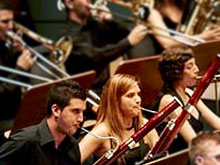
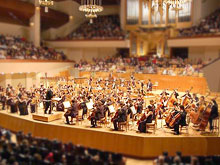
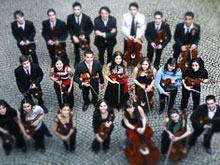
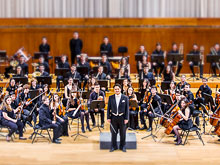
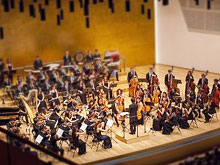
Youth Orchestras in Spain Young Spanish Musicians. Spain has 45 symphonic and/or philharmonic orchestras, but we’ll be taking a quick peek at Spanish youth orchestras. Youth Orchestras in Spain

Young Spanish Musicians

Music is the backbone of this conglomeration of traditions, languages, geographies, and cultures that we call Spain. Spanish heritage is surprisingly rich and diverse, and the music here, in its most “classic” form, provides a special source of inspiration for many Spaniards. Spain has 45 symphonic and/or philharmonic orchestras, but we’ll be taking a quick peek at Spanish youth orchestras.

Limited space for text has obliged us to focus our list on 10 of these groups. We certainly have no intention of undervaluing those that don’t appear here. 


JOCM

Joven Orquesta de la Comunidad de Madrid

This group got its start in 1991 with 15 to 26 year old students from Madrid-area conservatories and music schools. Young musicians may only participate with the JOCM for up to 3 years, during which they attend classes taught by professional orchestra members. The JOCM puts on concerts every year in the Auditorio Nacional de Música, the Teatro Monumental, various theatres throughout Madrid, and as part of tours around Spain and Europe.
(http://www.jorcam.org/)


JOVG

Joven Orquesta de la Generalitat Valenciana

The JOGV was also created in 1991 as a state-sponsored private entity. It remained private until 1996, when the Office of Culture, Education, and Science took over full responsibility. Members of the JOGV are between 16 and 25 years old. They must have also passed the final year of studies of their instrument at the intermediate level, and they must pass a test that will allow them to be members of the orchestra for 3 years. Members may prolong their membership for 3 more years after passing the required exams. The JOCV is made up of over 100 musicians who participate in a minimum of 3 yearly performances in Valencia.
(http://ivm.gva.es/cms/)


JONC

Joven Orquesta Nacional de Cataluña

In 1993, maestro Josep Pons founded the Jove Orquesta Simfònica de Catalunya, which changed its name in 1999 to its current Joven Orquesta Nacional de Cataluña (JONC). The group’s main goal has been to provide young musicians from Catalonia comprehensive orchestral training through lessons with professionals and visits from some of international music’s most noteworthy figures. The JONC serves as a stepping stone for young talents to break into the world of professional music, where they may have the chance to join some of Catalonia’s greatest orchestras such as that of El Liceu or the Palau de la Música Catalana. (http://www.jonc.cat/)


JONDE

Joven Orquesta Nacional de España

The JONDE belongs to the Instituto Nacional de las Artes Escénicas y de la Música, which operates under Spain’s Department of Culture. The JONDE was founded in 1983 to help train young musicians before beginning their professional musical careers. Classes here are offered by prominent figures such as Mstislav Rostropovich, John Williams, Teresa Berganza, etc. The orchestra places a special focus on contemporary music, attested to by the creation of the Academia de Música contemporánea in 2003. This orchestra makes up part of the Asociación Española de Jóvenes Orquestas (AEJO) and the Federación Europea de Jóvenes Orquestas Nacionales (EFNYO). Young musicians who have completed 2 or 3 years with the JONDE may enter a scholarship program allowing them to finish their music studies in the country and with the teachers of their choice. (http://jonde.mcu.es/)


JOST

Academia de Estudios Orquestales de la Orquesta Sinfónica de Tenerife

This academy aims to create a bridge between the life of a music student and that of a music professional. The teaching staff is responsible for transmitting their knowledge with students of the JOST (Joven Orquesta Sinfónica de Tenerife). Former students have gone on to become members of the JONDE, the Orquesta Gustav Mahler, the Joven Orquesta de Canarias, and other institutions. This program has proven so successful that the academy has put on symphony and chamber music concerts in the Auditorio de Tenerife and in different venues in the Canary Islands and the rest of Spain. What started as a program with admissions limited to 16 students has grown to accept 65. (http://www.ost.es/)


JOPM

Joven Orquesta Provincial de Málaga

This orchestra created in 1991 promotes passion for music in the province of Malaga and in the rest of Andalusia, focusing on helping young musicians develop their abilities to perform collective music and symphonic music in particular. The JOPM has an orchestral school, which accepts students aged 10 to 15 who will later join the JOPM and possibly go on to make a career as a professional chamber or symphony music player. (http://jopma.hol.es/index.php)


Joven Orquesta de la Fundación Caja Duero

Joven Orquesta de la Fundación Caja Duero

This orchestra, sponsored by the Salamanca-based savings bank Caja Duero, makes up part of an educational project launched in 2005 to help young musicians develop their talent by working together with professional musicians. The project originated as a chamber orchestra with 21 musicians. Today it has 61. In 2006, this young orchestra participated in the musical project “Fl milegio musical salmantino”, an effort which earned the appreciation of Salamanca residents. (http://www.fundacioncajaduero.es/musica/orquesta_home.aspx)


JOSG

Joven Orquesta Sinfónica de Granada

Over 10 years in existence, the JOSG is made up of musicians aged 15 to 23. It has an excellent reputation on a local and national level. The JOSG has participated in international festivals such as the Eurochestries and they’ve brought their wonderful brand of classical, symphonic, and chamber music to towns around the province of Granada where residents may not get the chance to hear it very often. The orchestra has also participated since 2008 in the FEX event of the Festival International de Música y Danza de Granada. It also receives the consistent support of the renowned Orquesta Ciudad de Granada. (http://www.josg.org/)


OJPA

Orquesta de Jóvenes de la Provincia de Alicante

The OJPA emerged in 2009 from the music-loving atmosphere that characterizes the region of Valencia and especially Alicante. Soloists and conductors of great prestige teach young members to develop and perfect their musical talent. The orchestra’s high level of education earned it great success in 2012 at the Teatro Monumental of Madrid, the home of RTVE’s Symphonic Orchestra. That same year, the young orchestra performed at the prestigious Schleswig-Holstein Musik Festival in Germany. Last year, the OJPA invited the Swiss Jugendorchester Oberthurgau, the Twist Youth Orchestra of Brussels, and the JOPM to participate in the 1st Festival International de Orquestas de Jóvenes, held in Alicante. This year, the OJPA will take part in the Summa Cum Laude International Youth Music Festival Vienna, and it will host the 2nd Festival International de Orquestas de Jóvenes. (http://www.orquestadejovenesdelaprovinciadealicante.com/)


Spain Young Spanish Musicians. Spain has 45 symphonic and/or philharmonic orchestras, but we’ll be taking a quick peek at Spanish youth orchestras. music in spain,youth orchestra,palau de la música catalana,spanish musicians, auditorio de tenerife,youth orchestras Off <!-- Revive Adserver Etiqueta JS asincrónica - Generated with Revive Adserver v5.0.2 --><ins data-revive-zoneid="7" data-revive-id="ec923599c3fad9b044f22a6a73433428"></ins><script async src="//ads.iegrupo.com/www/delivery/asyncjs.php"></script> John Bascombe

Las Meninas. Spanish painting | donQuijote

Submitted by Anonymous (not verified) on Mon, 12/02/2013 - 01:00
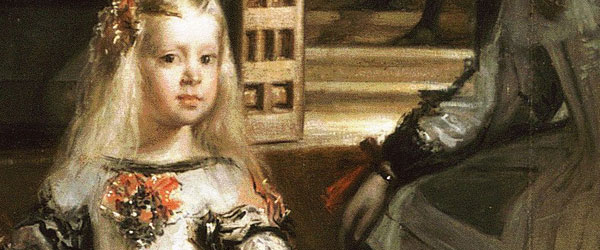
Las Meninas Las Meninas by Velazquez is one of the most famous Spanish paintings ever. Its Dutch name is The Court Ladies. Spanish culture with don Quijote! las meninas velazquez

One of the most famous Spanish paintings

Las Meninas was created by Spanish painter Diego Velázquez. One of the most famous Spanish painters of the golden age, he created many portraits of the Spanish royal family. The Dutch name for Las Meninas is De Hofdames.

Velazquez

Born in Seville, Diego Velázquez began painting at a very young age. At 12, Velázquez was an apprentice painter with Francisco Pacheco. When he moved to Madrid in 1622, he attracted the attention of Spain's King Philip IV.

In 1629, Velázquez left for Italy for a year and a half to study his classical predecessors. All at the expense of Spanish King Philip IV. Upon his return, Velázquez became the court painter of the Spanish royal house. In 1649, he went to Italy again, but this time to procure art for King Philip IV.

Las Meninas is one of the first modern Spanish paintings. A modern painting makes you think about everything on the canvas.

At the center of the painting is the Spanish princess, she was the apple of the family's eye, and at the time the only living child of King Philip IV. It is unusual for a princess to be the center of a painting. At the time the painting was made, princesses were often married to cousins or uncles in the family, to ensure that there was a male heir to the throne.

Everything on the life-size canvas makes the viewer think. For example, the painter has depicted himself, at work, on the canvas. It looks like he is painting Las Meninas. This is not the only thing that makes the viewer think. For example, all the persons in the painting, are looking outside the painting. There is also a mirror painted on the canvas. In this mirror the faces of the royal couple can be seen. The viewer is like the royal couple, we look out over the artist's studio, and the viewer is portrayed.

The main question all this raises is, am I looking at the painting or is the painting looking at me? Find out the answer for yourself during a visit at the Prado Museum in Madrid.

Spain Las Meninas by Velazquez is one of the most famous Spanish paintings ever. Its Dutch name is The Court Ladies. Spanish culture with don Quijote! spanish painting las meninas, velazquez, las meninas Off <!-- Revive Adserver Etiqueta JS asincrónica - Generated with Revive Adserver v5.0.2 --><ins data-revive-zoneid="7" data-revive-id="ec923599c3fad9b044f22a6a73433428"></ins><script async src="//ads.iegrupo.com/www/delivery/asyncjs.php"></script> Samentha Geerts

Top 10 Museums in Spain | donQuijote

Submitted by Anonymous (not verified) on Wed, 11/20/2013 - 01:00
Top Ten Museums in Spain Art and Culture in Spain: Our Top Ten Spanish Museums will give you a taster of Spain’s proud to celebrate its internationally-acclaimed artists. Top Ten Museums in Spain

Spanish Art: Broadening your cultural horizons

Although stereotypically associated with sun, sea and sand, Spain offers much more than just a summer glow. From Velázquez to Dalí, Ribera to Miró and El Greco to Picasso, Spain has produced some of history’s most influential, revolutionary and highly-esteemed artists. So why not mix things up this year during your holiday to Spain and replace a day of soaking up the rays with a day of cultural enrichment!? In alphabetical rather than preferential order, the featured Top Ten Spanish Museums below will simply give you a taster of a country proud to exhibit and celebrate the enduring talents of its internationally-acclaimed artists.


Fundación Joan Miró1. Fundación Joan Miró - Barcelona


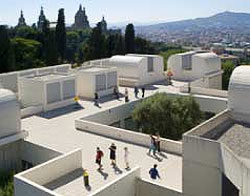
Within the confines of an incredibly-striking, contemporary and almost Lego-like white building, visitors will find themselves in awe of the sheer number, quality and diversity of the artwork produced by Barcelona-born painter, sculptor and ceramicist, Miró. With more than 14,000 pieces of artwork to observe, tourists will certainly leave with a much greater insight into the life of this 20th Century artistic genius.


Sevilla2. Museo de Bellas Artes - Seville


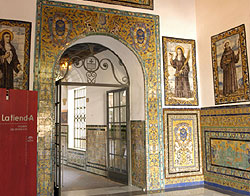
Priding itself on the display of the colossal altarpiece paintings which characterized the artwork of the 17th Century Seville school, the city’s Museum of Fine Arts completely captivates its visitors with its beautifully-detailed, and primarily religious, collections as soon as they pass through the former convent’s cloistered doorways. Greeted by works from El Greco, Velázquez, Murillo and Cano amongst many others, Spanish Golden Age art enthusiasts will find themselves in Baroque heaven.


Valencia3. Museo de Bellas Artes - Valencia


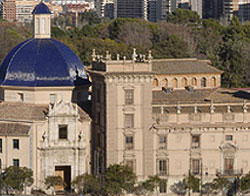
Artwork aside for a momentito, Valencia’s Museum of Fine Arts with its two grand towers, sapphire-tiled dome and charming courtyard is truly a marvel to behold in all its architectural glory. And beyond the spectacular façade, the museum showcases, most notably, an abundance of 17th Century art including Goya’s striking portraits and El Greco’s monumental religious iconography.


Bilbao4. Museo Guggenheim - Bilbao


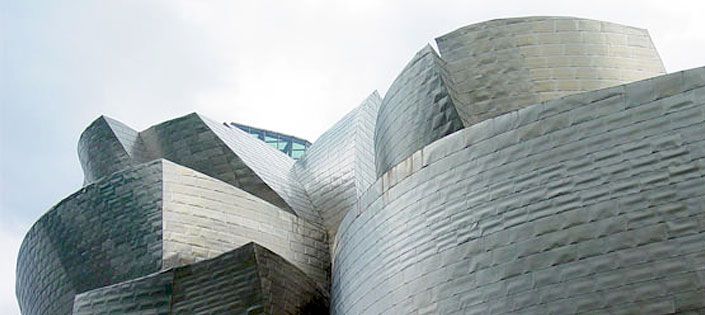
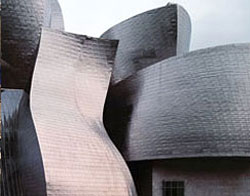
Reminiscent of a large, distorted and multiple-layered reflective mirror, Bilbao’s Guggenheim Museum is impossible to miss. Although the building’s utterly unique exterior design is a work of art in itself, it is only once inside that visitors can fully appreciate the ingenuity of the world’s greatest contemporary and modern artists. From Serra’s steel sculptures to Warhol’s renowned pop art, every room celebrates the daring and innovative approaches taken by these artists who, even if unconsciously, made art history.


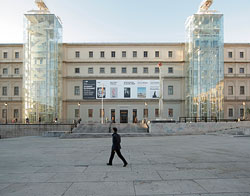
Reina Sofia Museum5. Museo Nacional Centro de Arte Reina Sofia (MNCARS) - Madrid

Home to what is arguably Picasso’s most famous, and extremely thought-provoking, painting, “Guernica”, in addition to a profuse number of Dalí’s cubist works, the MNCARS is a must-see when visiting the Spanish capital. Always changing thanks to the two floors solely devoted to temporary exhibitions, the museum strives to treat its visitors to a constant flow of the most internationally-celebrated modern and contemporary works of art history.


6. Museo Nacional d'Art de Catalunya (MNAC) - Barcelona


With breathtaking views over Barcelona’s world-famous, urbanized landscape, the neo-baroque Palau Nacional is the stately (and justifiably so given its prestigious and profuse art collection!) home to the Catalan capital’s National Art Museum. With more than 260,000 art pieces, the museum’s highlight has to be its Roman frescoes which were remarkably saved from destruction during the Spanish Civil War and are still beautifully-maintained to this day.


The Prado Museum in Madrid7. Museo Nacional del Prado - Madrid


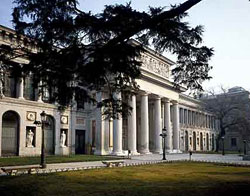
No sightseeing tour around Madrid would be complete without a visit to Spain’s largest art museum. Simply known as El Prado, the museum not only boasts a multitude of the finest paintings of the Spanish Golden Age but also contains one of the largest sculpture collections in Europe. With the chance to see Velázquez’s “Las Meninas”, Bosch’s “The Garden of Delights” and Murillo’s “Immaculate Conceptions” along with an estimated further 4,800 exquisitely-detailed paintings all in just one building, what are you waiting for?


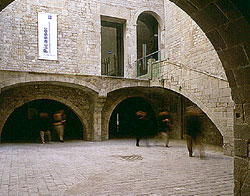
Picasso Museum8. Museo Picasso - Barcelona


Giving particular attention to his formative years but, equally taking its visitors on an artistic journey through the numerous and diverse periods which characterized his extensive career, Barcelona’s Picasso Museum successfully captures the essence of an artist whose work changed almost beyond recognition as he transformed from child prodigy to legendary Cubist.


Dali Museum 9. Teatro-Museo Dalí - Figueres


As eccentric as the artist and his surrealist work, the Dalí Theatre-Museum building with its almost fuchsia-colored and egg-covered design is certainly unique in appearance and, unsurprisingly, continues to entice the intrigued sightseer all year round. Within the dream-like walls, visitors are taken further into Dalí’s imagination and are welcomed by a profusion of paintings, sculptures, 3-dimensional collages and mechanical devices all created in the distinctive and fascinating Dalí style.


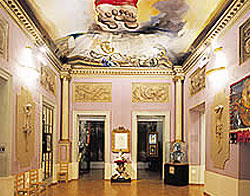
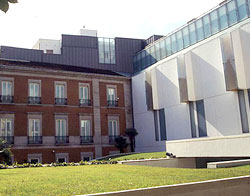
Thyssen Museum 10. Thyssen-Bornemisza Museum - Madrid


Behind the magnificent terracotta walls of the neoclassic Villahermosa Palace hang almost 1000 incredibly-diverse paintings which enable the admiring observer to appreciate the versatility of art through the ages as a form of creative expression. Displaying works from the Renaissance to the Mannerism period, Baroque to Rococo and Romanticism to Pop Art, the museum justly deserve her place in the so-called Madrilenian Golden Triangle of Art.


Spain Spain Art and Culture in Spain: Our Top Ten Spanish Museums will give you a taster of Spain’s proud to celebrate its internationally-acclaimed artists. spanish culture,guggenheim bilbao,spanish art,culture in spain,museums in spain,prado madrid,art in spain Off <!-- Revive Adserver Etiqueta JS asincrónica - Generated with Revive Adserver v5.0.2 --><ins data-revive-zoneid="7" data-revive-id="ec923599c3fad9b044f22a6a73433428"></ins><script async src="//ads.iegrupo.com/www/delivery/asyncjs.php"></script> Abigail
Subscribe to Spain

Manage cookie consent

Cookies on this website are used to personalize content and ads, provide social media features and analyze traffic. In addition, we share information about your use of the website with our social media, advertising and web analytics partners, who may combine it with other information you have provided to them or that they have collected from your use of their services. You can learn more in our Cookies policy

Always active

Necessary cookies help make a website usable by enabling basic functions such as page navigation and access to secure areas of the website. The website cannot function properly without these cookies.

Statistical cookies help website owners understand how visitors interact with websites by gathering and providing information in an anonymous form.

Preference cookies allow the website to remember information that changes the way the site behaves or looks, such as your preferred language or the region you are in.

Marketing cookies are used to track visitors on web pages. This is used to show ads that are more relevant and attractive to the individual user, and therefore more valuable to publishers and third-party advertisers.