World Heritage in Latin America | donQuijote
Submitted by Anonymous (not verified) on Mon, 02/04/2013 - 01:00
World Heritage in Latin America UNESCO creates a World Heritage List that includes all the world's special places. Many of these wonderful places are found in Latin America. world heritage latin america

Building peace in the minds of men and women. That is the goal of UNESCO. UNESCO creates a World Heritage List containing all of the world's special places. Many of these beautiful and historic places can be found in Latin America. Definitely worth a visit if you are in South America!

UNESCO was founded by the United Nations, the aim of which is world peace. The UN wants to improve the living conditions of all people in the world. They also strive to stimulate the development of universal values, in this way they hope to achieve freedom of want and freedom of fear.

UNESCO is helping in this endeavor by creating a World Heritage List. This list is divided into 3 parts. Namely; Natural Heritage, Cultural Heritage and Mixed Heritage, which is a combination of Natural and Cultural Heritage. There is also a separate list of endangered world heritage. In total there are 962 World Heritage Sites, spread over 157 countries.

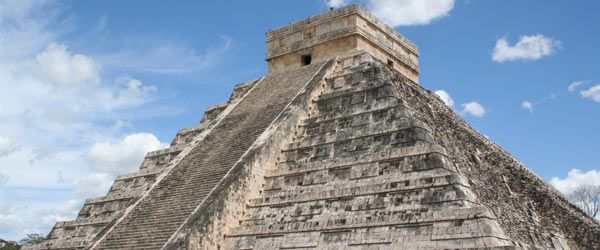
Latin America is full of extraordinary places on this World Heritage List. 20 percent of all Natural World Heritage Sites on UNESCO's list are found in Latin America and the Caribbean.  Most world heritage sites in Latin America are found in Mexico and Peru. Thus, in Mexico you can see sights like one of the new 7 wonders of the world "Chichen Itza. In Mexico you will find no less than 31 (!) World Heritage sites. Take your pick!

One of the most important cities of the Maya was Chichen Itza. In the city you will find the Pyramid of Kukulcán (also called "el Castillo"). The pyramid is now more than 1,000 years old and great to see once! There are many more ruins to view, attracting millions of visitors. But that's not surprising, the city and its monuments are breathtaking and still exude all the historical charm of the past.

You certainly won't be bored in Peru either! Here you will find 11 different sights that are on the World Heritage List. There are many different cities, historical properties, parks and much more. Peru's most besproke n world heritage site is Cusco. This ancient village was originally the capital of the Incas.

In short: take a good look at the world heritage list and find a nice place to visit! Enjoy!
History UNESCO creates a World Heritage List that includes all the world's special places. Many of these wonderful places are found in Latin America. unesco, latin america, world heritage list, world heritage, unesco world heritage list Off <!-- Revive Adserver Etiqueta JS asincrónica - Generated with Revive Adserver v5.0.2 --><ins data-revive-zoneid="7" data-revive-id="ec923599c3fad9b044f22a6a73433428"></ins><script async src="//ads.iegrupo.com/www/delivery/asyncjs.php"></script> Pauline Heuvelmans

Mayan Ruins really found in Northern Georgia, USA?

Submitted by Anonymous (not verified) on Wed, 12/28/2011 - 01:00
Mayan Ruins really found in Northern Georgia, USA? Mayan Ruins really found in Northern Georgia, USA?

There is some controversy about whether or not this story is true and a quick Internet search reveals all kinds of arguments, but, we think it is interesting and worth a mention.

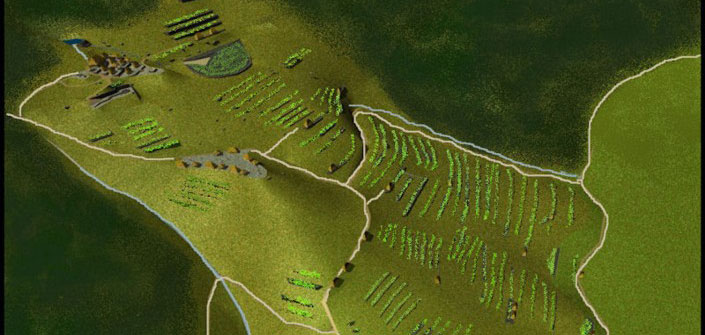
According to a group of archaeologists, 1,100 year old Mayan ruins have been discovered at Track Rock Gap, near Georgia´s tallest mountain. Investigators believe that 154 stone masonry walls are visible, used for creating agricultural terraces, as well as other stone structures. The Mayans are known for having implemented advanced irrigation systems, adapting to difficult terrains. Some believe that the site could, in fact, be the lost city of Yupaha, which Spanish explorer Hernando de Soto failed to find on an expedition in 1540.

Some theorize that the Mayans made the move north around 800 AD, when the once flourishing population began to collapse due to volcanic eruptions, wars and extreme drought. In fact, strong similarities in architectural forms of towns along southern Mexico and southeastern USA have documented and some agronomists believe that corn, beans and tobacco was introduced to the Native Americans from those who migrated north from Mexico.

Despite all these theories, no ruins have ever been found in the US that have been attributed to people who originated in what today is Mexico. Although, many point out that Native American tribes such as the Creeks, Alabamas, Natchez, Chitmachas and Choctaws may be descendants of southern indigenous groups and particularly point out the use of Mesoamerican words in the Creek Indian language, for example.

The mystery remains: Where did the Mayans go? Archaeologists know that the Mayan civilization suffered a rapid collapse and for 170 years they have debated what exactly happened to the vast number of people that once thrived in the area. Mass immigration has been hard to prove and many archeologists have concluded that the Mayans simply died in masse.

However, in the Georgian Mountains there has always been “evidence”. Ruins found around the state were usually attributed to the Cherokee Indians, who denied having created the circular structures and wall terraces on the mountaintops and mountainsides. In the mid-20th Century, modernization in Georgia led to little conservation of these “Indian” mounds and stone structures, most being swept away to give way to highways and other construction projects. It wasn’t until the late 20th century that the state took at active role in trying to conserve this part of its history, the most famous site being the ruins of Fort Mountain State Park.

In 1999, an archaeologist named Mark Williams from the University of Georgia led a group to study the southeastern side of Brasstown Bald. The ruins survived reveal a massive 5 sided pyramidal mound, possibly dating back to 900 AD, partially sculpted out of an existing hill with clay. Of all the indigenous tribes of the Americas, only the Itza Mayas and the Creek Indian ancestors have been known to build 5-sided earth pyramids as their principal mounds, and dozens of similar structures can be found in Central America.

Other reasons to suspect a Mayan presence in the area can be found on early maps of the area. The name “Itsate” can be found. “Itsate” is the name that the Itza Mayans used to call themselves.

An archaeological survey by Loubser’s firm surveyed the area and is said to have done soil dating which estimated that some of the shards were made around 760 AD – 850 AD, around the time that the Mayan population plummeted. The study offered no firm conclusions, but did state that examples of similar sites only exist in the Maya Highlands of South America.

Is Track Rock Gap the “missing link” that archaeologists and architects had been seeking since 1841? Did the Mayas make their way North and establish new cities? There are many debates… If the site does prove specific links between the Southeastern Native Americas and the ancient Mayans, then, according to Thornton, this could be the “most important archeological discovery in recent times.”

History Mayan Ruins really found in Northern Georgia, USA? maya,mayans Off <!-- Revive Adserver Etiqueta JS asincrónica - Generated with Revive Adserver v5.0.2 --><ins data-revive-zoneid="7" data-revive-id="ec923599c3fad9b044f22a6a73433428"></ins><script async src="//ads.iegrupo.com/www/delivery/asyncjs.php"></script> Kimberly
Subscribe to History

Manage cookie consent

Cookies on this website are used to personalize content and ads, provide social media features and analyze traffic. In addition, we share information about your use of the website with our social media, advertising and web analytics partners, who may combine it with other information you have provided to them or that they have collected from your use of their services. You can learn more in our Cookies policy

Always active

Necessary cookies help make a website usable by enabling basic functions such as page navigation and access to secure areas of the website. The website cannot function properly without these cookies.

Statistical cookies help website owners understand how visitors interact with websites by gathering and providing information in an anonymous form.

Preference cookies allow the website to remember information that changes the way the site behaves or looks, such as your preferred language or the region you are in.

Marketing cookies are used to track visitors on web pages. This is used to show ads that are more relevant and attractive to the individual user, and therefore more valuable to publishers and third-party advertisers.