Spanish singers | Spanish famous singers

Submitted by analitica2 on Wed, 02/25/2026 - 10:46
Spanish famous singers

Spanish singers. Discover the definitive list of famous Spanish famous singers to improve your Spanish through music.
spanish singers

Music is one of the best tools for learning Spanish or any other language. Through songs, students can improve their listening comprehension, expand their vocabulary, and discover new cultural aspects.

In this article, don Quijote brings you a selection of the most famous Spanish singers of all time, so you can discover their international impact and importance, as well as songs that will help you improve your language skills and expand your vocabulary.

1. Julio Iglesias: the most international Spanish artist

We begin with an artist you have surely heard of: Julio Iglesias. He may be the most internationally recognized Spanish singer, having sold over 300 million records since the 1970s and sung in several languages.

Julio Iglesias is the singer of songs such as “Me olvidé de vivir,” “Hey,” and “De niña a mujer,” classics of romantic music.

His songs are very useful for training your ear and, since he vocalizes clearly, for understanding the simple grammatical structures he uses in his songs. That's why this Spanish artist is ideal for intermediate learners who want to work on vocabulary related to feelings and personal experiences.

2. Raphael Spanish singer

With a career that began in the 1960s, Raphael is a historical figure in melodic songs. Songs such as “Yo soy aquel” and “Mi gran noche” are still popular today and known by everyone.

Raphael has a clear and theatrical pronunciation that facilitates listening comprehension, especially for students who want to learn about classic Spanish music.

3. Camilo Sesto: romanticism in Spanish

One of the great icons of romantic pop in Spanish since the 1970s was Camilo Sesto. His song “Vivir así es morir de amor” is part of Spain's musical history.

In addition, his songs are useful for practicing simple structures and vocabulary related to love and emotions.

4. Enrique Iglesias: global Spanish pop

Since the late 1990s, Enrique Iglesias has been a key figure in international Latin pop. You've probably heard of him, as he is the son of fellow Spanish artist Julio Iglesias.

He has songs such as “Experiencia religiosa” and “Bailamos,” which established him in the international Spanish music market.

Enrique Iglesias' songs are particularly useful for students who want to familiarize themselves with contemporary Spanish and expressions commonly used in pop music. His lyrics tend to be repetitive, which makes it easier to memorize basic structures.

5. Rosalía: innovation and contemporary Spanish

Rosalía has revolutionized Spanish music since 2018, when she rose to fame with songs such as “Malamente” and “Despechá.” Her style mixes flamenco, urban music, and experimental pop.

Although she is not the best Spanish artist for understanding grammatical structures in Spanish, if you are an advanced student, her songs will allow you to explore contemporary, colloquial, and creative Spanish. However, some metaphors and cultural expressions may be complex for beginners. Even so, we invite you to listen to her and immerse yourself in the universe of Rosalía.

6. Alejandro Sanz: poetry and emotion in Spanish pop

Active since the 1990s, Alejandro Sanz is one of the most influential singer-songwriters in the Spanish-speaking world. “Corazón partío” and “Amiga mía” are some of his greatest hits.

Sanz's lyrics are rich in emotional vocabulary and varied verb tenses, making them an excellent resource for intermediate and advanced students.

7. Joan Manuel Serrat: singer-songwriter and culture

Since the 1960s, Serrat has been a leading figure in Spanish and Catalan singer-songwriting. “Mediterráneo” is considered one of the best songs in Spanish of all time.

His literary lyrics are especially recommended for advanced students interested in Spanish culture and poetry.

8. Paco de Lucía: universal flamenco

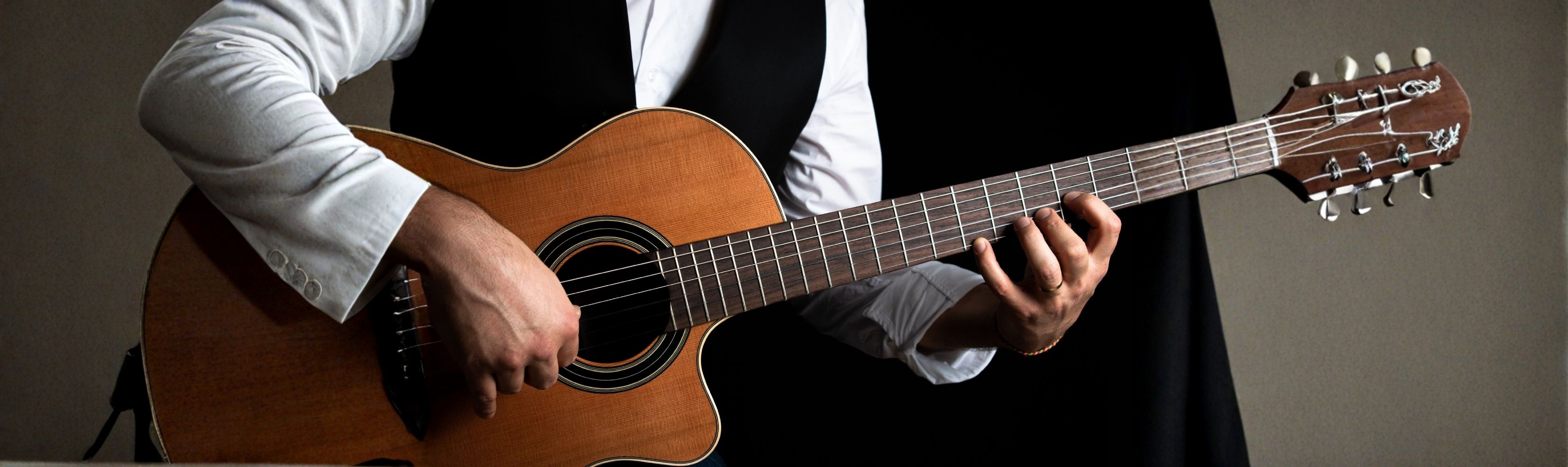
If Andalusia is known for anything, it is for flamenco and Spanish guitar, and this is where Paco de Lucía comes in, who brought flamenco guitar to international stages in the 1970s.

Although his music is mainly instrumental, it is essential for understanding Spanish musical culture. So, dare to listen to flamenco to familiarize yourself with the traditional rhythms and sounds of Spain.

9. Rocío Jurado and Lola Flores: icons of Spanish tradition

If there are iconic figures among famous Spanish-language singers, they are undoubtedly Rocío Jurado and Lola Flores. Both represent Spanish copla and folklore and became major cultural symbols of the 20th century.

Their influence went beyond music, as they helped spread a very recognizable image of Spanish culture both inside and outside the country.

Rocío Jurado, known as “La más grande” (The Greatest), developed her career in the 1960s and achieved great international fame, especially in Latin America. Songs such as “Como una ola,” “Se nos rompió el amor,” and “Ese hombre” stand out for their emotional intensity and powerful performances.

For her part, Lola Flores, nicknamed “La Faraona,” was a singer, dancer, and actress who stood out for her charisma and stage presence since the 1940s. Songs such as “A tu vera” and “Pena, penita, pena” are part of the history of Spanish copla.

10. Miguel Ríos: the pioneer of rock in Spanish

From the 1960s and especially in the 1980s, Miguel Ríos popularized rock in Spain with songs such as “Bienvenidos.” His direct style and everyday vocabulary can be very accessible for intermediate-level students.

11. Mecano: the most influential pop group

Mecano left its mark on an entire generation during the 1980s and 1990s with songs such as “Hoy no me puedo levantar,” “Hijo de la luna,” and “Mujer contra mujer.”

Their narrative lyrics, often telling complete stories, allow students to work on their comprehension of stories and the analysis of complex grammatical structures.

12. Héroes del Silencio: international Spanish rock

In the 1990s, Héroes del Silencio achieved international fame. Their poetic and symbolic lyrics are ideal for advanced students who want to delve deeper into the more literary Spanish found in rock music.

13. David Bisbal: 21st-century Spanish pop

David Bisbal has been one of the best-selling Spanish artists since he left the television program Operación Triunfo in 2000. His song “Ave María” is one of his greatest hits. But he also has songs with repetitive structures and catchy rhythms, which facilitate listening practice and vocabulary acquisition.

14. C. Tangana: the urban evolution of Spanish

C. Tangana represents the new Spanish music scene. With songs like “Tú me dejaste de querer,” he fuses tradition and urban sounds. This Spanish artist is recommended for students interested in current Spanish and contemporary expressions, especially at advanced levels.

More Spanish music artists you should know

In addition to the artists already mentioned, Spanish music has many other important figures who have marked different eras and styles. Getting to know them all is complicated, but among them you will find a wide variety of musical styles, different accents, registers, and forms of expression.

  • Manuel de Falla: 20th-century classical music
  • Plácido Domingo: opera and zarzuela tenor
  • Isabel Pantoja: copla
  • Estopa: mix of rumba and rock
  • La Oreja de Van Gogh: pop
  • El Canto del Loco: represents youth pop-rock
  • Vetusta Morla: indie/alternative
  • Malú: melodic pop
  • Aitana: contemporary Spanish pop
  • Pablo Alborán: pop ballads
  • Quevedo: urban / reggaeton
  • Amaral: combines pop and rock

As you can see, there are Spanish artists and singers for all genres. The enormous diversity of Spanish music offers you a unique way to improve your Spanish through different genres and eras.

Listening to Spanish songs to learn Spanish is an active way to improve your level if classes or intensive Spanish courses are not your thing. There are famous Spanish artists who offer varied styles and registers that can be adapted to different levels of learning. Music allows you to improve your pronunciation, expand your vocabulary, and better understand Spanish culture.

Culture Art Spain History Spain Traditions Spain Spanish singers. Discover the definitive list of famous Spanish famous singers to improve your Spanish through music. spanish singers, spanish famous singers, raphael spanish singer, rafael spanish singer Off to improve your level Marta Díaz

International Education Day | January 24

Submitted by analitica2 on Wed, 01/21/2026 - 09:13
International Education Day

International Education Day. Discover everything you need to know about International Education Day on January 24.International Education Day in Spain with don Quijote.

international day Education

International Education Day is celebrated every year on January 24, and its main objective is to recognize the role that education plays in society. As a Spanish language school, don Quijote knows firsthand the importance of education and is fully committed to making society more fair, inclusive, and sustainable thanks to it.

This day invites everyone to reflect on access to learning, educational quality, and the importance of lifelong learning. In an increasingly globalized world, knowledge and language skills open personal and professional doors. That is why education is consolidating its position as one of the most powerful tools for individual and collective development.

Origin of International Education Day

In 2018, the United Nations General Assembly established January 24 as International Education Day. The aim of adding this day to the calendar was to highlight education as an essential right, a public good, and a collective responsibility of society.

This day is part of the 2030 Agenda for Sustainable Development, particularly Sustainable Development Goal No. 4 (SDG 4), which seeks to ensure inclusive, equitable, and quality education, as well as to promote lifelong learning opportunities for all.

Thus, this day focuses on education as a driver of social, cultural, and economic change.

What is the main objective?

The main objective of International Education Day is to raise awareness among the population about the need to invest in quality education and ensure that no one is excluded from access to learning.

Among its goals are:

  • Defending universal access to education
  • Reducing educational inequalities
  • Promoting continuous learning
  • Strengthening international cooperation in education
  • Promoting training as the basis for social progress

Because education not only imparts knowledge, but also fosters values such as tolerance, critical thinking, and intercultural coexistence.

What does International Education Day seek to promote?

This day seeks to promote inclusive and accessible education for people of all ages and backgrounds, as well as quality education adapted to the challenges of today's world. It also seeks to promote multiculturalism, which fosters understanding between cultures, and a global education connected to international mobility and language learning

That is why learning foreign languages, such as Spanish, becomes a key tool for global communication, employability, and cultural exchange.

The social importance of this day lies in reminding us that without education, there can be no sustainable development. Educating the global population contributes directly to:

  • Reducing poverty
  • Improving employability
  • Promoting gender equality
  • Strengthening social cohesion
  • Promoting understanding between countries

For its part, language education plays an essential role in cultural integration and international mobility, allowing thousands of students to have transformative experiences in other countries and learn about other cultures.

Relevant data on education

Although you may think that this goal is consolidated and established throughout the world, the reality is quite different. Here are some facts that underscore the importance of International Education Day:

  • More than 250 million children and young people worldwide are not in school (UNESCO)
  • Approximately 70% of the jobs of the future will require language and digital skills
  • Studying abroad improves employability by up to 50%, according to various international studies

These figures highlight the need to commit to global, accessible, and quality education.

Education and studying Spanish as a foreign language

In keeping with the values promoted by International Education Day, don Quijote has been committed to providing quality education through Spanish language instruction to international students for decades.

Our Spanish courses are available in different destinations in Spain and Latin America. We don't just teach a language; we also offer a complete educational experience based on cultural immersion and communicative methodologies. Our qualified native teachers are trained to teach Spanish as a foreign language, and we have programs adapted to all ages and levels.

Learning Spanish in Spain with don Quijote means accessing an education that promotes intercultural understanding, personal growth, and connection with the Spanish-speaking world.

International Education Day reminds us that investing in learning is investing in the future. No matter what the goal, whether it is to improve career opportunities, have an international experience, or grow on a personal level, education is and will continue to be the key to transforming and improving lives.

Culture History Spain International Education Day. Discover everything you need to know about International Education Day on January 24. international day Education, international Education day Off Marta Díaz

Spanish flamenco dancers | Spain traditional dance flamenco

Submitted by analitica2 on Thu, 09/18/2025 - 11:53
Spanish flamenco dancers

Spanish flamenco dancers. Discover the most important figures in Spain traditional dance flamenco and how they rose to stardom in flamenco.

Spanish flamenco dancers

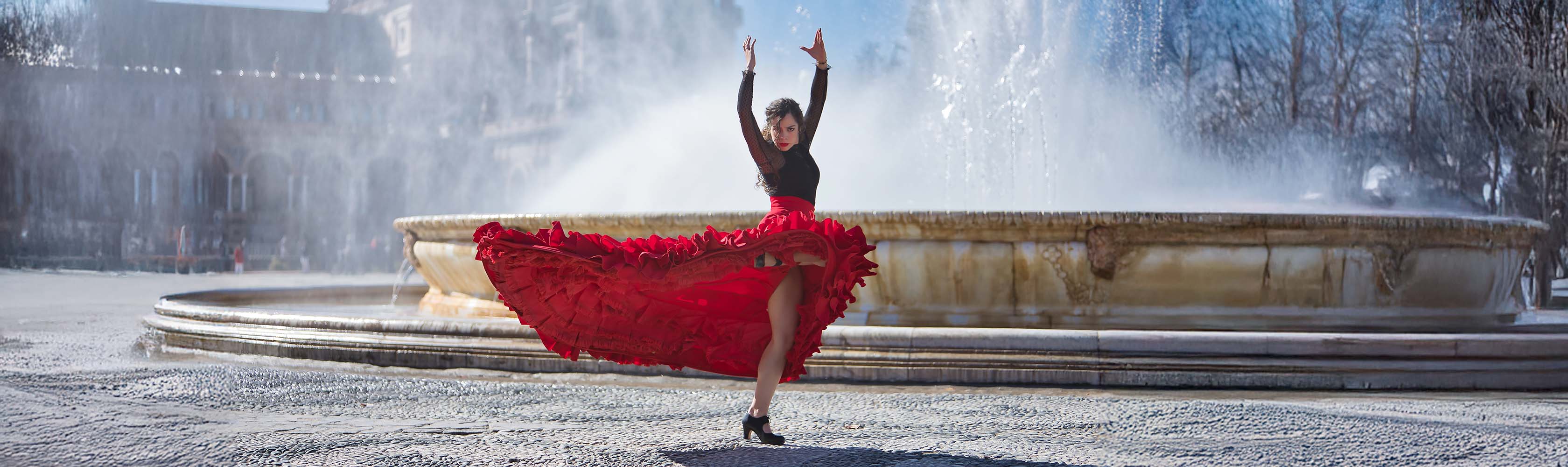
If Spain is known internationally for anything, it is for flamenco. Although it is a dance that is mainly practiced in Andalusia and not by all Spaniards, outside our borders it is a major attraction for tourists.

Flamenco dancing is one of the fundamental pillars of this Andalusian art, along with singing and guitar playing. Over the centuries, numerous Spanish flamenco dancers have left their mark with their technique, personality, and ability to transform this discipline into something magnificent.

That's why we at don Quijote want to introduce you to some of the essential figures who have shaped this dance from its origins to the present day.

Vicente Escudero (1888-1980)

Vicente Escudero was one of the great innovators of flamenco dance in the 20th century. In addition to being a virtuoso, Escudero conceived flamenco as a dance with its own artistic identity, developing his famous Decalogue of the Good Dancer.

He sought purity and sobriety, avoiding theatrical exaggeration in each performance. His interpretation of the farruca is remembered as one of the milestones of his personal style, austere and deeply expressive.

Faíco (Francisco Manzano Heredia, 1932-1993)

Francisco Manzano Heredia, better known as Faíco, stood out for his strength and elegance. This gypsy dancer belonged to the Pelaos family and was a leading figure in the tablaos during the middle decades of the 20th century. He also contributed new forms to the dance, especially in styles such as the farruca and the garrotín. His style combined great technical precision with an overwhelming stage presence.

Carmen Amaya (1913-1963)

Considered one of the greatest Spanish flamenco dancers in history, Carmen Amaya revolutionized this dance with her wild energy, her mastery of zapateado (footwork) and her way of moving across the stage.

Amaya broke gender stereotypes, dancing with the same power as the men, which led her to become an international figure who took flamenco to stages around the world. You can learn more about Carmen Amaya in this video: Carmen Amaya: The dancer who shook flamenco.

Antonio Gades (1936-2004)

Gades was a famous dancer and choreographer who played a key role in the professionalization of stage flamenco. He conceived dance as a narrative and theatrical art, creating productions that integrated dance, drama, and music, such as Bodas de Sangre, Carmen, and El Amor Brujo. He also brought flamenco to the cinema, introducing it to new audiences. His style was characterized by refinement, restraint, and a deep respect for the essence of flamenco.

Merche Esmeralda (b. 1947)

Merche Esmeralda represents the generation that took flamenco from the tablao to the academic stage. She was a member of the Spanish National Ballet and toured internationally extensively.

Her dancing combines elegance, technical precision, and musicality. She has also played an important role as a teacher, training new generations of Spanish flamenco dancers.

Pastora Imperio (1889-1979)

She was one of the first great stars of stage flamenco. Pastora Imperio is known for her elegance, majestic presence, and expressiveness. She also helped shape the stage style of flamenco in the first half of the 20th century. She influenced an entire generation and became a symbol of classical flamenco.

Eva Yerbabuena (b. 1970)

One of the most respected flamenco dancers today is Eva Yerbabuena. Her work combines deep tradition with a constant search for choreographic innovation. This Spanish flamenco dancer is known for her emotional intensity, expressiveness, and use of her entire body in her choreography. She has taken flamenco to international stages and influenced many contemporary artists.

Sara Baras (b. 1971)

Known for her impeccable technique and great sense of rhythm, Sara Baras has managed to popularize flamenco around the world without losing its roots. Her shows are large-scale productions that combine classical elements with modern staging, appealing to both specialists and new audiences. She has been instrumental in keeping flamenco alive and constantly evolving in the 21st century.

Rafael Amargo (b. 1975)

Rafael Amargo is a dancer and choreographer from Granada who trained in classical flamenco but soon began to mix it with contemporary dance and theater. His shows, such as Poeta en Nueva York, have been performed internationally. He is known for his great stage energy, charisma, and willingness to break the mold within flamenco.

Joaquín Cortés (b. 1969)

Joaquín Cortés began his career with the Spanish National Ballet and went on to become one of the world's most famous Spanish flamenco dancers. His style combines flamenco with contemporary dance, bringing spectacular stage presence, drama, and great technique. He has taken flamenco to major international theaters, bringing it to a wide range of audiences.

Farruquito (b. 1982)

A descendant of the Farruco flamenco dynasty, Spanish flamenco dancer Farruquito is considered one of the greatest exponents of pure flamenco today. His dancing is characterized by its power, technical mastery, and fidelity to the Andalusian gypsy tradition.

Antonio Canales (b. 1961)

Antonio Canales trained at the Spanish National Ballet and later founded his own company. Canales is renowned for his strength, character, and enormous stage presence. He has renewed the choreographic language of flamenco and has been part of seminal shows, as well as being internationally awarded and recognized.

All these artists share certain characteristics that define them as Spanish flamenco dancers: great technical mastery, a strong artistic personality, and an ability to convey emotion. Flamenco dance remains a living art form, in which tradition and innovation coexist. If you want to discover more about flamenco or improve your language skills, come to don Quijote to learn Spanish in Spain and fall even more in love with this dance.

Culture Art Spain History Spain Traditions Spain Spanish flamenco dancers. Discover the most important figures in Spain traditional dance flamenco and how they rose to stardom in flamenco. spanish flamenco dancers, spain traditional dance flamenco Off Marta Díaz

Spanish Culture: History | donQuijote's blog

Submitted by Anonymous (not verified) on Tue, 05/12/2020 - 16:41
Learn more about Spanish History around the world in countries like Spain, Colombia and Argentina. Discover important moments in History Spanish Culture: History Spanish history is fascinating and it has helped to shape the modern world into what it is today. Read on to discover the timeline of Spanish history, the story of a land that has been sought after by many civilizations, and how life was before and after the colonization of America. spanish history
spanish history History Discover more important moments of the spanish history <svg xmlns="http://www.w3.org/2000/svg" width="58" height="58" viewBox="0 0 58 58"><metadata><?xpacket begin="" id="W5M0MpCehiHzreSzNTczkc9d"?><x:xmpmeta xmlns:x="adobe:ns:meta/" x:xmptk="Adobe XMP Core 5.6-c138 79.159824, 2016/09/14-01:09:01"><rdf:RDF xmlns:rdf="http://www.w3.org/1999/02/22-rdf-syntax-ns#"><rdf:Description rdf:about=""/></rdf:RDF></x:xmpmeta><?xpacket end="w"?></metadata><defs><style> .cls-1 {fill: #d2283d; fill-rule: evenodd; }</style></defs><path id="Forma_1" data-name="Forma 1" class="cls-1" d="M601.032,1143.2h-2.9a3.867,3.867,0,0,0-2.9-3.74v-13.78a3.878,3.878,0,0,0,2.9-3.75H599.1a0.964,0.964,0,0,0,.967-0.96v-2.9h0.966a0.966,0.966,0,0,0,.315-1.88l-17.714-6.11v-8.45a10.633,10.633,0,0,0-21.266,0h0v8.45l-17.715,6.11a0.967,0.967,0,0,0,.316,1.88h0.966v2.9a0.964,0.964,0,0,0,.967.96h0.967a3.879,3.879,0,0,0,2.9,3.75v13.78a3.867,3.867,0,0,0-2.9,3.74h-2.9a0.966,0.966,0,0,0-.967.97v3.86a0.966,0.966,0,0,0,.967.97h56.064a0.966,0.966,0,0,0,.967-0.97v-3.86A0.966,0.966,0,0,0,601.032,1143.2Zm-4.833,0h-9.666a1.93,1.93,0,0,1,1.934-1.93h5.8A1.93,1.93,0,0,1,596.2,1143.2Zm-16.432,0a3.867,3.867,0,0,0-2.9-3.74v-13.78a3.878,3.878,0,0,0,2.9-3.75H584.6a3.878,3.878,0,0,0,2.9,3.75v13.78a3.867,3.867,0,0,0-2.9,3.74h-4.833Zm-18.366,0a3.867,3.867,0,0,0-2.9-3.74v-13.78a3.878,3.878,0,0,0,2.9-3.75h4.833a3.878,3.878,0,0,0,2.9,3.75v13.78a3.867,3.867,0,0,0-2.9,3.74H561.4Zm-8.7-17.4h3.866v13.53H552.7V1125.8Zm18.366,0h3.866v13.53h-3.866V1125.8h0Zm4.833-1.93h-5.8a1.938,1.938,0,0,1-1.933-1.94h9.666A1.938,1.938,0,0,1,575.9,1123.87Zm-5.8,17.4h5.8a1.93,1.93,0,0,1,1.933,1.93h-9.666A1.93,1.93,0,0,1,570.1,1141.27Zm23.2-1.94h-3.866V1125.8H593.3v13.53Zm0.967-15.46h-5.8a1.938,1.938,0,0,1-1.933-1.94H596.2A1.938,1.938,0,0,1,594.266,1123.87Zm-14.5-15.13v-6.14H581.7v6.81Zm-9.667-6.14v4.81l-1.933.67v-5.48H570.1Zm1.934,0h1.933v4.14l-0.652-.22a0.971,0.971,0,0,0-.63,0l-0.651.22v-4.14h0Zm3.866,0h1.933v5.48l-1.933-.67v-4.81Zm-2.9-9.67a8.714,8.714,0,0,1,8.647,7.74H564.354A8.713,8.713,0,0,1,573,1092.93Zm-8.7,9.67h1.933v6.14l-1.933.67v-6.81Zm8.7,5.86,22.264,7.67H550.736ZM547.867,1120v-1.93h50.265V1120H547.867Zm1.934,1.93h9.666a1.938,1.938,0,0,1-1.933,1.94h-5.8A1.938,1.938,0,0,1,549.8,1121.93Zm1.933,19.34h5.8a1.93,1.93,0,0,1,1.933,1.93H549.8A1.93,1.93,0,0,1,551.734,1141.27Zm48.332,5.8H545.934v-1.94h54.132v1.94h0Z" transform="translate(-544 -1091)"/></svg>
Hispanic Heritage in the United States | donQuijote

Submitted by Anonymous (not verified) on Mon, 11/11/2019 - 01:00
Hispanic Heritage in the United States Hispanic Heritage in the United States

Spanish Presence in North America

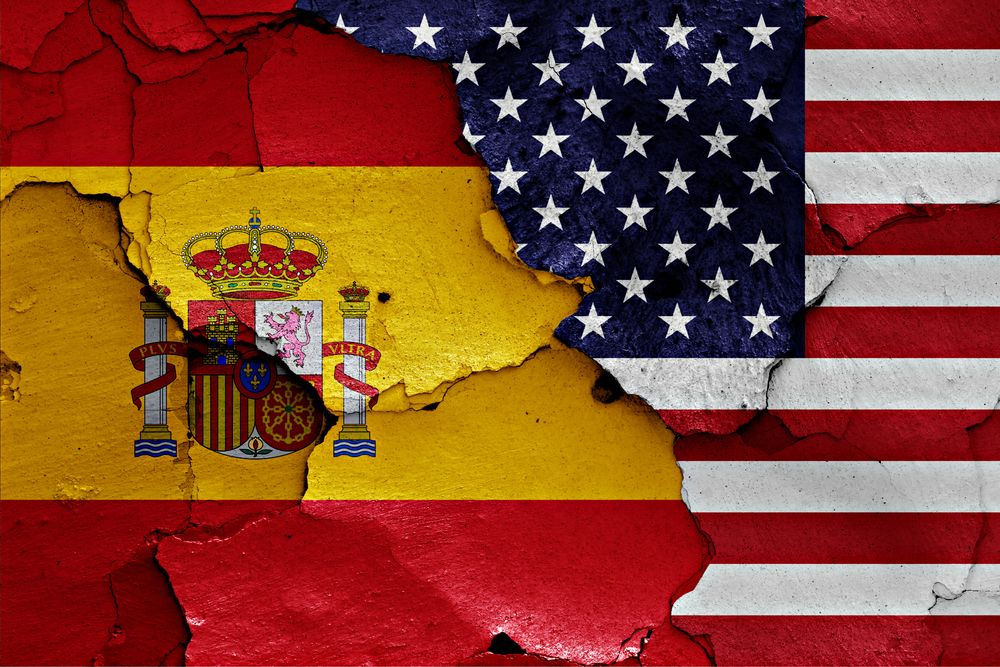
For about 300 years, Spain played a conspicuous role in the History of the United States, leaving a significant footprint in the country. During this period, Spanish traditions were exported by the settlers, who had a big influence on North America’s culture and customs. Click here to continue reading in Spanish.

Spain was present in the States for 309 years, and its heritage is still alive. Since Juan Ponce de León landed on the coast of Florida on April 12, 1513, many historic events involving Spanish people took place: Mexico’s Independence in 1822, the Pacific Ocean exploration and the role of the Spanish Monarchy in the Independence of the US are present in many monuments, symbols and place names around the country.

Place Names

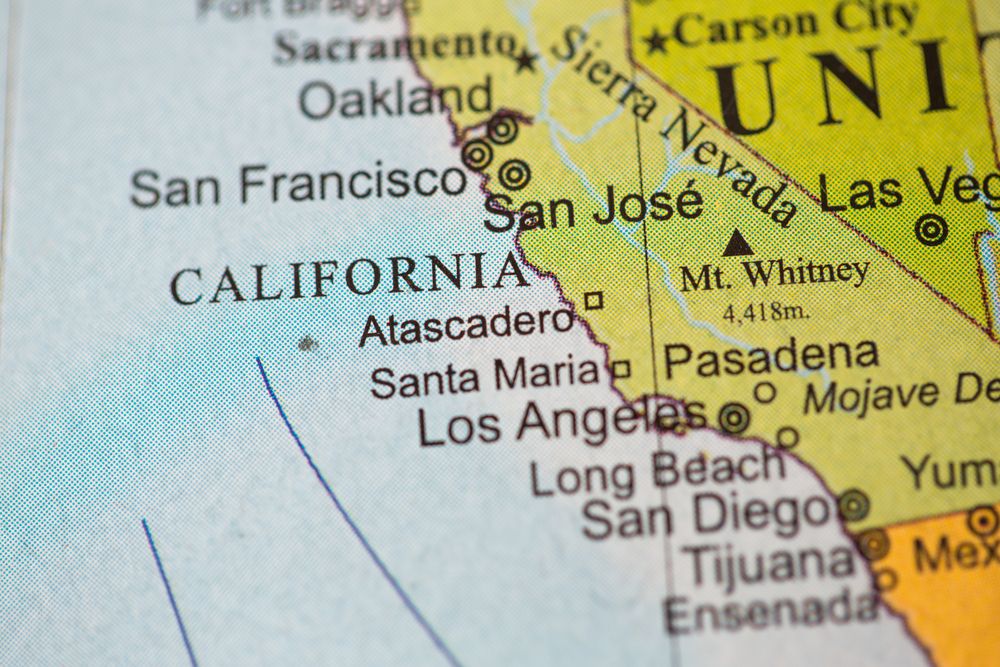
California map

Hispanic influence remains present in place names all around the United States. San Agustín, the oldest city in the US, was founded by Spanish explorers. So were San Francisco, San Antonio, Tucson, Los Ángeles, Santa Fe or San Diego. Besides, many places in the country still preserve the name that Christian missions, fortifications and Spanish settlers gave them: Amarillo, Arizona, Alcatraz, Boca Ratón, Bahía Morro, California, Cañaveral, Colorado, Florida, Madre de Dios, Montana, Nevada, Nuevo México, Pima y Tiburón, Puerto Rico and Texas.

Some islands and territories in the State of Washington do also have a Spanish name: San Juan, López, Fidalgo, López y Cortés. In Canada, Victoria and Isla Galiano are also good examples; and in Alaska we have Valdez and Córdova.

In the geography of the States we can also find several rivers with a Spanish name: Bravo, Sacramento, Colorado, Grande.

El origen español del dólar

Spanish dollar

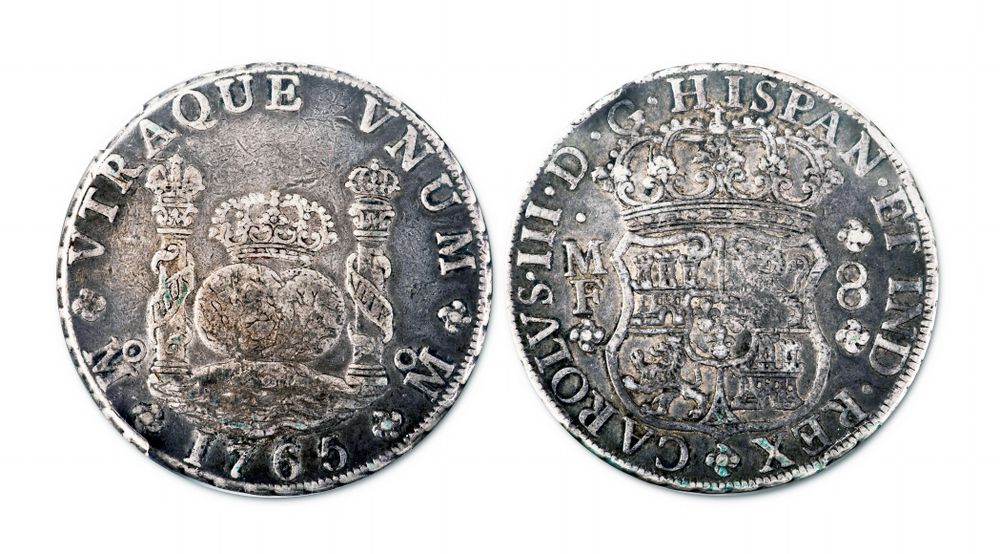
The dollar was born in 1787 at the United States Congress. What many people ignore is that it was the equivalent to the Spanish duro and the dollar symbol ($) finds its roots in the Pillars of Hercules (Gibraltar), built to represent the Greek vision of the end of the world.

Besides, the so-called Spanish Dollar (real de a 8) was employed as hard currency in the States until 1857. It got even more popular than the American dollar for two reasons: it was thinner, and it weighed less, although it had a greater amount of silver. It was present in the New York Stock Exchange until 1997.

Spanish Symbols in the United States

  • The Spanish flag is in the Texas shield.
  • One of the six Texas flags is the one Castilla y León (a Spanish region)
  • The confederate flag contains Saint Andrew’s cross, the symbol of the Spanish air forces.
  • The Spanish flag still stands on the Castillo de San Marcos at St. Augustine, first fort built by the Europeans in the States.
  • The shield of Los Angeles City contains the shield of Castilla y León and the date of the Spanish settling.
  • The flag of Cupertino, Apple Silicon Valley’s headquarters, shows the helmet of Spanish explorers.
  • Arizona’s flag has 13 red and yellow bars honoring the 13 colonies and the Spanish flag colors.

Spanish Landmarks in the US

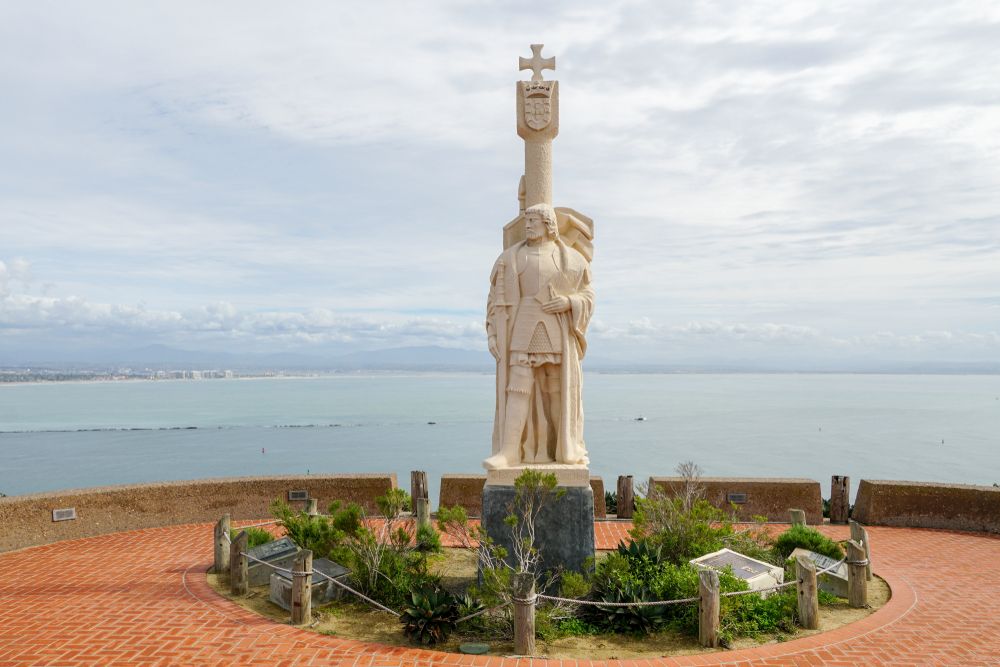
  • Cabrillo National Monument. It marks the location of the first European sea voyage, which departed from California in 1542 ruled by Juan Rodríguez Cabrillo.
  • Coronado National Memorial. It commemorates Francisco Vásquez de Coronado’s expeditions, that went all the way from Mexico City up to Kansas.
  • Hernando de Soto’s Expedition Landing Mark, 1539.
  • The Statue of Ponce de León, Saint Augustine.
  • The Statue of Juan de Oñate, El Paso Airport. It is the tallest equestrian statue in the world, with 59 feet high, and it weighs 18 tons.
  • St. Louis Cathedral, New Orleans. It hosts both the Spanish flag and the one of Castilla y León.
  • Statues of El Cid in New York, San Diego’s Balboa Park, and San Francisco’s Lincoln Park.
  • Sculptures of Isabella I of Castille at the Capitol of the State of California and at the Organization of American States building in Washington.

The lists above are just a brief summary of the Spanish legacy in the US. You surely are aware of the importance of the Spanish language in this country, where the Hispanic population is expected to reach 99.8 million by 2050. But did you know that there are many more remote places where Spanish is also a key language? Find out which ones with our video.

Culture History For about 300 years, Spain played a conspicuous role in the History of the United States, leaving a significant footprint in the country. Off <!-- Revive Adserver Etiqueta JS asincrónica - Generated with Revive Adserver v5.0.2 --><ins data-revive-zoneid="7" data-revive-id="ec923599c3fad9b044f22a6a73433428"></ins><script async src="//ads.iegrupo.com/www/delivery/asyncjs.php"></script> Patricia Mendez

Women Who Changed the World | donQuijote

Submitted by Anonymous (not verified) on Thu, 03/14/2019 - 01:00
Women Who Changed the World Women Who Changed the World

On March 8, International Women’s Day, hundreds of thousands of people took to the streets in a mixture of protest and celebration. In today’s world, there is no shortage of events that fuel the fire and desire to fight for a better future.

Even as we continue to march down the long road ahead, it’s valuable to look back and see how far we’ve come. In this post, we’ll draw inspiration from the past by highlighting five female forces who have changed the face of the Spanish-speaking world. Click here to enjoy reading this post in Spanish.

Clara Campoamor

(1888-1972)


Best known as one of the mothers of feminism in Spain, Clara Campoamor came from humble beginnings in Madrid and had to leave school and enter the workforce at the age of 10 after the death of her father. But she didn’t let personal hardships didn’t stop her; by the time she was in her 30s she had become a lawyer and an activist who wrote pieces in the newspaper at a time when more than half of Spain’s population was illiterate.

When the dictatorship of Primo de Rivera fell in 1930, Campoamor was determined to fight for the democratic principle of equality for all. She joined the leftist Radical Party and was elected as a Madrid representative. (Oddly enough, at this time women could be elected for public office although they couldn’t vote themselves.) In an intense debate on October 1, 1931, Campoamor defended women’s suffrage on the floor of Parliament. Thanks to her determination, women’s right to vote was enshrined in the Spanish Constitution of 1931.

This victory for democracy was shortlived. The Spanish Civil War began in 1936 and was followed by decades of dictatorship. No Spaniard, man nor woman, was able to vote in general elections again until 1977. Campoamor fled Spain after the military coup in ’36 and was unable to ever return. Today, she is honored around the country with statues as well as streets, plazas, and schools named after her.


La libertad se aprende ejerciéndola

Freedom is learned by practicing it


María Zambrano

(1904-1991)

Another great thinker who went into exile after the Spanish Civil War was María Zambrano. Arguably one of the most original Spanish philosophers of the 20th century, in 1988 she became the first woman to receive the Miguel de Cervantes Prize.

Zambrano was best known for the concept she coined poetic reason. Her philosophy was an attempt to resolve the crisis of Western reason and rationalism. As she saw it, rationalism excludes many aspects of reality that are fundamental to the human experience. By accepting only that which can be rationally explained as real, emotions, dreams, creativity, and even the human soul are denied. With poetic reason, Zambrano insisted on the need for poetry within every philosophy.

“El corazón es centro, porque es lo único de nuestro ser que da sonido”

The heart is the center because it is the only thing in our being that makes a sound


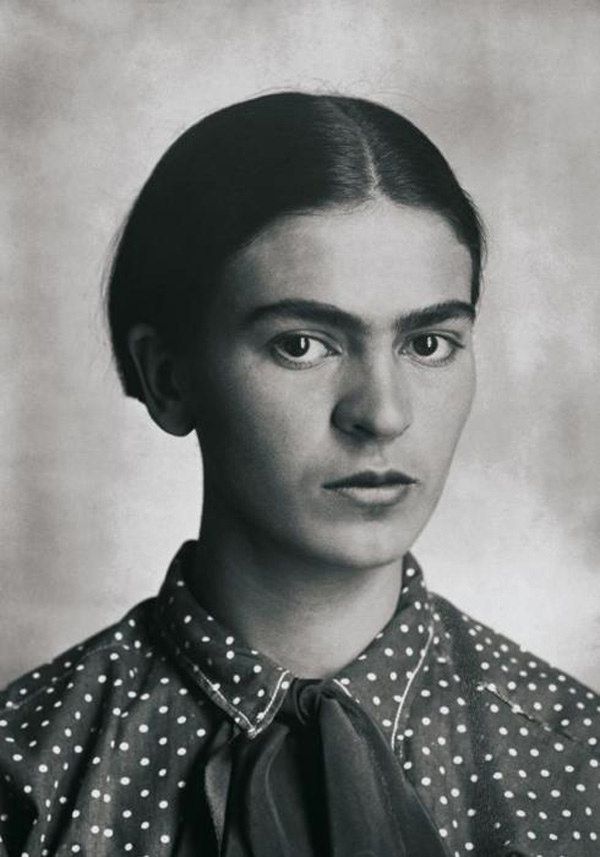
Frida Kahlo

(1907-1954)

This iconic Mexican artist is remembered for her imaginative paintings, mostly self-portraits, that often depict intense physical and emotional pain while incorporating elements of Mexican folk art, indigenous culture, and nature.

Along with her deeply personal art, Kahlo is widely admired for the incredible internal strength she showed throughout her life despite many physical hardships, chronic pain, and around 30 surgeries. Even when her leg was amputated, she managed to stay positive.

“Pies para qué los quiero si tengo alas para volar”

Feet, what do I need them for if I have wings to fly


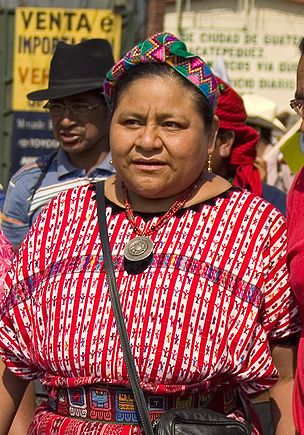
Rigoberta Menchú

(1959-present)

A member of the Quiché Maya group, Menchú has spent her life fighting for the rights of indigenous peoples. When she was young, her and her family’s activism led them to be persecuted by Guatemala’s military government. Her father died in a fire while protesting human rights abuses committed by the military, while her mother and younger brother both suffered violent deaths at the hands of the military.

Menchú fled the country in 1981 and stepped onto the international stage in 1983 to tell her story. Living abroad, she has continued to work against oppression in Guatemala and fight for the rights of the underprivileged. She received the Nobel Peace Prize in 1992 for her dedication to social justice. Menchú ran for president of Guatemala in 2007 and 2011 and is a UNESCO Goodwill Ambassador.

“No hay paz sin justicia, no hay justicia sin equidad,

no hay equidad sin desarrollo, no hay desarrollo sin democracia,

no hay democracia sin respeto a la identidad y dignidad de las culturas y los pueblos”


There is no peace without justice, no justice without fairness,

no fairness without development, no development without democracy,

no democracy without respect for the identity and dignity of cultures and peoples.


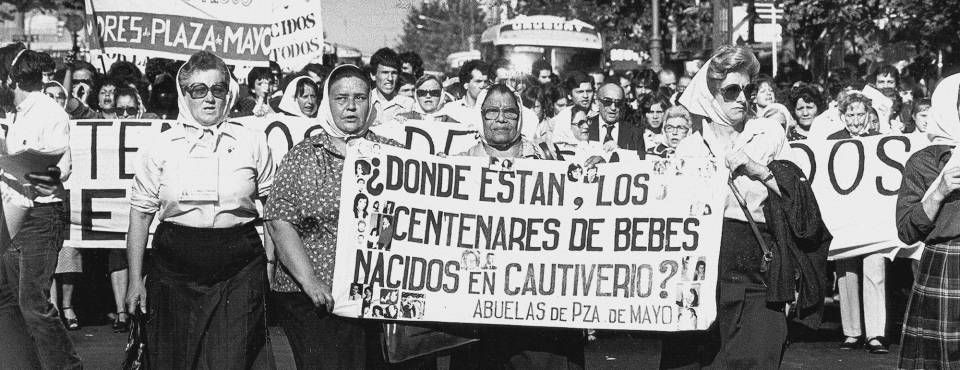
Las Abuelas de la Plaza de Mayo

(1977-present)

The Grandmothers of the Playa de Mayo is a human rights organization founded by a group of Argentinian women to find the children who were “disappeared” by the Argentinian dictatorship and return them to their families.

From 1974 to 1883, during Argentina’s Dirty War, the military regime “disappeared” tens of thousands of liberal thinkers and dissidents. Hundreds of babies were taken from political prisoners at birth or kidnapped along with their parents. While their parents were killed by the regime, the stolen babies were illegally adopted by military families and allies of the regime. This was a strategy to do away with a second generation of dissidents. The babies grew up with no knowledge of who their real parents were or what had happened to them—in most cases, they didn’t even know they had been adopted.

But their grandmothers were determined to find them. They dared to speak out and fight to find their family members even while the violent regime was still in power. Las Abuelas have marched in Buenos Aires’ main square, Plaza de Mayo, every week since they began their struggle for truth and justice. So far, from 1977 to 2018, they have found 128 grandchildren.

“La única lucha que se pierde es la que se abandona”

The only struggle that is lost is that which is abandoned


Throughout history, there have always been brave women ready to step outside the confines of the status quo. Some say that the future is female — it’s nice to remember that the past was, too.

History Women in the World. On March 8, International Women’s Day, hundreds of thousands of people took to the streets in a mixture of protest and celebration Off <!-- Revive Adserver Etiqueta JS asincrónica - Generated with Revive Adserver v5.0.2 --><ins data-revive-zoneid="7" data-revive-id="ec923599c3fad9b044f22a6a73433428"></ins><script async src="//ads.iegrupo.com/www/delivery/asyncjs.php"></script> Vanessa Johnson

Mercado de la Lonja del Barranco | donQuijote

Submitted by Anonymous (not verified) on Mon, 02/26/2018 - 01:00
Mercado de la Lonja del Barranco, much more than a market. Mercado de la Lonja del Barranco, much more than a market.

Today we decided to go for a "mercantile" trip around the city of Seville. We are going to visit one of the most important markets in the city and tell you all the secrets, so when you visit Seville you know where to go.

Let's discover Seville!

Let's go directly to the Mercado Lonja del Barranco.

We have been told that it is one of the coolest places to go and enjoy the gastronomy of the city, so let´s see if it's true.

Read the Spanish version

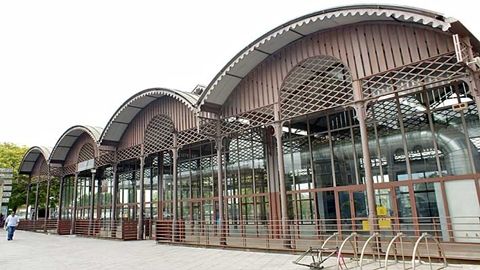
After a walk along the river, we arrived at the market at 11.00 am, an hour after they opened so we wouldn´t be crowded with people. The first thing we see already leaves us speechless. On the outside, we see a fish market which was created many years ago and remains its structure. However, once you walk inside we discover a new modernized world.

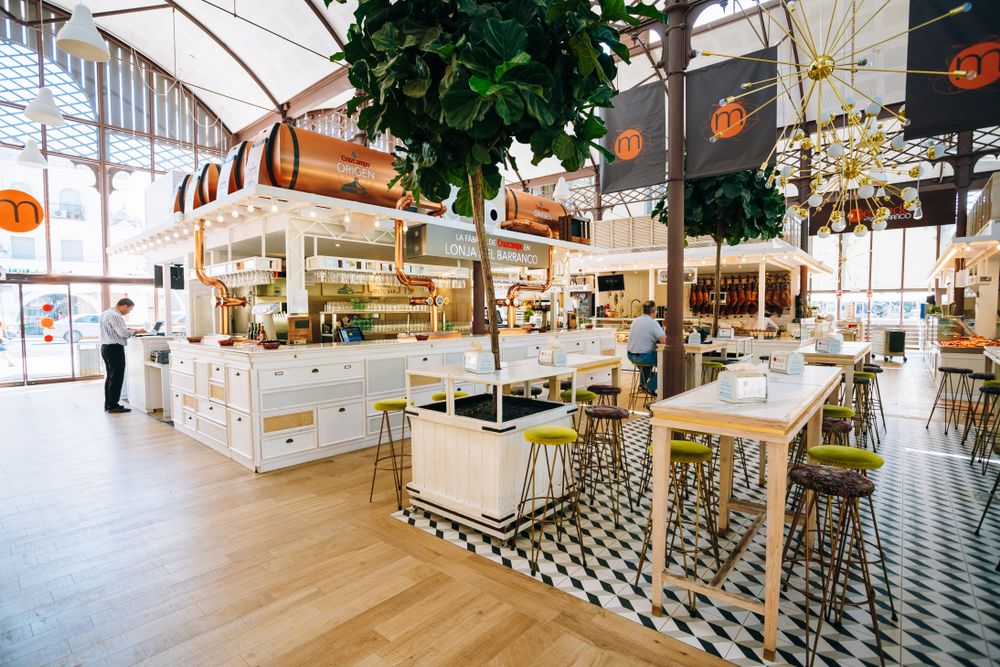
As you enter El Mercado del Barranco we see that it is not well-lit. They say it´s because of its high ceilings and large windows that allow the sun of Seville to shine inside the market.

After taking a few pictures, we started walking inside the market and, at a glance, we calculated that there are at least 20 different stations. After a quick tour of a small part of the market, we decided to grab a refreshment but there was a problem. How are we going to pick one station out of 20?

We met different people around the market and asked them where should we go, which brewery should we try, and what was their favorite cocktail bar or a wine bar? After thinking about it for a while, we decided to stop by the brewery they recommended and it was awesome. However, we had to stop there and save the other two options for the next visit because it was clear that we had to return for more fun.

From a distance, you can distinguish the brewery for its tremendously large barrels above it.

After a while, we realized loads of people entering the market from all directions. From curious people stopping by each station to tourists from around the world. It was like visiting a different world with such an amazing atmosphere. El Mercado del Barranco is next to the Guadalquivir River, we walked around the terrace and the views were impressionable. A trip to Seville is completely worth it, we promise.

Between one thing to another, the time went flying by and it was lunchtime! However, we were indecisive about what to eat? An Appetizer or the main course?

Not having a clue what to pick we took the opportunity to visit several food stations and tried a little bit of everything. Without a doubt, it was the best decision we made.

The market has such a gastronomic variety of food that it was impossible for us to go everywhere. They had appetizers, tapas, desserts, octopus, empanadas, croquettes, seafood, cheese, ham, rice ... We will be back!

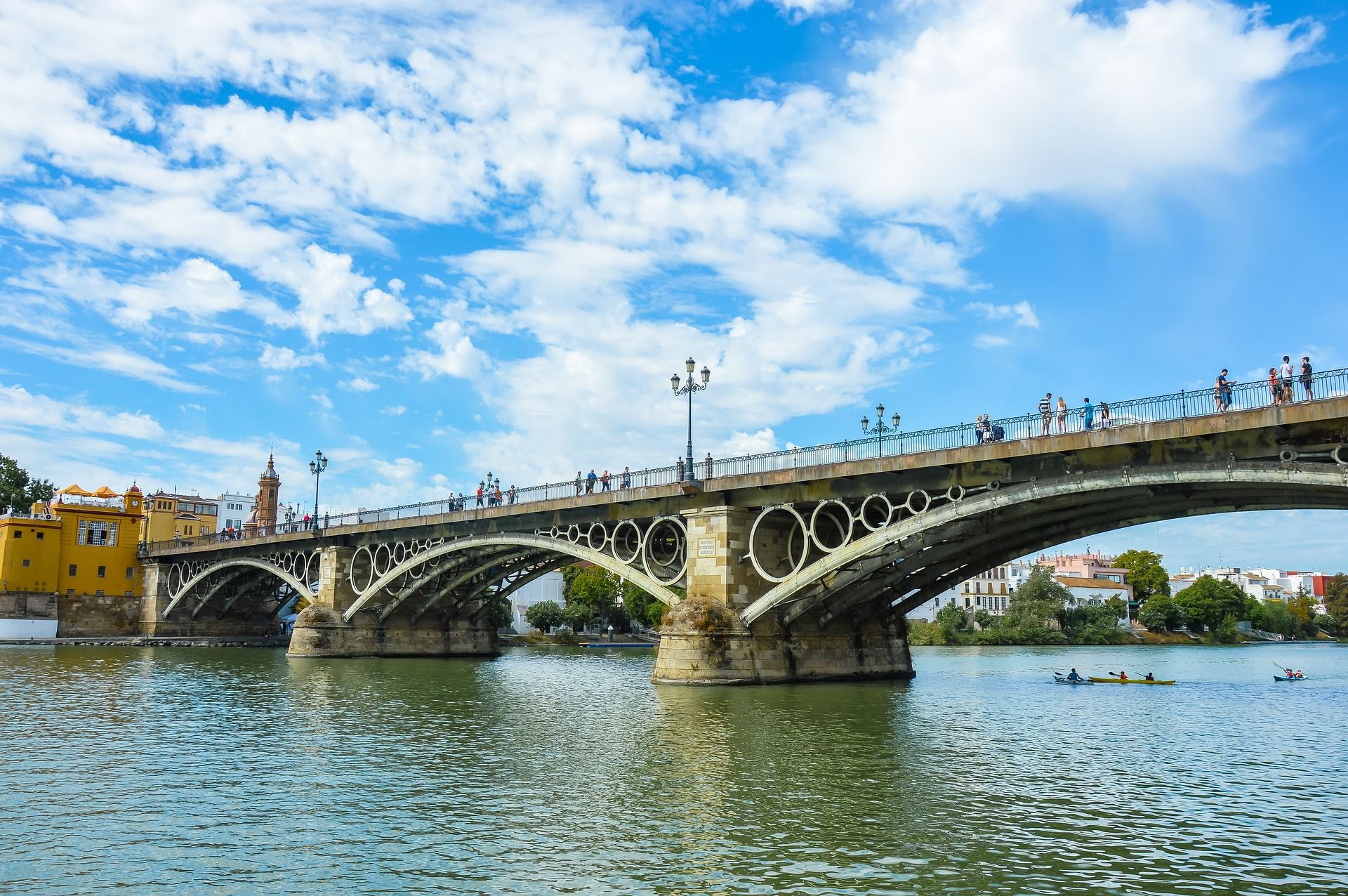
We had such a great time discovering new and unique selections. When you go, you must dedicate time so you can visit most of the stations there. Also, before you leave you must watch the sunset on the terrace while you enjoy some flamenco. From there you can see all of Seville, the Guadalquivir, and even the Triana bridge!

Pack your bags, go to Seville, learn Spanish and let yourself fall in love with the city.


See you soon!

Seville History Mercado de la Lonja del Barranco, Seville: much more than a market. Off <!-- Revive Adserver Etiqueta JS asincrónica - Generated with Revive Adserver v5.0.2 --><ins data-revive-zoneid="7" data-revive-id="ec923599c3fad9b044f22a6a73433428"></ins><script async src="//ads.iegrupo.com/www/delivery/asyncjs.php"></script> Trad by Mark

All about Ecuador | donQuijote

Submitted by Anonymous (not verified) on Mon, 11/24/2014 - 01:00
All about Ecuador Ecuador, the land of the Incas and the equator. It is a country with a rich history and a thriving culture. All about Ecuador

Ecuador, the land of the Incas and the equator. It is a country with a rich history and a thriving culture. With influences mainly from Hispanic cultures, Ecuador is vibrant and varied. Varied in culture, but also definitely in landscapes. Ecuador is the country with one of the greatest biodiversity and has much to offer.

  • Ecuador is located in the middle of the equator and owes its name to that as well.
  • It all started with the indigenous Indian tribes and the Incas.
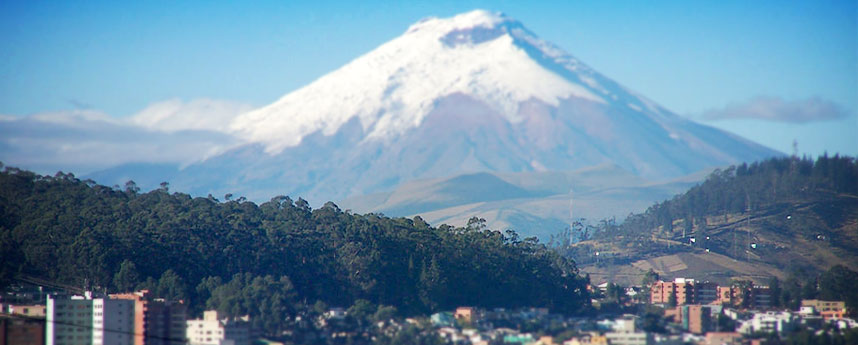
  • From Indians with colored ponchos to rumbling volcanoes, Ecuador has it all.

Spanish Word for "Equator"

Officially, the country is called: República del Ecuador (Republic of Ecuador). It got this special name due to the fact that it is located in the middle of the equator. This has given it not only a high temperature throughout the year, but also the name of the country. In fact, the Spanish translation of equator is ecuador. Ecuador is located in western South America and borders Colombia to the north and Peru to the east and south. As many as 14 different languages are spoken in the country, but only one is an official language; 94% of Ecuador's population speaks Spanish, with the rest speaking vernacular languages. Like any country, Ecuador has a number of major cities. The largest city is Guayaquil, however the capital is Quito. With its historic cities and rich Inca history, among other things, Ecuador is now on UNESCO's World Heritage List. The current presidential republic has left a great trail in world history.

Ecuador's history goes back to before the 15th century. The Incas were very important to Ecuador, but before they arrived, the country was filled with different Indian cultures. Most of the tribes words on the coast and in the highlands. The two most important tribes were the Quitus and the Caras. When the Incas settled in Ecuador in the 15th century, the empire expanded rapidly. The center of the Inca empire was Cuzco. In the 16th century, Ecuador was conquered by Spanish conquistadores and was a Spanish colony for about 300 years. The first city to become independent was Guayaquil, yet not all of Ecuador became independent immediately and for a short time the country remained part of the Republic of Greater Colombia. It wasn't until 1830 that Ecuador gained full independence when the Republic of Greater Colombia fell apart. From this time on, the country was very unstable and had many different leaders. Today it is a thriving, presidential republic.

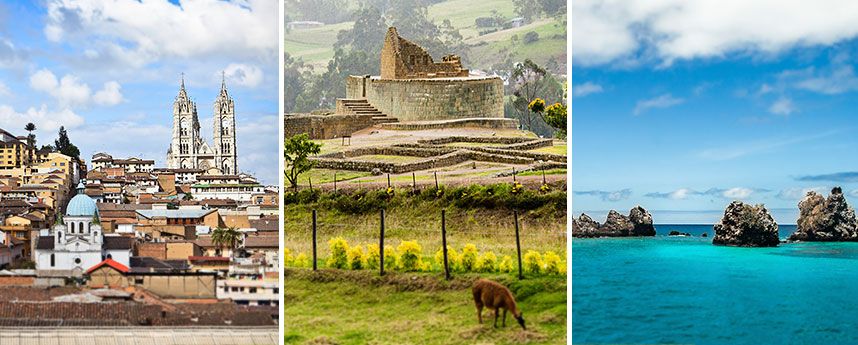
The small but oh so versatile country of Ecuador has it all. From living volcanoes to beautiful waterfalls in the Amazon and from indigenous Indian tribes with colorful ponchos to colonial cities. Plus through-the-mountains-walking llamas and a jungle with monkeys. Ecuador has something for everyone and you will never be bored. The country can be divided into four zones: the Galapagos Islands (which are also part of Ecuador), the coast in the west, the Andes mountains in the middle of the country and the Amazon rainforest in the east.

Ecuador is one of the poorest countries in South America. As many as 45% of the population lives below the poverty line. In addition, there is high illiteracy, despite free and otherwise compulsory schooling for children aged 6 to 14. Because of poverty, children leave school early to go to work, a problem found in many poor countries. But despite the poverty, it is a beautiful country with very friendly and hospitable people. Ecuador also has some great things to offer tourists; besides the big cities of Guayaquil, Quito (capital) and Cuenca, the Sangay National Park and the special Galapagos Islands are very popular. Ecuador is vibrant and alive! Ecuador has it all!

History Ecuador, the land of the Incas and the equator. It is a country with a rich history and a thriving culture. ecuador,equator,quito,amazon region,incas,cuenca ecuador,guayaquil ecuador,galapagos islands,countries of south America Off <!-- Revive Adserver Etiqueta JS asincrónica - Generated with Revive Adserver v5.0.2 --><ins data-revive-zoneid="7" data-revive-id="ec923599c3fad9b044f22a6a73433428"></ins><script async src="//ads.iegrupo.com/www/delivery/asyncjs.php"></script> Daphne Nossels

The Battle of Pichincha. Spain and Ecuador | donQuijote

Submitted by Anonymous (not verified) on Mon, 05/19/2014 - 02:00
The Battle of Pichincha The Battle of Pichincha is the last battle of the independence struggle between Spain and Ecuador. Annually on May 24, the people commemorate this battle.  battle of pichincha

Equador, the Spanish name for the word Equator. As such, the country lies on the zero line that divides the world into the northern and southern hemispheres. It is surrounded by Peru, Colombia and the Pacific Ocean. The country has a thriving tradition of national holidays, festivals and celebrations. Colorful and lavish celebrations occur monthly and are part of Ecuadorian culture. These holidays often center on the country's history. Every year on May 24, the people of Ecuador celebrate their independence and commemorate the defeat of the Spanish in 1822. This event is known as the “Battle of Pichincha".

  • The Battle of Pichincha is the last battle of the independence struggle between Spain and Ecuador. Every year on May 24, the people commemorate this battle and celebrate their freedom.
  • The name “Battle of Pichincha” comes from the volcano Pichincha, which is located next to the capital Quito. The battle took place on the slopes of the volcano, hence the name.
  • The celebrations on May 24 consist of parades with children or with military personnel in the larger cities. Through this parade, Ecuadorians honor the country's history and show their pride. There is also much partying, drinking and, above all, enjoying the day off.

Ecuador was first conquered by the Spanish in 1534 under the leadership of Francisco Pizarro. They founded the city “Muy noble y muy leal ciudad de San Francisco de Quito” the very high and very loyal city of St. Francis of Quito, which is now the present capital city of Quito. Through the Spanish occupation, Quito grew into a city of more than 10,000 inhabitants. Despite the growth, the city first proclaimed independence in 1809.

The battle of Pichincha dates back to the year 1822 when the Ecuadorian independence fighters defeated the Spanish army on the slopes of the volcano Pichincha. This volcano is located next to the capital Quito at 3,500 meters above sea level and is still active. After this military victory, the country joined the republic of Greater Columbia until 1830, when the republic fell apart. Officially, then, Ecuador became an independent republic in 1830, but the Equadorian people consider May 24 to be the true Independence Day.

On May 24 in Ecuador

On May 24, then, all of Ecuador and also the tropical Galapos Islands are in a celebratory mood. Schoolchildren march in their school uniforms through the smaller towns and honor the country's history. In the larger cities there are military parades and they are watched by tourists, visitors and the Equadorian people themselves. In the Galapos Islands, there is a special parade. This parade is also walked by school children in uniform, but the student with the highest average gets the privilege of carrying the Equadorian flag. This is quite an honor and people work all year for it.

Ecuador's Independence Day is not the country's most fascinating holiday, but it does showcase the country's history and the pride of its people. It is a perfect opportunity to mingle among the locals and if you do travel through Equador or the Galapos Islands during this day, find a hole in your itinerary and stop for a moment to enjoy this historic day.

History The Battle of Pichincha is the last battle of the independence struggle between Spain and Ecuador. Annually on May 24, the people commemorate this battle. ecuador, quito, equador, francisco pizarro, 24 may, pichincha Off <!-- Revive Adserver Etiqueta JS asincrónica - Generated with Revive Adserver v5.0.2 --><ins data-revive-zoneid="7" data-revive-id="ec923599c3fad9b044f22a6a73433428"></ins><script async src="//ads.iegrupo.com/www/delivery/asyncjs.php"></script> Tessa

Mayan culture | donQuijote

Submitted by Anonymous (not verified) on Mon, 10/28/2013 - 01:00
Mayan culture Mayan culture originated around 2000 BC. Despite the many changes in Maya culture, the languages of the Maya still exist. Mayan culture

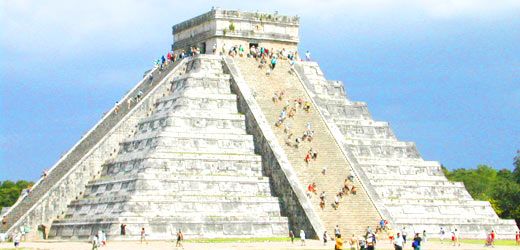
One of the most famous cultures from Central America is the culture of the Maya. Who does not know the Mayan calendar or Chitzen Itza. These are just a few of the impressive structures from the Mayan civilization. The Mayan empire stretched from southern Mexico to northern Central America.

Mayan culture originated around 2000 BC. The peak of Mayan culture was from 250 to 900 AD. However, after this period, the empire continued to grow. It was not until the 9th century that Mayan culture in the central lowlands went into decline. This was caused by wars and because agriculture could no longer handle the required yield due to the prevailing drought. Because of these conditions, Maya culture moved to the edges of the Maya empire. In the north of the Mayan Empire, cities continued to flourish until the 15th century. In 1450, the Mayan empire disintegrated and the city-states were then conquered in 1520 by the Spanish who took advantage of the rivalry between the Mayan cities.

The Maya civilization consisted of 8 to 9 million Maya. Although Maya culture has changed a lot, Maya people still live in Central America. Today, they live mostly in Guatemala. One of the characteristics of Maya culture is the clothing they wear. People almost always wear brightly colored clothing whose fabric is woven by the people themselves. The woven capes and dresses are also a nice souvenir for tourists and thus generate money for the Mayans.

The Mayan calendar

The Mayan calendar is perhaps the best known part of Mayan culture. The Mayan calendar consists of three parts; the Haab, the Tzolken and the Long Count. These three are used together and make up the entire Mayan calendar. The Haab consists of 365 days, and 19 months. 18 Months consist of 20 days and 1 month consists of 5 days. The Haab is similar to the calendar as we know it. To determine religious days, the Maya use another part of the calendar, the Tzolkin. The Tzolkin consists of 260 days divided into 20 periods consisting of 13 days. Even though the Tzolkin does not run concurrently with the Haab, this calendar begins again after the calendar is completed. The last part of the Mayan calendar is the Long Count. It is used for longer periods of time. The Long Count consists of 2,880,000 days, which is equivalent to 7885 solar years. The Long Count is also the part of the Mayan calendar that predicted the world would end in December 2012.

History Mayan culture originated around 2000 BC. Despite the many changes in Maya culture, the languages of the Maya still exist. maya, chitzen itza, maya calendar, maya culture Off <!-- Revive Adserver Etiqueta JS asincrónica - Generated with Revive Adserver v5.0.2 --><ins data-revive-zoneid="7" data-revive-id="ec923599c3fad9b044f22a6a73433428"></ins><script async src="//ads.iegrupo.com/www/delivery/asyncjs.php"></script> Samentha Geerts
Subscribe to History

Manage cookie consent

Cookies on this website are used to personalize content and ads, provide social media features and analyze traffic. In addition, we share information about your use of the website with our social media, advertising and web analytics partners, who may combine it with other information you have provided to them or that they have collected from your use of their services. You can learn more in our Cookies policy

Always active

Necessary cookies help make a website usable by enabling basic functions such as page navigation and access to secure areas of the website. The website cannot function properly without these cookies.

Statistical cookies help website owners understand how visitors interact with websites by gathering and providing information in an anonymous form.

Preference cookies allow the website to remember information that changes the way the site behaves or looks, such as your preferred language or the region you are in.

Marketing cookies are used to track visitors on web pages. This is used to show ads that are more relevant and attractive to the individual user, and therefore more valuable to publishers and third-party advertisers.