Combine cities and countries
You can combine programs in any of our destinations, allowing you to experience more than one Spanish-speaking region during to stay.
Higly qualified teacher
All our teachers are native speakers, hold a university degree (many also have a doctorate), and hace more than 15 years of proven experience
Success on the DELE exam
If you take a 12-week program and the 4 week DELE preparation course, we guarantee that you will the DELE exam. If not, you will receive a free 4-week program and we will cover you reexamination fees.
Small class sizes
We garantee high levels of student-teacher interaction with small groups of three to eight students, depending on the course.
Homestay satisfaction guarantee
If you aren´t completely comfortable with your host family for whatever reason, you can change to a different family at no extra cost.
All Spanish levels
We offer courses for all Spanish levels, and we guarantee that you´ll be placed at the correct level according to your skills.
Live close to school
Chosse one of don Quijote´s accomodation options and walk or use public transportation to meet up with your friends every day in 30 minutes or less, guaranteed
True linguistic immersion
There are never more than three non-native Spanish speakers in the same host family to ensure an optimal immersion experience in your destination country
Money-back guarantee
If you´re not completely satisfied for any reason, contact us within 24 hours after the problem occurs and we´ll work to solve it in less than two days. If you´re still not satisfied, we´ll try to reach an agreement directly with you or throuhg an
Cancellation guarantee
When you pay the cancellation fee, you can rest easy in case an unexpected event makes you want to cancel your program.

32
Destinations in Spain & Latin America
8
Student PerGroup max.
80
Different Nationaties In schools
40,000
Student everyYear
School Director
Responsible for the schools
Academic Director
There to help in any academic related matter such as certificates or level assignments
Residence and Housing Advisor
Can answer any questions regarding host families, residence life or other housing options
Faculty Members
Your professors are ther to personalize your learning experience and make the most of your time in class

How can we help you?

Fill out the form and we will contact you shortly.

CONTACT

Tel.: +34 923 268 860

infocentral@donquijote.org

CHAT

Would you like to speak with someone? Our advisors can help you, feel free to send us a message via chat or Facebook Messenger

Email *
For a more personalized proposal, please fill in the following fields:

CONTACT

Tel.: +34 923 268 860

infocentral@donquijote.org

CHAT

Would you like to speak with someone? Our advisors can help you, feel free to send us a message via chat or Facebook Messenger

Contact information for don Quijote schools and courses

Submitted by admin on Wed, 09/11/2019 - 10:15
Let us help you with any questions about our Spanish courses, our schools, the booking process and more by contacting us through e-mail, phone and chat. Contact Us

How can we help you?

Fill out the form and we will contact you shortly.

CONTACT

Tel.: +34 923 268 860

infocentral@donquijote.org

CHAT

Would you like to speak with someone? Our advisors can help you, feel free to send us a message via chat or Facebook Messenger

Email *
For a more personalized proposal, please fill in the following fields:

CONTACT

Tel.: +34 923 268 860

infocentral@donquijote.org

CHAT

Would you like to speak with someone? Our advisors can help you, feel free to send us a message via chat or Facebook Messenger

Spanish in Hollywood: 8 Oscar-Winning Movies | donQuijote

Submitted by Anonymous (not verified) on Mon, 09/09/2019 - 02:00
The Spanish Language in Hollywood: 8 Oscar-Winning Movies We roll out the red carpet and put on our best outfit to talk about films in Spanish that have won an Academy Award. The Spanish Language in Hollywood: 8 Oscar-Winning Movies

In today's post, we roll out the red carpet and put on our best outfit to talk about films in Spanish that have won an Academy Award. Set your Spanish homework aside and put your listening skills into action by watching these cultural touchstones.

Did you know that the first Hispanic Academy Award-winning director (from outside the US) earned his statue for a movie that was filmed mostly in French, not Spanish? The Spanish filmmaker Luis Buñuel had to shoot the 1972 film The Discreet Charm of the Bourgeoisie (French: Le Charme discret de la bourgeoisie) in France due to the censorship in force during the Franco dictatorship. Hence, the Spanish language had to wait until the early 80s.

Enjoy this post in Spanish if you prefer. 

Remember also that the new awards season is beginning, and with it, all the film festivals in Spain... do not miss the best premieres!

Academy Award-winning films in Spanish

1.- Begin the Beguine (Volver a empezar) (Spain, 1982)

Director: José Luis Garci.

Cast: Antonio Ferrandis and Encarna Paso.

Begin the Beguine tells the moving story of a prestigious writer, winner of a Nobel Prize, who returns to Gijón (Asturias, Spain) to die in his hometown after many years of exile.

The movie won the first Oscar for a Spanish-language film in 1983 (Best Non-English Language Film), an international recognition that opened the door for Spanish to make its way into Hollywood.


2.- The Official Story (La historia oficial) (Argentina, 1985)

Director: Luis Puenzo.

Cast: Norma Aleandro, Analía Castro, and Héctor Alterio.

The Official Story (1985) was the first Latin American film to receive the valued statuette (Best Non-English Language Film). It is a cinematographic work that takes us to the last days of the Argentine military dictatorship (1976-1983). In the film, Puenzo depicts a country in crisis after the loss of the Falklands in 1982; a nation going through the final stage of an oppressive regime that led to the “disappearance” of thousands of people.

The plot takes place between the house of Alicia, Roberto, and Gabi (the main characters of this story) and the high school where Alicia teaches Argentine History classes. In this way, the home is linked to the family atmosphere of the time, while the educational center represents the Argentine sociopolitical sphere.

3.- Belle Époque (Spain, 1992).

Director: Fernando Trueba.

Cast: Miriam Díaz Aroca, Penélope Cruz, Ariadna Gil, Fernando Fernán Gómez, Jorge Sanz, and Maribel Verdú.

Although Belle Époque was canceled three times due to lack of budget, the film was finally shot in Portugal to reduce costs. The movie won the Oscar for Best Non-English Language Film in 1993.

According to Trueba himself, Belle Époque represents a "bright and cheerful vision of Spain," “something we were not used to in 1992." It tells the story of a young man named Fernando who arrives in a small Spanish town in 1930, just before the proclamation of the Second Spanish Republic. After deciding to  leave the army during the Jaca uprising, the handsome soldier is taken in by a widowed artist who has four daughters with very different personalities.

4.- All About My Mother (Todo sobre mi madre) (Spain, 1999)

Director: Pedro Almodóvar.

Cast: Cecilia Roth, Marisa Paredes, Penélope Cruz, Candela Peña, and Rosa María Sardá.

All About My Mother tells the story of Manuela, a mother who, after losing her son the day he turned 17, returns to Barcelona to find the boy's father. During the trip, we enjoy a tragicomedy in the purest style of the Spanish director, suffering the pain along with Manuela.

In the end, Almodóvar received the Oscar (Best Non-English-Speaking Film) from his muse Penelope Cruz, an iconic moment that went down in Spanish film history.

5.- Talk to Her (Hable con ella) (Spain, 2003)

Director: Pedro Almodóvar

Cast: Javier Cámara, Darío Grandinetti Leonor Watling, Geraldine Chaplin, and Rosario Flores.

Four years later, Almodóvar won the Academy Award again, but this time on a larger scale. For the first and only time in history, a Hispanic film won an Oscar under one of the main categories: Best Original Screenplay. The director also broke his own mold with this film by shooting with two male characters, in defiance of those who said that he was only able to direct women.

Talk to her tells the story of two men who fight against loneliness as they care for the women they love: both are in a coma. Benigno is a nurse who has fallen in love with a dancer who is in a coma after an accident. In the meantime, Marcos looks after his girlfriend, who undergoes the same situation after being gored while bullfighting.

6.- The Sea Inside (Mar adentro) (Spain, 2004)

Director: Alejandro Amenábar.

Cast: Javier Bardem, Belén Rueda, and Lola Dueñas.

This movie put on the table the debate on the use of euthanasia and assisted suicide for people with irreversible or terminal illnesses. The Sea Inside tells the real story of Ramón Sampedro, who, after a tragic dive into the sea, remains bedridden for the rest of his life. After three decades in these conditions, claiming his right to die, he succeeds with the assistance of his lawyer and a close friend and neighbor.

Alejandro Amenábar won the Oscar for Best Non-English Language Film in 2005.

7.- The Secret In Their Eyes (El secreto de sus ojos) (Argentina, 2009)

Director: Juan José Campanella.

Cast: Ricardo Darín, Soledad Villamil, Pablo Rago, and Javier Godino.

Benjamín Espósito is an official who used to work at a Criminal Court in Buenos Aires and has just retired. He is obsessed with a crime he witnessed 25 years ago and decides to write a novel about the murder. During the creation process, he also recalls a past and not forgotten love.

This is a thriller with a captivating plot and high technical quality. The Secret In Their Eyes won the Oscar for Best Non-English Language Film in 2010, the second Academy Award for Argentina’s film industry.

8.- A Fantastic Woman (Una mujer fantástica) (Chile, 2017)

Director: Sebastián Lelio.

Cast: Daniela Vega and Francisco Reyes.

A fantastic woman was the second cinematographic work to receive the golden statuette in the history of Chilean cinema, after the animated short film Historia de un oso (2014). It won the Oscar in 2018 in the category of Best Non-English Language Film.

The plot focuses on Marina (a young waitress who wants to be a singer) and her partner, Orlando, twenty years older than her. One day, Marina has to take Orlando to the emergency room, where he dies in her arms. Then, she must face the rejection of Orlando’s social circle due to her transgender identity.

To sum up, Spanish language movies have plenty of reasons to be proud. From Luis Buñuel to Pedro Almodóvar, Spanish speakers started winning the hearts and earning the praise of Hollywood film critics and audiences in the second half of the 20th century and have been reaping success ever since. This year it’s Almodóvar’s turn again…we wish him all the best with his film Pain and Glory (2019), which has been selected by the Spanish Academy as its submission for the international feature film Academy Award. 

If you want to learn more about Spanish and film, we encourage you watch this video with some of the funniest Spanish translations of classic movie titles.

Spain Argentina Chile We roll out the red carpet and put on our best outfit to talk about films in Spanish that have won an Academy Award. oscars, spanish films, academy awards Off <!-- Revive Adserver Etiqueta JS asincrónica - Generated with Revive Adserver v5.0.2 --><ins data-revive-zoneid="7" data-revive-id="ec923599c3fad9b044f22a6a73433428"></ins><script async src="//ads.iegrupo.com/www/delivery/asyncjs.php"></script> Maria Martin

Back to school in Spain: 5 tips to survive | dQ

Submitted by Anonymous (not verified) on Fri, 09/06/2019 - 02:00
Back to school in Spain: 5 tips to survive the new term Every year, Spanish schoolchildren get prepared for the new course that begins with the arrival of the fall in September. Find here 5 tips to survive the new term. Back To School in Spain: 5 Tips To Survive The New Term

As the song of the Spanish music band Los Piratas says, "No te echaré de menos en septiembre" (I won’t miss you in September). Every year, Spanish schoolchildren get prepared for the new course that begins with the arrival of the fall.

Click here to read this post in Spanish to improve your reading skills.

1.- The beginning of a new term:

While in Canada and the US back-to-school shopping is associated with Labor Day (first Monday of September), in Spain, we know the new term is approaching when we see publicity campaigns advertising the back-to-school season. Now it’s time to buy textbooks and cover them with great care, a ritual I imagine will be disappeared soon since the tendency is to change paper for modern tablets.

September is the month to get hold of back-to-school supplies: a new diary, some pencils, pens and an eraser (I still can remember that characteristic smell of stationery shops). Some will even have to get a new backpack as the old one is tattered after so much rattle!

But what we really need before starting this new stage are a good attitude and a lot of enthusiasm to commence this new cycle and take up new projects: studying languages, doing some sport, and, especially, being persevering students.

In don Quijote, we encourage you to visit us if you are considering learning Spanish in Spain or improving your level.

Here you go some basics you should know if studying in Spain and want to be prepared for the new school year.

2.- Education in Spain

In Spain, we talk about Centros de Educación Primaria and Centros de Educación Secundaria (the so-called institutos), as far as compulsory education is concerned. Children must go to school since they’re 6 years old (although most start at the age of 3) and remain studying at least until they’re 16.

When students finish compulsory education in Spain, they have different options to continue studying: they can do either bachillerato (High School) to access to a ciclo formativo de grado superior (Higher Professional Training) or University; or just a ciclo formativo de grado medio (Basic Vocational Training).

If you want to go further, go to our website and learn more about the Spanish Education System.

3.- When does the school year begin in Spain?

The new school year will begin between the first and second week of September , depending on the region and the corresponding educational stage.

In the case of the so-called escuelas de primaria (Primary Schools), the academic year starts around September 10; while institutos (High Schools) and centros de FP (Vocational Education Centers) get started around September 15. Besides, university students normally wait until the end of September or even the beginning of October to go back to their lessons.

4.- The length of the school year in Spain:

The school year in Spain lasts over nine months, distributed into three different trimestres (trimesters) separated by vacation periods at the end of each term. The first one coincides with fall months (from September to December), and closes with the Holiday Season. The second one comes with the entry of winter, and ends with the arrival of spring and the Easter holidays (January - April). Finally, we reach the end of the term with the third trimester, which runs until the end of June.

At universities, the academic year is divided into cuatrimestres (quarters). The first one goes from October to January and the second one from February to May.

5.- The longed-for vacations

If there’s something we all like (whether we are students or workers), that is the vacation period. After months of routine and daily effort, we count the days we have left to enjoy that rest we were waiting for so much.

The first holiday period comes with Christmas. Spain is a country of Catholic tradition, and two of the three main holiday periods commemorate this kind of festivities. At Christmas, holidays are usually extended for two weeks for schoolchildren. This is because the day of the Three Wise Men (January 6) is an important celebration, as most of us receive and make gifts throughout that day.

After the Holiday Season, we must wait until Easter to have a break again (except for students in the Canary Islands, who enjoy a week in carnival). This vacation period (10 days in the Peninsula and Balearic Islands and 7 in the Canary Islands) is usually re-scheduled every year since it comes from a pagan holiday and it’s celebrated on the first full moon of the spring season.

Finally, we close the cycle again with summer vacations. In Spain, this period lasts from the last week of June (for most educational stages) until the month of September (the week depends on the different regions and the educational stage as we have already commented before). Besides, many schoolchildren take advantage of these months to sign up for summer camps to make the most of their time.

Apart from these and depending on each term’s school calendar, there are other public holidays and celebrations.

We hope this post helps you to organize the new school term. Ready to keep your studies up-to date?

Practical Spanish Spanish schoolchildren get prepared for the new course that begins with the arrival of the fall in September. Find here 5 tips to survive the new term. Off <!-- Revive Adserver Etiqueta JS asincrónica - Generated with Revive Adserver v5.0.2 --><ins data-revive-zoneid="7" data-revive-id="ec923599c3fad9b044f22a6a73433428"></ins><script async src="//ads.iegrupo.com/www/delivery/asyncjs.php"></script> Maria Martin

Movie Titles in Spanish: Funniest Translations | donQuijote

Submitted by Anonymous (not verified) on Mon, 09/02/2019 - 02:00
Movie Titles in Spanish: Funniest Translations Movie Titles in Spanish: Funniest Translations

If you are a film lover who enjoys watching foreign films, you may have realized by now that movie titles change a lot when translated into another language. Spanish speakers know that very well, because movie titles are usually transformed into something completely different compared to the original version.

Keep on reading to find out the reason behind this metamorphosis and have a laugh with some of the seventh art’s funniest translations. If you prefer to read this post in Spanish, click here. Lights, camera, action!

Mistranslation or localization?

When a new movie is released, many viewers criticize its title’s translation. However, we don’t usually ask ourselves why it changed so much. In don Quijote we want to stand up for translators, because this lack of textual coincidence with the original title is not always due to mistranslation.

Professionals who are in charge of the translation need to adapt to the culture and the market where the movie is going to be distributed. As it occurs with brands, when thinking about a title, translating is not enough – copyright, cultural issues, and more need to be considered as well. However, that doesn’t mean that those little marketing experiments don’t end up giving us very funny titles every now and then.

One language, several titles

Did you know there are several Spanish versions for the same foreign movie? Due to the richness of the Spanish language, producers order several dubbed versions for Spain and Latin America. As a consequence, movie titles are also different in each Spanish-speaking country.

Watching movies and series in Spanish is one of the best ways to practice the language. However, having such different titles, sometimes it is hard to find out the name of that film you’ve been wanting to watch. Here’s a trick for all Spanish students: Internet Movie Database is a website which hosts information about thousands of movies. Among other things, it lists the title of a movie in each country.

Movie titles in Spanish

Let’s get down to business. Here are some of the funniest movie titles in Spanish. Some of the titles we have chosen for this post belong to the Spanish version of the movie and some other to the Latin American versions. Enjoy!

1. The Sound of Music is… Sonrisas y lágrimas (Smiles and Tears)

This popular Broadway drama film tops our list for obvious reasons. The literal translation would be ‘El sonido de la música’, but ‘Smiles and Tears’ sounds equally beautiful, right? Fun fact: in Latin America, this movie was called La novicia rebelde (The Reckless Nun). 

2. Home Alone is… Mi pobre angelito (My Poor Little Angel)

Although in Spain they kept the title as ‘Solo en casa’, in Latin America they chose something more emotional: ‘My Poor Little Angel’. Truth is, the face of the little Macaulay Culkin is sweet as sugar.

3. Die Hard is… La jungla de cristal (Glass Jungle)

Ok, got it. There is a huge difference between ‘Die Hard’ and ‘Glass Jungle’. But the first option doesn’t sound very appealing in Spanish: ‘muere fuertemente’. Long life to free translation! In Latin America they got a little bit closer to the original title and named this movie ‘Duro de matar’.

4. 101 Dalmatians is… La noche de las narices frías (The Night of the Cold Noses)

Spain and Latin America never come to an agreement. While in Europe they kept the translation as ‘101 dálmatas’, across the pond they let their imagination run free with this funny title. Like it or not, this title describes the movie’s protagonists.

These are just some examples among plenty of funny titles you can find all over the Internet. Hope this post encouraged you to get hands on Spanish through cinema. In case you didn’t know, don Quijote’s web shows how much an average cinema ticket costs in each of our destinations in Spain. Start planning your trip and enjoy your movies in Spanish!

Learn more about the movies above by watching this video.

Spain The funniest translations of movie titles in Spanish. Can you guess any of them? Off <!-- Revive Adserver Etiqueta JS asincrónica - Generated with Revive Adserver v5.0.2 --><ins data-revive-zoneid="7" data-revive-id="ec923599c3fad9b044f22a6a73433428"></ins><script async src="//ads.iegrupo.com/www/delivery/asyncjs.php"></script> Patricia Mendez

How to Order Food in a Spanish Restaurant |donQuijote

Submitted by Anonymous (not verified) on Fri, 08/30/2019 - 02:00
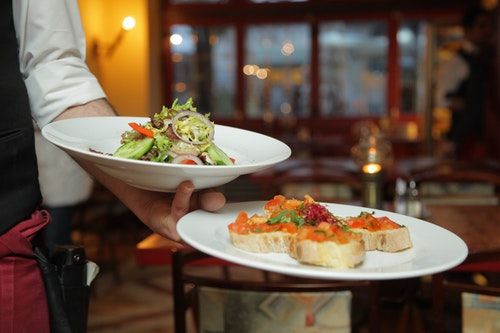
How to Order Food in a Spanish Restaurant How to Order Food in a Spanish Restaurant

Ordering food abroad can be tricky sometimes. Eating out is often one of the first things people do when they travel, so at that early stage you may not know the expressions and vocabulary to communicate properly.

Don’t worry! Here you’ll find everything you need to know to get by fluently and order your food in Spanish without batting an eye.

You can also read this post in Spanish.

How to get a table

The most important thing if you want to sit down to eat is to get a table. You can call the restaurant in advance to book, or just go in person and try your luck. If you are with a large group, we recommend you make a reservation ahead of time to ensure you can get a table.

Remember that meal times in Spain may be different from what you’re used to. (How does dinner at 10 p.m. sound?)

Here are some expressions you can use as an example to get a table:


Cliente (customer) —Buenos días/ buenas tardes/ buenas noches, ¿para comer / cenar?

(Good morning/afternoon/evening. For lunch/dinner?)


Camarero (waiter) —¡Hola! Claro, ¿tienen reserva? / ¿cuántos son?

(Hello! Of course, do you have a reservation? How many people?


Cliente —Sí, tengo una reserva a nombre del señor Smith. / No, solo somos dos personas

(Yes, I have a reservation for Mr. Smith. / No, we need a table for two.)


Camarero —Por aquí, por favor

(Right this way, please).


Cliente— ¡Gracias! (Thank you!).


Frequently Asked Questions about Spanish menus

Although you can often find an English version of the menu, it’s good to know what to order and how to do it so that no one has an unpleasant surprise.

There’s one question almost always comes up if you order meat (especially beef). The waiter will usually ask you how you’d like your meat, or as Spanish would say,

¿Cómo quiere el punto de la carne? / ¿Cómo quiere la carne?

You can answer with poco hecho (rare), al punto (medium), and muy hecho / pasado” (well done). If they don’t ask, don’t hesitate to tell them anyway (e.g. “me gustaría tomar la carne al punto.)

In Spain, it is also very common to ask what the specialty is. You can say, for example, “¿Qué nos recomienda tomar?” (What do you recommend) or “¿Cuál es la especialidad de la casa?” (What is the house’s specialty?)

If you need to know the specific ingredients of a recipe, you could ask something like this: “¿Este plato lleva algo de marisco / gluten / cebolla…?” (“Does this dish contain seafood/gluten/onion?”), “Soy alérgico al huevo, ¿me puedes recomendar algo que no lleve?” (“I’m allergic to eggs, could you recommend something for me?”).

Also, don’t forget about the menú del día. It is a set-price menu usually offered Monday to Friday at midday. It generally consists of a first and second course and a dessert or coffee, and a drink and some bread are usually included, too.


How to order food in Spanish

When the moment to order comes, the confusion arises. This may occur since protocol varies from one culture to another and depends on the different customs of each country.

Here are some useful expressions in Spanish to use in restaurants:

Camarero (waiter) ¿Ya saben lo que van a tomar? / ¿Qué quieren tomar? (Are you ready to order? / What would you like to order?).

Cliente (customer)—Sí. De primero tomaremos la crema de verduras y una ensalada mixta. (Yes. We’ll have the creamy vegetable soup and a salad to start.)

Camarero —Perfecto. ¿Y de segundo? (Perfect. What about the main course?)

Cliente De segundo tomaremos solomillo de ternera. (We’ll have the sirloin steak.)

Camarero —¿Cómo prefieren la carne? (How would you like the meat?)

ClienteAl punto y muy hecha, por favor. (Medium and well done, please.)

Camarero —¿Qué quieren para beber? (Anything to drink?)

Cliente —Para beber, una botella de agua y una Coca-Cola, por favor. (Sparkling water and a Coke, please.)

Camarero —¿El agua fría o del tiempo? (Do you want the water cold or room temperature?)

Cliente —Fría, por favor (Cold, please.)

Camarero —¿Desean algo más? (Anything else?)

Cliente —Así está bien de momento, gracias. (That’s all for now, thanks).
 

How to order dessert and coffee in Spanish

As a rule, the waiter will ask if you are going to have dessert or coffee when you finish the second course:

Camarero (waiter)¿Desean algo de postre o café? (Would you like any coffee or dessert?).

Cliente (customer)Sí, por favor ¿podría traernos la carta de postres? (Yes, please. Could we see the dessert menu?)

Camarero —¡Claro! Aquí tienen. (Sure! Here you go.)

ClienteProbaremos el arroz con leche y la tarta de chocolate. (We’ll have the rice pudding and a piece of the chocolate cake).

You might also want to have a coffee or tea. In Spain, the most popular options are café cortado (espresso with a small amount of milk), café solo (espresso, which you can ask for “con hielo” or with ice in the summertime), and poleo menta (mint tea). Café con leche is usually enjoyed in the morning, but you can order it any time you want.


Asking for the check in Spanish

In some countries it’s common for waiters to bring the check automatically when customers finish their meal, but Spain is not one of them. Spaniards like to take it easy and enjoy what they call la sobremesa. This means people like to chat while they have a coffee or even a digestif. But, if you’re in a hurry,

Cliente (customer) —¿Me/Nos puede traer la cuenta, por favor? (Could you bring me/us the check, please?).

Camarero (waiter) —¿Van a pagar en efectivo o con tarjeta? (Cash or card?)

ClienteCon tarjeta. ¿Me puede traer el datáfono? (Card. Could you bring the card reader?)

*Note that in Spain when you pay with card, the waiter will usually bring a wireless card reader to the table.

Camarero —¡Por supuesto! (Sure!)

By the way, tips aren’t mandatory in Spain, but they are very common. The better the service, the higher the tip should be.


Useful Spanish phrases to use in a restaurant

To finish, we propose some helpful language you might want to use at the restaurant:

  • La comida está muy fría/caliente – The food is too cold/hot
  • ¡Felicite al cocinero! – My compliments to the chef!
  • ¿Dónde están los aseos / el baño / los servicios / los lavabos, por favor? – Where is the bathroom, please?
  • No estoy satisfecho con el servicio. ¿Tenéis hojas de reclamaciones para clientes? —I’m not satisfied with the service. Are there any complaint sheets available for customers?


¡Que aproveche! (Enjoy your meal!)



Practical Spanish How to order food in a Spanish restaurant. Find out here the vocabulary you need. Off <!-- Revive Adserver Etiqueta JS asincrónica - Generated with Revive Adserver v5.0.2 --><ins data-revive-zoneid="7" data-revive-id="ec923599c3fad9b044f22a6a73433428"></ins><script async src="//ads.iegrupo.com/www/delivery/asyncjs.php"></script> Maria Martin

Saber vs. Conocer: learn to differentiate them | donQuijote

Submitted by Anonymous (not verified) on Wed, 08/28/2019 - 02:00
Saber vs. Conocer: How to Know the Difference Spanish verbs saber and conocer have the same translation in English: to know. Find and learn here the differences between them. Saber vs. Conocer: How to Know the Difference

When our students use a dictionary — whether it’s a physical one or an application installed on their phone — to look up the Spanish verbs saber and conocer, they usually find the same translation for both words: in English, to know. As a result, in addition to realizing their search was pretty useless, they start to feel a bit stressed as they remember other classic Spanish grammar issues they’ve studied, like the differences between ser and estar or por vs. para.

Today we aim to ease your mind by explaining the differences between saber and conocer. If you want to read this post in Spanish, click here.

Since both verbs have very similar meanings, and in many languages a single verb is used to translate both of them, we recommend you keep the following cheat sheet in mind:

Saber

Acquired knowledge or ability

Conocer

Experience

When to use SABER

We use the verb saber to talk about knowledge we have acquired through instruction, training, study, or any other means.

  • Sabemos cuál es la capital de Bolivia, sabemos las reglas de juego del baloncesto, sabemos los verbos irregulares o sabemos el significado de una palabra.
    •  (We know what the capital of Bolivia is, we know the rules of the game of basketball, we know irregular verbs, and we know the meaning of a word.)

We also use saber to talk about abilities.

  • Sabemos hablar español, sabemos nadar, sabemos dibujar o sabemos preparar una paella.
    •  (We know how to speak Spanish, we know how to swim, we know how to draw, and we know how to make a paella.)

When to use CONOCER

We use the verb conocer to talk about knowledge we have gained through experience (or perception).  

  • Conocemos a los padres de mi novia, conocemos el norte de España o conocemos el mejor sitio para comer paella en la ciudad. 
    •  (We know my girlfriend’s parents, we have been to* the north of Spain, or we know the best place to eat paella in the city.)

*Note that conocer + a place means that you have been there

SABER vs. CONOCER

Take a look at these pairs of sentences:

  1. Sé el calor que hace en Málaga en verano.
    • (I know how hot it gets in Malaga in summer.)
  2. Conozco el calor que hace en Málaga en verano.
    • (I know how hot it gets in Malaga in summer.)

In the first case (a), we are referring to knowledge that we have acquired through studying or reading about the weather in Malaga.

In the second case (b), we are talking about a lived experience we have had. We have personally enjoyed/suffered the summer heat in Malaga.

  1. Sé quién es el jefe de estudios.
    • (I know who the director of studies is.)
  2. Conozco al jefe de estudios.
    • (I know the director of studies.)

In the latter case (b) we know the director of studies personally (we have talked to him, said hi to him, or asked him a question at some point or another).

In the former case (a) we know his identity (who he is, what his name is, where his office is) but haven’t actually had the pleasure of meeting him in person.

Now that you know the difference between saber and conocer, we invite you to put what you’ve learned into practice on the ground. Visit one of our 32 destinations in Spain and Latin America!

Thanks to Ramón from our school in Malaga for writing this post.

Grammar Spanish verbs saber and conocer have the same translation in English: to know. Find and learn here the differences between them. Off <!-- Revive Adserver Etiqueta JS asincrónica - Generated with Revive Adserver v5.0.2 --><ins data-revive-zoneid="7" data-revive-id="ec923599c3fad9b044f22a6a73433428"></ins><script async src="//ads.iegrupo.com/www/delivery/asyncjs.php"></script> Vanessa Johnson
Subscribe to

Manage cookie consent

Cookies on this website are used to personalize content and ads, provide social media features and analyze traffic. In addition, we share information about your use of the website with our social media, advertising and web analytics partners, who may combine it with other information you have provided to them or that they have collected from your use of their services. You can learn more in our Cookies policy

Always active

Necessary cookies help make a website usable by enabling basic functions such as page navigation and access to secure areas of the website. The website cannot function properly without these cookies.

Statistical cookies help website owners understand how visitors interact with websites by gathering and providing information in an anonymous form.

Preference cookies allow the website to remember information that changes the way the site behaves or looks, such as your preferred language or the region you are in.

Marketing cookies are used to track visitors on web pages. This is used to show ads that are more relevant and attractive to the individual user, and therefore more valuable to publishers and third-party advertisers.