Antonio Banderas: Spanish actor | donQuijote
Submitted by Anonymous (not verified) on Mon, 11/18/2013 - 01:00
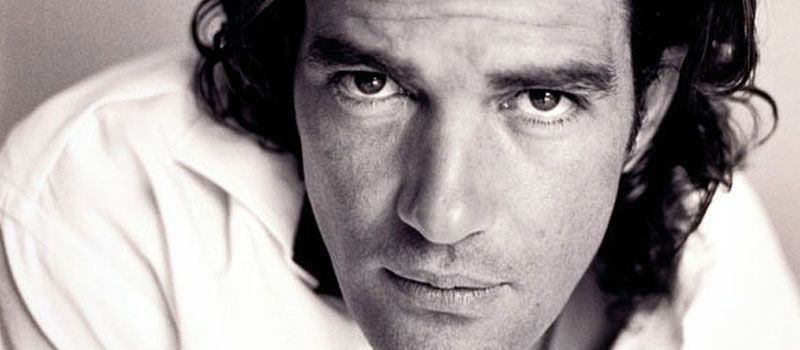
Antonio Banderas Antonio Banderas is one of many well-known Spanish actors. His roles in "Evita" in 1996 and "The Mask of Zorro" in 1998 brought him great fame.  Antonio Banderas | Spanish actor

Spanish actors

Many internationally known actors and actresses are of Spanish descent. For example, Penelope Cruz, Javier Bardem and Fernando Rey, among others, are from Spain. Antonio Banderas is also one of many well-known Spanish actors. In addition to being an actor, Antonio Banderas is also a reggisseur, producer and singer.

José Antonio Dominguez Banderas was born on August 10, 1960 in Benalmádena, Malaga. In his younger years, Antonio always wanted to become a professional soccer player. However, this dream fell apart when Banderas broke his foot at the age of 14. At that time, he went to see the theater show "Hair" with his parents and thus his interest in theater was awakened. Soon after, Antonio started taking drama classes. He then joined a theater group and toured the whole country with this group. In this theater group, he caught the attention of some big names in the Spanish theater industry. As a result, he managed to secure a place in the National Theater of Spain. From the theater, he rolled into the film industry and frequently starred in Spanish films.

Fame with "The mask of Zorro"


His breakthrough came in 1990 with his role in the film "Tie me up! Tie me down!", a Spanish romantic comedy. Until 1992, Antonio Banderas barely spoke English but still managed to attract the attention of the film industry in America. In 1993, he broke through in America with his role in the film "Philadelphia. This was followed by many roles in well-known films including Desperado, Evita, The Mask of Zorro, Spy Kids and Once Upon a Time in Mexico. The 1990s in particular were good years for Banderas; his roles in Evita in 1996 and "The Mask of Zorro" in 1998 brought him great fame. And even led him to take on the role of Zorro again in 'The Legend of Zorro' in 2005.

In 2003, Antonio Banderas returned to the theater with his role in the musical "Nine. Banderas has also voiced many voices for various animated films. His best-known voice role can be found in "Shrek 2," "Shrek the Third" and "Shrek Forever After. In these films, he voiced the role of the Puss in Boots. This cat became so popular that the Puss in Boots was even given its own movie for which Antonio Banderas once again contributed the voice.

His input in various films has also earned Antiono Banderas several awards. In 2005, for example, he received a star on the Hollywood Walk of Fame. In 2006, Antonio Banderas won the "Gabi Lifetime Achievement Award" at the Los Angeles International Film festival. He was also nominated for 3 Golden Globe Awards and presented the 69th version of the Golden Globe Awards ceremony with Salma Hayek in 2012.

Spain Antonio Banderas is one of many well-known Spanish actors. His roles in "Evita" in 1996 and "The Mask of Zorro" in 1998 brought him great fame. antonio banderas,the mask of zorro,spanish films,spanish actors Off <!-- Revive Adserver Etiqueta JS asincrónica - Generated with Revive Adserver v5.0.2 --><ins data-revive-zoneid="7" data-revive-id="ec923599c3fad9b044f22a6a73433428"></ins><script async src="//ads.iegrupo.com/www/delivery/asyncjs.php"></script> Samentha Geerts

The Prado Museum in Madrid | donQuijote

Submitted by Anonymous (not verified) on Mon, 11/11/2013 - 01:00
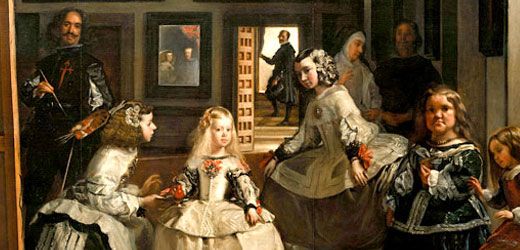
The Prado Museum in Madrid In addition to works by Spanish artists, the Prado Museum in Madrid includes works by Dutch and Flemish artists. padro museum

Spain is home to many internationally known museums. These include the Picasso Museum in Barcelona, the Guggenheim Museum and the Dalí Theatre Museum in Figueras. However, the most famous museums in Spain can be found in Madrid, including the Prado Museum.

The Prado Museum in Madrid

The Prado Museum is one of the world's most famous museums. Together with the Museum Thyssen - Bornemisza and the Museum Nacional Centro de Arte Reina Sofia, the Prado Museum is part of Madrid's Golden Triangle.

The building of the Prado Museum was designed in 1785 and the museum was open to the public in November 1819. In 2007, the museum was remodeled and expanded by 50%. The renovation added the former Jeronimos Monastery to the museum. The new section includes a restaurant, a restoration studio and the temporary exhibitions are located here.

The museum contains works dating from the 14th to 19th centuries. The collection includes 5,000 drawings, 2,000 applied art objects, 2,000 prints and 700 sculptures. Besides the masterpieces, don't miss the fine art with Greek works and the beautiful Roman murals.

In the 16th century, the Netherlands fell under Spanish rule, causing the works of a number of Dutch and Flemish artists to be exhibited at the Prado Museum. This collection includes works by Bosch, Pieter Brughel and Rubens, among others.

To visit the museum, it is recommended to take at least one day. For those who only have a few hours or half a day, the Prado Museum has outlined 3 routes to visit the museum's masterpieces. The shortest route takes about 1 hour and takes you past 15 works of art. To see 30 works, it is recommended to take the 2-hour route. Should you have 3 hours, it is also possible to follow the longest route that takes you past 50 works. Among others, "The Annunciation" by Fra Angelico, "The Garden of Earthly Delights" by Hieronymus Bosch and "The Three Graces" by Rubens are visited during these routes. In addition to international works, Spanish works are also incorporated into the routes. For example, one passes Velázquez's "Las Meninas" and Ribera's "Jacob's Dream.

Spain In addition to works by Spanish artists, the Prado Museum in Madrid includes works by Dutch and Flemish artists. madrid, madrid spain, prado, las meninas, prado museum madrid Off <!-- Revive Adserver Etiqueta JS asincrónica - Generated with Revive Adserver v5.0.2 --><ins data-revive-zoneid="7" data-revive-id="ec923599c3fad9b044f22a6a73433428"></ins><script async src="//ads.iegrupo.com/www/delivery/asyncjs.php"></script> Samentha Geerts

Watching television in Spain | donQuijote

Submitted by Anonymous (not verified) on Mon, 10/14/2013 - 02:00
Watching television in Spain After Franco died in 1975, censorship also eased on Spanish media. Consequently, most famous Spanish films were made after 1975. spanish television

Watching television is not as popular in Spain as it is in the Netherlands. Spaniards, thanks to the climate, mostly live outside and if the television is on at all, it is usually during dinner. Spaniards do not slouch on the couch in front of the television.

Until 1975, Franco's regime imposed strict censorship on the Spanish media. This caused few good films to come from Spain until then. In 1956, the television channel TVE came into being. TVE is similar to the Dutch NOS. Mostly documentaries, news lectures and sports were broadcast. Until 1974, all programs in Spain were in black and white. In 1977, all TV channels were in color.

The Spanish way of watching television is very different from the Dutch way. Where the Dutch often watch television on the couch after dinner, Spaniards mainly watch television during dinner. This is why most televisions in Spanish households can be found in the dining room or kitchen.

Spanish films

Spanish films are a reflection of Spanish culture, diverse, raw and passionate. Abre los ojos is considered the most successful Spanish film. Made in 1997, this film is about the beautiful man, Cesar who lives in Madrid. Because of his outward appearance, he gets enough attention from women, much to the jealousy of his girlfriend. This jealousy has caused his girlfriend to cause a car accident in which Cesar gets disfigured in his face. This accident changes his whole life and this film is about Cesar's search for a new love.

Penélope Cruz

One of the leading roles in Abre los ojos is played by Penélope Cruz. She also played the same role in the American film adaptation Vanilla Sky. She is one of Spain's most famous actresses of all time. Before studying theater in New York, Penélope Cruz studied ballet in Madrid. To this day, Penélope Cruz is one of Hollywood's most famous actresses and, among other things, has a star on the Hollywood Walk of Fame. Penélope is married to Javier Bardem, also a celebrated Spanish actor. Among other awards, he received an oscar for his role in No country for old men, in which he plays a cold-blooded hitman.

Antonio Banderas

Finally, we must not forget Antonio Banderas! Who doesn't know him? He has sidns 2005 star on the Hollywood walk of Fame and he is known, among other things, for his role in Spy Kids, but really broke through in America with his role in Philadelphia in 1993. After his breakthrough in America, he played in many films. His most famous role he played in the movie The Mask of Zorro in which he plays Zorro. This puts him, along with Penélope Cruz and Javier Bardem, at the top of the Spanish film industry!

Spain After Franco died in 1975, censorship also eased on Spanish media. Consequently, most famous Spanish films were made after 1975. watching television, the mask of zorro, spanish films, spanish culture Off <!-- Revive Adserver Etiqueta JS asincrónica - Generated with Revive Adserver v5.0.2 --><ins data-revive-zoneid="7" data-revive-id="ec923599c3fad9b044f22a6a73433428"></ins><script async src="//ads.iegrupo.com/www/delivery/asyncjs.php"></script> Samentha Geerts

Carlos Ruiz Zafon. Spanish novelist | donQuijote

Submitted by Anonymous (not verified) on Mon, 07/29/2013 - 02:00
Carlos Ruiz Zafon Carlos Ruiz Zafón is a Spanish novelist from Barcelona.  His first novel was the book "La sombra del viento. Learn Spanish now! Carlos Ruiz Zafón

Carlos Ruiz Zafón was born on Sept. 25, 1964, in Barcelona. He is one of the best-known Spanish novelists. All the books written by Zafón are set in Barcelona. He became famous with his first novel "La sombra del viento," the shadow of the wind. All of Zafón's books have been translated into Dutch, by Nelleke Geel.

Until today there are 7 books by Carlos Ruiz Zafón. Including 3 novels and 4 juvenile novels. All his novels have been published in more than 40 countries in 30 different languages. Ever since Carlos was five years old he has wanted to be a writer, working at a large advertising company until the 1990s. But then quit this to focus fully on his passion: writing! In his own words, Zafón's novels are a biography of his own life.

The shadow of the wind

His first novel was the 2001 book "La sombra del viento," which in Dutch means "the shadow of the wind". This was also the book that brought him great fame. This book is about the main character, Daniel, who one day is taken by his father to the Cemetery of Forgotten Books. Daniel gets to pick one book and chooses the book; "The Shadow of the Wind. From that day on, the book changes his whole life, and even seems that the people Daniel meets in his life from then on are part of a game in which the book is the centerpiece.

Juvenile novels

In 1993 Carlos released his first book, a juvenile novel called 'El príncipe de la niebla' (the mist prince), this was a mystery horror novel. In 1994 he released his second juvenile novel called 'El palacio de la medianoche' (The Midnight Palace). His last juvenile novel was "Marina," which he released in 1999. After this, Zafón began writing novels for adults.

The Spanish Civil War

Besides 'La sombra del viento' Zafón released two other novels. 'El juego del angel' in Dutch is called 'Het spel van de engel' this book was released in 2008 and in 2011 he released the book 'El prisionero del cielo', 'The prisoners of heaven'. The remarkable thing is that all these novels are set after the Spanish Civil War in Barcelona. Consequently, there are several individual and group tours available in Barcelona that visit all the locations from the books. Carlos has mentioned several times that his three novels are part of a four-part series, "the quartet of Barcelona. So it is only a matter of time until his next novel comes out and his four-part series is complete.

Spain Carlos Ruiz Zafón is a Spanish novelist from Barcelona. His first novel was the book "La sombra del viento. Learn Spanish now! zafon, carlos ruiz zafon, la somrba del viento, spanish writer, spanish novelist, the shadow of the wind Off <!-- Revive Adserver Etiqueta JS asincrónica - Generated with Revive Adserver v5.0.2 --><ins data-revive-zoneid="7" data-revive-id="ec923599c3fad9b044f22a6a73433428"></ins><script async src="//ads.iegrupo.com/www/delivery/asyncjs.php"></script> Samentha Geerts

Spanish dancing | donQuijote

Submitted by Anonymous (not verified) on Mon, 07/15/2013 - 02:00
Spanish dancing: flamenco and salsa Flamenco and salsa, we've all heard of them. But where do these dances come from? Spanish culture with donQuijote Spanish language schools! spanish dance

Increasingly popular, also in the Netherlands, are the Spanish dances. Flamenco and salsa, we have all heard of them. But where do these dances come from, are they real Spanish dances or did they originate elsewhere in the world?

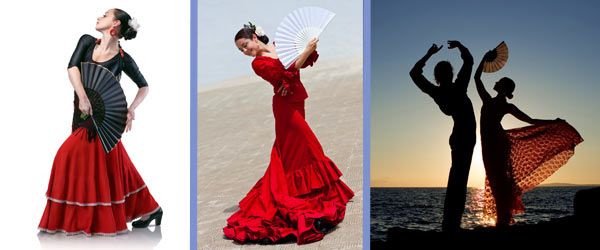
Flamenco is one of the most complex dances in the world. Flamenco originated in the second half of the nineteenth century in Andalusia, southern Spain. When people think of flamenco they often think of flamenco dance, but flamenco is more. Flamenco is a combination of baile (dance), toque (guitar playing), cante (singing) and palmas (hand clapping). It is a spirited, expressive and powerful dance and is characterized by its footwork, rhythms, attire and castanets. Today flamenco is one of Spain's most important cultural exports.

Another dance thought to be Spanish is salsa. In the Netherlands, salsa dancing is very well known and therefore there are many opportunities to learn this dance. Salsa is a collective name for different types of dances and rhythms such as son, mambo, guaguancó, cha-cha-cha and the dázon. The rhythm of the dance consists of 8 beats divided into two times four beats, where of every four beats one beat is rested.

When you dance salsa, you don't have to memorize complicated choreography; you can certainly improvise as well. So you don't have to be a professional dancer! With the right rhythm, basic steps and turning technique you will come a long way. The footwork is fortunately not complicated, with these you make the basic steps and the rest of your body does the remaining (dance) work, such as graceful arm movements that are characteristic of salsa.

Salsa is found both in Spain and in the Spanish-speaking countries of Latin America and is a melting pot of different cultures of peoples who came to Cuba, each bringing with them their own music and dance style. African slave music and Spanish singing were especially influential in the creation of salsa. Today some 15 million Latin Americans dance salsa.

Spain Flamenco and salsa, we've all heard of them. But where do these dances come from? Spanish culture with dQ Spanish language schools! salsa dancing, spanish flamenco, flamenco dance, spanish dance, spanish dancing Off <!-- Revive Adserver Etiqueta JS asincrónica - Generated with Revive Adserver v5.0.2 --><ins data-revive-zoneid="7" data-revive-id="ec923599c3fad9b044f22a6a73433428"></ins><script async src="//ads.iegrupo.com/www/delivery/asyncjs.php"></script> Vliegende Hollander

La Celestina. Spanish literature classic | donQuijote

Submitted by Anonymous (not verified) on Mon, 06/24/2013 - 02:00
La Celestina Spanish books: La Celestina is a love story with a tragic ending. The story is the Spanish version of the story of Romeo and Juliet.  la celestina - spain

Calixto and Melibea

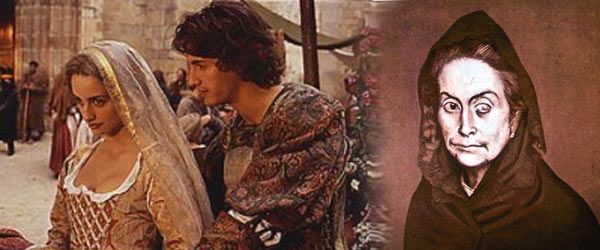
Calixto and Melibea park is a beautiful garden in Salamanca. It is the garden of the house where Melibea lived in the story, La Celestina. La Celestina is a love story with a tragic ending. The story is the Spanish version of the story of Romeo and Juliet.

The garden is located in the old town of Salamanca. The garden was opened on June 12, 1981. The garden is 2,500 square meters and is built on part of the old city wall, offering a beautiful view of the Río Tormes with its Roman bridge. On the other side, the garden offers a view of the old town and the beautiful old cathedral. The garden has a great variety of colorful flowers, plants and fruit and nut trees. And is an ideal place to relax and enjoy the tranquility, the view and the romantic atmosphere of the garden.

La CelestinaThe garden is the setting of the love story between Calisto and Melibea in the book "La Celestina" by Fernando de Rojas. Therefore, the name of the park refers to the two main characters of the story, Calisto and Melibea. The park is also home to a statue of Celestina, the matchmaker between Calisto and Melibea.

The story is about Calisto, who is an employee of Pleberio, Melibea's father. Calisto falls in love with Melibea and enlists the help of a matchmaker. The matchmaker, named Celestina, also owns a brothel. Celestina matches Malisto and Melibea by telling Melibea that a man is seriously ill and can only be cured by Melibea's attention. Celestina arranges an appointment between the two in Pleberio's garden.

Calisto's two servants do not trust Celestina, so they try to convince Calisto not to accept her help. However, when the servants find out that Calisto cannot change his mind they decide to make a pact with Celestina. They decide to help her in exchange for some of the money Celestina receives from Calisto. On the night of the meeting, however, the two servants find out that Celestina has no intention of sharing part of the money with them. At this, the servants go to Celestina's brothel and kill her, however, they are caught and the two servants are also executed by one of the prostitutes.

In the meantime, another tragedy takes place in Pleberio's garden. In desperation, Calisto tries to climb a ladder to get to Melibea's window, but Calisto falls off the ladder and dies. Melibea, however, cannot live without him, so she tells her father the whole love story between her and Calisto. After telling him this, she robs herself of life by jumping off a tower.

La Celestina is considered one of the most important and well-known works of Spanish literature. This book is also marked as the end of medieval literature and the beginning of the literary renaissance in Spain.

Spain Spanish books: La Celestina is a love story with a tragic ending. The story is the Spanish version of the story of Romeo and Juliet. spanish book la celestina, la celestina, fernando de rojas, spanish classic book Off <!-- Revive Adserver Etiqueta JS asincrónica - Generated with Revive Adserver v5.0.2 --><ins data-revive-zoneid="7" data-revive-id="ec923599c3fad9b044f22a6a73433428"></ins><script async src="//ads.iegrupo.com/www/delivery/asyncjs.php"></script> Samentha Geerts

Spanish Music | donQuijote

Submitted by Anonymous (not verified) on Mon, 06/10/2013 - 02:00
Spanish Music The best-known phenomenon in the Spanish music industry is flamenco music. The origins of flamenco are in southern Spain, Andalusia. spanish music flamenco

Flamenco

The best-known phenomenon in the Spanish music industry is flamenco music. The origin of flamenco lies in southern Spain, Andalusia. However, besides flamenco, there are many other Spanish influences in the music known in the Netherlands. Flamenco is one of Spain's most famous musical genres. Flamenco is an umbrella term for the dance, music and singing that originated in the second half of the 19th century in southern Spanish Andalusia. The first things that immediately stand out about flamenco is the twelve-tell system, the Arabic sound influences and the lavish embellishments such as clothing style used in this genre of music. Flamenco is mostly known as powerful, expressive and spirited.

The basis of flamenco is singing. This singing is also called cante flamenco. The cante flamenco is supported by the baile flamenco, the dance style. The baile flamenco consists of often graceful arm and hand movements and intricate footwork. The footwork is also known as "taconeo.

When looking for information about flamenco, one also often comes across the word Duende. Duende is the moment when the guitarist, singer or dancer becomes so absorbed in the music that it creates something more than song, dance or music. The moment a duende takes place, the audience is breathlessly focused on the person possessing this Duende.

Spanish Pop Music

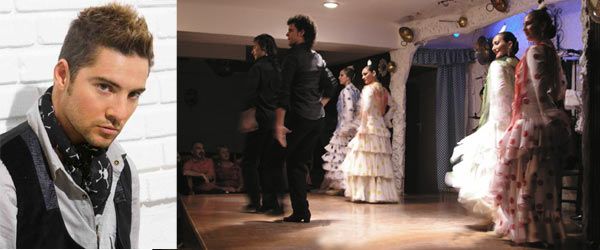
Besides flamenco, there are a number of Spanish singers who have made their mark in Spanish pop music worldwide. Alejandro Sanz and David Bisbal are good examples. David Bisbal gained name recognition in the Netherlands after Jeroen van der Boom released the song "Jij bent zo" in 2007. The original of this song is Spanish-language and was sung by David Bisbal. During Jeroen van der Boom's concert, David was therefore one of the guests of honor. The covering of "Silencio" to "You are so" was not the only song that created worldwide fame for David Bisbal. Outside the Netherlands and Spain, David became very well known worldwide for the song 'Wavin´ Flag' which he released together with K´naan, an African artist as the title song for the 2010 World Cup in South Africa. This song became a huge hit, and since then David Bisbal has been a much sought-after artist all over the world. He also has a number of Latin Awards to his name.

Spain The best-known phenomenon in the Spanish music industry is flamenco music. The origins of flamenco are in southern Spain, Andalusia. flamenco, spanish music flamenco, dance flamenco, alejandro sanz, david bisbal Off <!-- Revive Adserver Etiqueta JS asincrónica - Generated with Revive Adserver v5.0.2 --><ins data-revive-zoneid="7" data-revive-id="ec923599c3fad9b044f22a6a73433428"></ins><script async src="//ads.iegrupo.com/www/delivery/asyncjs.php"></script> Samentha Geerts

Architecture in Salamanca | donQuijote

Submitted by Anonymous (not verified) on Mon, 06/03/2013 - 02:00
Architecture in Salamanca Salamanca, ´Ciudad Dorada´. Salamanca is also called ´the golden city´. An ideal city to learn Spanish. salamanca-spain

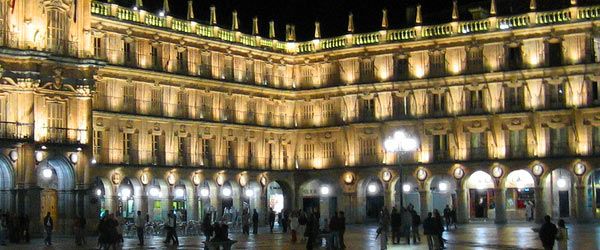
Salamanca, ´Ciudad Dorada´. Salamanca is also called ´the golden city´. This name is due to the type of stone with which many monuments and other buildings are built. This stone comes from Villamayor, a village in the region of Salamanca. This type of stone has a high iron content, giving the city a golden glow especially at sunrise and sunset. Besides this stunning appearance, Salamanca has much more to offer. Such as the new and the old cathedral, among others, and definitely do not forget the beautiful University of Salamanca.

The Romanesque architectural style

The origins of Romanesque architecture date back to the early 11th century. The construction of the old cathedral of Salamanca was started in the 12th century; it was not completely finished until the 14th century. The old cathedral therefore has many features of Romanesque architecture. For example, the cathedral has thick walls, with small windows and narrow doorways. The walls of this type of building carried almost the entire weight of the building. It was therefore feared that if one made openings too large, the walls could no longer bear the weight. So this is why many buildings with Romanesque architecture have dark interiors. Some other features of the Romanesque architectural style that can be found in the old cathedral include the round curved walls, quiet and clear shapes, many decorations and a cross shape as a floor plan.

The Gothic architectural style

Gradually around the 15th century, the Romanesque style gradually passed into the Gothic architectural style. Therefore, the new cathedral built between the 16th and 18th centuries has many features of the Romanesque architectural style, but also some features of the Gothic architectural style. The main difference between the Romanesque and Gothic styles is that Gothic construction left out many elements that were previously important to ensure that the building would stand. Instead of these elements, more use was made of cross-ribbed vaults, pillars and pointed arches. All of these uses made it possible to make the buildings much taller than previously possible.

The University of Salamanca has influences of different architectural styles, for example, the buildings have Romanesque, Gothic and as well as Platoresque features. The main features of the latter architectural style are much reflected in the facade of the University of Salamanca. This facade is beautifully decorated with various ornaments such as chandeliers, garlands and various other ornaments. For example, in addition to the famous frog in the facade, there is also a time traveler. This one symbolizes the "journey" that the University of Salamanca has gone through.

Spain Salamanca, ´Ciudad Dorada´. Salamanca is also called ´the golden city´. An ideal city to learn Spanish. salamanca, architecture spain, cuidad dorada Off <!-- Revive Adserver Etiqueta JS asincrónica - Generated with Revive Adserver v5.0.2 --><ins data-revive-zoneid="7" data-revive-id="ec923599c3fad9b044f22a6a73433428"></ins><script async src="//ads.iegrupo.com/www/delivery/asyncjs.php"></script> Samentha Geerts

Enrique Iglesias. Spanish singer | donQuijote

Submitted by Anonymous (not verified) on Mon, 03/04/2013 - 01:00
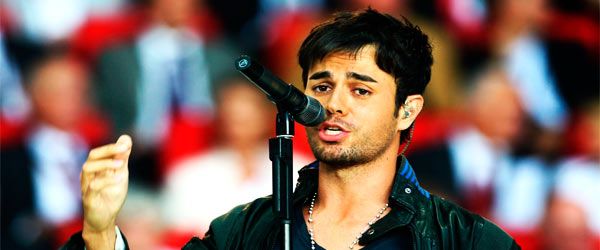
Enrique Iglesias When Enrique Iglesias' first album was released in 1996, it did well in Spanish-speaking countries.  enrique iglesias singer

As the youngest son of famous singer Julio Iglesias, it was no surprise that Enrique chose to become a singer as well. This has served him well, not least because of his looks.

On May 8, 1975, Enrique Miguel Iglesias Preysler was born in Madrid. He continued to live there until he was 7 years old and was sent to his father, who lived in America. From then on, things move quickly. When he is a teenager he sings in a school musical and his career has begun. A few years later he manages to land a recording contract.

He adopts an artist name ''Martinez'' when he sends a demo to a record company, hoping not to be seen ''as-the-son-of''. When his career starts to get a little more serious, he tells his parents that he is going to be an artist. His parents are a little skeptical about it but they support him.

When Enrique Iglesias' first album was released in 1996, it did well in Spanish-speaking countries. But success in other countries was not forthcoming. After the same happens with his second album, he decides to conquer the rest of the world. He made an English-language album and scored hits with ''Bailamos'' (which spent 16 weeks in the Dutch top 100) and ''Rythm Devine''. A number 1 hit followed with ''Can I have this kiss forever'' in collaboration with Whitney Houston. Many more hits follow such as ''Hero'', ''Be with you'' and ''Escape''.

He releases more hits such as in 2007 ''Do you know'', ''Taking back my love'' with Ciara and ''Can you hear me''. From 2010 he also scores several more hits with famous artists such as Wisin y Yandel ''No me digas que no'', Juan Luis Gerra ''Cuando me Enamoro'', Pitbull ''I like it'', Usher & lil Wayne ''Dirty dancer'', Nicole Sherzinger ''Heartbeat'', Ludacris ''Tonight I'm loving you'' and more.

Enrique Iglesias has also performed several times in the Netherlands, he has already performed in Ahoy three times. A concert by Enrique Iglesias is almost always crowded and mainly by female spectators.

Enrique has won many awards since 1996. He has won a Grammy, a Latino Grammy, several MTV awards, World Music Awards and many more. All this added up + more than 50 million albums sold make Enrique Iglesias one of the biggest Latin pop stars of this decade!

Spain When Enrique Iglesias' first album was released in 1996, it did well in Spanish-speaking countries. enrique iglesias, concert enrique iglesias, album enrique iglesias, latino music Off <!-- Revive Adserver Etiqueta JS asincrónica - Generated with Revive Adserver v5.0.2 --><ins data-revive-zoneid="7" data-revive-id="ec923599c3fad9b044f22a6a73433428"></ins><script async src="//ads.iegrupo.com/www/delivery/asyncjs.php"></script> Pauline Heuvelmans

Architecture in Madrid | donQuijote

Submitted by Anonymous (not verified) on Mon, 11/26/2012 - 01:00
Architecture in Madrid This metropolis of 3.2 million (!) inhabitants is a true paradise for art and architecture lovers! There are endless hotspots to be found here. Architecture in Madrid

This metropolis of 3.2 million (!) inhabitants is a true paradise for art and architecture lovers! There are endless hotspots to be found here. With all the beautiful squares, extraordinary statues, sights and beautiful architecture, Madrid offers you everything your heart desires!

Madrid is so incredibly big! I remember my first time in Madrid. Where to start? I thought. Therefore, I made a list for you of the places where you can find the most interesting architecture that you should not miss!

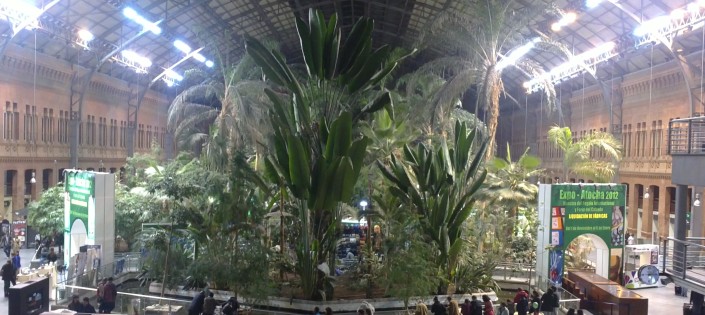
The square not to be missed is Plaza Puerta del Sol, the heart of the city. And of course the Plaza Mayor, an ancient square where you can relax, designed by Juan de Villanueva. Furthermore, you can visit the impressive train station; Estación de Atocha where you will find, for example, in the waiting hall a tropical garden and the memorial of the 2004 bombings. Then continue to the Palacio Real (royal palace) and take an immediate walk down Gran Vía, as this street is known as the broadway of Spain!

What else should you see?

  • Arco de la Victoria, the triumphal arch built in honor of the Spanish army, work of architect Arreguien
  • Monasterio de las Descalzas Reales, the dome, courtyard and royal salon are all examples of admirable architecture in this palace
  • Faro de Madrid, this modern tower was designed by Salvador Perez Arroyo in honor of the Barcelona Summer Olympics
  • Parque Retiro, on Sundays visit the most beautiful park in Madrid, where you will find the only statue in the world honoring the devil.
  • Torre Picasso, this is the tallest building in Madrid, designed by the same designer as the Twin Towers in NYC, namely Japan's Minoru Yamasaki.

Puerta de Europa is a good example of how modern Madrid is. Still fairly new (1.5 years old) in this city, it is the largest inner-city park in the world! The huge park full of modern achitecture is built on a highway so that the residents are no longer bothered by the noise. This park is definitely worth a visit when you are in Madrid!

Madrid is the perfect city for a city break! As you may have read, there are many sights to see, but you can also go shopping and find some of the best nightclubs in the country and probably in Europe! But if you want to spend more time in this vibrant city, take a Spanish course! Where better to do this than in the capital of Spain?

Spain This metropolis of 3.2 million (!) inhabitants is a true paradise for art and architecture lovers! There are endless hotspots to be found here. madrid city, modern architecture, madrid spain, madrid architecture Off <!-- Revive Adserver Etiqueta JS asincrónica - Generated with Revive Adserver v5.0.2 --><ins data-revive-zoneid="7" data-revive-id="ec923599c3fad9b044f22a6a73433428"></ins><script async src="//ads.iegrupo.com/www/delivery/asyncjs.php"></script> Pauline Heuvelmans
Subscribe to Spain

Manage cookie consent

Cookies on this website are used to personalize content and ads, provide social media features and analyze traffic. In addition, we share information about your use of the website with our social media, advertising and web analytics partners, who may combine it with other information you have provided to them or that they have collected from your use of their services. You can learn more in our Cookies policy

Always active

Necessary cookies help make a website usable by enabling basic functions such as page navigation and access to secure areas of the website. The website cannot function properly without these cookies.

Statistical cookies help website owners understand how visitors interact with websites by gathering and providing information in an anonymous form.

Preference cookies allow the website to remember information that changes the way the site behaves or looks, such as your preferred language or the region you are in.

Marketing cookies are used to track visitors on web pages. This is used to show ads that are more relevant and attractive to the individual user, and therefore more valuable to publishers and third-party advertisers.