Spanish singers | Spanish famous singers

Submitted by analitica2 on Wed, 02/25/2026 - 10:46
Spanish famous singers

Spanish singers. Discover the definitive list of famous Spanish famous singers to improve your Spanish through music.

spanish singers

Music is one of the best tools for learning Spanish or any other language. Through songs, students can improve their listening comprehension, expand their vocabulary, and discover new cultural aspects.

In this article, don Quijote brings you a selection of the most famous Spanish singers of all time, so you can discover their international impact and importance, as well as songs that will help you improve your language skills and expand your vocabulary.

1. Julio Iglesias: the most international Spanish artist

We begin with an artist you have surely heard of: Julio Iglesias. He may be the most internationally recognized Spanish singer, having sold over 300 million records since the 1970s and sung in several languages.

Julio Iglesias is the singer of songs such as “Me olvidé de vivir,” “Hey,” and “De niña a mujer,” classics of romantic music.

His songs are very useful for training your ear and, since he vocalizes clearly, for understanding the simple grammatical structures he uses in his songs. That's why this Spanish artist is ideal for intermediate learners who want to work on vocabulary related to feelings and personal experiences.

2. Raphael Spanish singer

With a career that began in the 1960s, Raphael is a historical figure in melodic songs. Songs such as “Yo soy aquel” and “Mi gran noche” are still popular today and known by everyone.

Raphael has a clear and theatrical pronunciation that facilitates listening comprehension, especially for students who want to learn about classic Spanish music.

3. Camilo Sesto: romanticism in Spanish

One of the great icons of romantic pop in Spanish since the 1970s was Camilo Sesto. His song “Vivir así es morir de amor” is part of Spain's musical history.

In addition, his songs are useful for practicing simple structures and vocabulary related to love and emotions.

4. Enrique Iglesias: global Spanish pop

Since the late 1990s, Enrique Iglesias has been a key figure in international Latin pop. You've probably heard of him, as he is the son of fellow Spanish artist Julio Iglesias.

He has songs such as “Experiencia religiosa” and “Bailamos,” which established him in the international Spanish music market.

Enrique Iglesias' songs are particularly useful for students who want to familiarize themselves with contemporary Spanish and expressions commonly used in pop music. His lyrics tend to be repetitive, which makes it easier to memorize basic structures.

5. Rosalía: innovation and contemporary Spanish

Rosalía has revolutionized Spanish music since 2018, when she rose to fame with songs such as “Malamente” and “Despechá.” Her style mixes flamenco, urban music, and experimental pop.

Although she is not the best Spanish artist for understanding grammatical structures in Spanish, if you are an advanced student, her songs will allow you to explore contemporary, colloquial, and creative Spanish. However, some metaphors and cultural expressions may be complex for beginners. Even so, we invite you to listen to her and immerse yourself in the universe of Rosalía.

6. Alejandro Sanz: poetry and emotion in Spanish pop

Active since the 1990s, Alejandro Sanz is one of the most influential singer-songwriters in the Spanish-speaking world. “Corazón partío” and “Amiga mía” are some of his greatest hits.

Sanz's lyrics are rich in emotional vocabulary and varied verb tenses, making them an excellent resource for intermediate and advanced students.

7. Joan Manuel Serrat: singer-songwriter and culture

Since the 1960s, Serrat has been a leading figure in Spanish and Catalan singer-songwriting. “Mediterráneo” is considered one of the best songs in Spanish of all time.

His literary lyrics are especially recommended for advanced students interested in Spanish culture and poetry.

8. Paco de Lucía: universal flamenco

If Andalusia is known for anything, it is for flamenco and Spanish guitar, and this is where Paco de Lucía comes in, who brought flamenco guitar to international stages in the 1970s.

Although his music is mainly instrumental, it is essential for understanding Spanish musical culture. So, dare to listen to flamenco to familiarize yourself with the traditional rhythms and sounds of Spain.

9. Rocío Jurado and Lola Flores: icons of Spanish tradition

If there are iconic figures among famous Spanish-language singers, they are undoubtedly Rocío Jurado and Lola Flores. Both represent Spanish copla and folklore and became major cultural symbols of the 20th century.

Their influence went beyond music, as they helped spread a very recognizable image of Spanish culture both inside and outside the country.

Rocío Jurado, known as “La más grande” (The Greatest), developed her career in the 1960s and achieved great international fame, especially in Latin America. Songs such as “Como una ola,” “Se nos rompió el amor,” and “Ese hombre” stand out for their emotional intensity and powerful performances.

For her part, Lola Flores, nicknamed “La Faraona,” was a singer, dancer, and actress who stood out for her charisma and stage presence since the 1940s. Songs such as “A tu vera” and “Pena, penita, pena” are part of the history of Spanish copla.

10. Miguel Ríos: the pioneer of rock in Spanish

From the 1960s and especially in the 1980s, Miguel Ríos popularized rock in Spain with songs such as “Bienvenidos.” His direct style and everyday vocabulary can be very accessible for intermediate-level students.

11. Mecano: the most influential pop group

Mecano left its mark on an entire generation during the 1980s and 1990s with songs such as “Hoy no me puedo levantar,” “Hijo de la luna,” and “Mujer contra mujer.”

Their narrative lyrics, often telling complete stories, allow students to work on their comprehension of stories and the analysis of complex grammatical structures.

12. Héroes del Silencio: international Spanish rock

In the 1990s, Héroes del Silencio achieved international fame. Their poetic and symbolic lyrics are ideal for advanced students who want to delve deeper into the more literary Spanish found in rock music.

13. David Bisbal: 21st-century Spanish pop

David Bisbal has been one of the best-selling Spanish artists since he left the television program Operación Triunfo in 2000. His song “Ave María” is one of his greatest hits. But he also has songs with repetitive structures and catchy rhythms, which facilitate listening practice and vocabulary acquisition.

14. C. Tangana: the urban evolution of Spanish

C. Tangana represents the new Spanish music scene. With songs like “Tú me dejaste de querer,” he fuses tradition and urban sounds. This Spanish artist is recommended for students interested in current Spanish and contemporary expressions, especially at advanced levels.

More Spanish music artists you should know

In addition to the artists already mentioned, Spanish music has many other important figures who have marked different eras and styles. Getting to know them all is complicated, but among them you will find a wide variety of musical styles, different accents, registers, and forms of expression.

  • Manuel de Falla: 20th-century classical music
  • Plácido Domingo: opera and zarzuela tenor
  • Isabel Pantoja: copla
  • Estopa: mix of rumba and rock
  • La Oreja de Van Gogh: pop
  • El Canto del Loco: represents youth pop-rock
  • Vetusta Morla: indie/alternative
  • Malú: melodic pop
  • Aitana: contemporary Spanish pop
  • Pablo Alborán: pop ballads
  • Quevedo: urban / reggaeton
  • Amaral: combines pop and rock

As you can see, there are Spanish artists and singers for all genres. The enormous diversity of Spanish music offers you a unique way to improve your Spanish through different genres and eras.

Listening to Spanish songs to learn Spanish is an active way to improve your level if classes or intensive Spanish courses are not your thing. There are famous Spanish artists who offer varied styles and registers that can be adapted to different levels of learning. Music allows you to improve your pronunciation, expand your vocabulary, and better understand Spanish culture.


Culture Art Spain History Spain Traditions Spain Spanish singers. Discover the definitive list of famous Spanish famous singers to improve your Spanish through music. spanish singers, spanish famous singers, raphael spanish singer, rafael spanish singer Off to improve your level Marta Díaz

Horror films in Spanish | Horror movies in Spanish

Submitted by analitica2 on Wed, 02/04/2026 - 09:05
Horror films in Spanish

Horror movies in Spanish. Discover the definitive list of scary movies in Spanish to improve your vocabulary and get really scared. Horror films in Spanish.

horror movies in spanish

Spanish films can be a very effective way to improve your language skills while enjoying intense and exciting stories. Horror films in Spanish have a large following, which is why we bring you the best horror movies in Spanish to enjoy at home in this article.

This type of film combines strong emotions with realistic dialogue, which makes it easier to memorize vocabulary and common expressions.

Below, we recommend several scary movies in Spanish so you can learn without losing track of the story. Remember that you can also read this article in Spanish, Italian or Portuguese.

Horror movies in Spanish

For the basic-intermediate level (A2–B1), we recommend choosing scary movies with a slow pace, clear pronunciation, and situations that are easy to contextualize.

El orfanato (The Orphanage)

El orfanato is one of the best options to start with. The story centers on Laura, a woman who returns with her family to the orphanage where she grew up. As the film progresses, the viewer is immersed in an atmosphere of mystery linked to childhood, memories, and family.

The language used is clear and emotional, with a lot of vocabulary related to feelings, the past, home, and family relationships, which makes it easier for Spanish learners to understand.

Los otros (The Others)

Another excellent option is Los otros, a film set almost entirely in a large, isolated house. The protagonist lives with her children under strict rules due to a strange illness, which leads to quiet but tense conversations.

Here you will find very careful Spanish, with well-structured sentences and everyday vocabulary related to domestic life, routines, and coexistence, ideal for strengthening the foundations of the language.

Best horror movies in Spanish

At the intermediate level of Spanish (B1-B2), horror movies in Spanish feature more natural dialogue and varied communicative situations, but they are still accessible.

REC

The REC saga is a good example of scary movies with very realistic language. The story follows a reporter who accompanies firefighters during a nighttime intervention in an apartment building. From there, the film unfolds in real time, with spontaneous dialogue, orders, screams, and colloquial expressions.

It is perfect for familiarizing yourself with spoken Spanish, urban vocabulary, and the way people react in stressful situations.

Mientras duermes

In Mientras duermes, horror is more psychological. The film focuses on César, a building doorman who knows all the details of his neighbors' lives. The language is calmer but very descriptive, with vocabulary related to daily routines, work, thoughts, and emotions.

It is an ideal choice for students who want to expand their vocabulary and improve their comprehension of more profound texts without losing clarity.

La habitación del niño (The Child's Room)

Also noteworthy is La habitación del niño, a story about a young couple who move into a new house with their baby. Through seemingly normal situations, the film introduces a growing tension.

The Spanish used is very every day, with familiar dialogues and vocabulary related to home, sleep, worry, and life as a couple, making it very suitable for this level.

Best scary films in Spanish

If your level is advanced (C1-C2), these scary movies in Spanish will allow you to work with more complex language and varied registers.

Tesis

Tesis is a film that combines horror and social commentary. The protagonist is a university student who investigates violence in the audiovisual media and becomes involved in a disturbing plot. Throughout the film, there are academic conversations, ethical debates, and more formal vocabulary related to university, research, and the media, making it an excellent tool for expanding advanced vocabulary.

El día de la bestia

Finally, El día de la bestia offers a very particular mix of horror, black humor, and social criticism. The story follows a priest who is convinced that he has discovered the date of the end of the world.

The language is very varied, ranging from religious vocabulary to colloquial expressions typical of urban Spanish. This diversity of registers makes it especially interesting for students who want to better understand real Spanish in different contexts.

Learning with scary movies

Horror movies in Spanish are not only a great way to have a good time, but they are also an excellent tool for improving listening to comprehension, learning vocabulary in context, and becoming familiar with different accents and ways of speaking.

Choose movies that are appropriate for your level and turn on the Spanish subtitles to help you progress naturally and gradually. And if this experience isn't enough, come take an intensive Spanish course with don Quijote.

Culture Spain Spain Spain Spain Horror movies in Spanish. Discover the definitive list of scary movies in Spanish to improve your vocabulary and get really scared. Horror films in Spanish. horror movies in spanish, scary movies in spanish, horror films in Spanish, best horror movies in spanish Off Marta Díaz

International Education Day | January 24

Submitted by analitica2 on Wed, 01/21/2026 - 09:13
International Education Day

International Education Day. Discover everything you need to know about International Education Day on January 24.International Education Day in Spain with don Quijote.

international day Education

International Education Day is celebrated every year on January 24, and its main objective is to recognize the role that education plays in society. As a Spanish language school, don Quijote knows firsthand the importance of education and is fully committed to making society more fair, inclusive, and sustainable thanks to it.

This day invites everyone to reflect on access to learning, educational quality, and the importance of lifelong learning. In an increasingly globalized world, knowledge and language skills open personal and professional doors. That is why education is consolidating its position as one of the most powerful tools for individual and collective development.

Origin of International Education Day

In 2018, the United Nations General Assembly established January 24 as International Education Day. The aim of adding this day to the calendar was to highlight education as an essential right, a public good, and a collective responsibility of society.

This day is part of the 2030 Agenda for Sustainable Development, particularly Sustainable Development Goal No. 4 (SDG 4), which seeks to ensure inclusive, equitable, and quality education, as well as to promote lifelong learning opportunities for all.

Thus, this day focuses on education as a driver of social, cultural, and economic change.

What is the main objective?

The main objective of International Education Day is to raise awareness among the population about the need to invest in quality education and ensure that no one is excluded from access to learning.

Among its goals are:

  • Defending universal access to education
  • Reducing educational inequalities
  • Promoting continuous learning
  • Strengthening international cooperation in education
  • Promoting training as the basis for social progress

Because education not only imparts knowledge, but also fosters values such as tolerance, critical thinking, and intercultural coexistence.

What does International Education Day seek to promote?

This day seeks to promote inclusive and accessible education for people of all ages and backgrounds, as well as quality education adapted to the challenges of today's world. It also seeks to promote multiculturalism, which fosters understanding between cultures, and a global education connected to international mobility and language learning

That is why learning foreign languages, such as Spanish, becomes a key tool for global communication, employability, and cultural exchange.

The social importance of this day lies in reminding us that without education, there can be no sustainable development. Educating the global population contributes directly to:

  • Reducing poverty
  • Improving employability
  • Promoting gender equality
  • Strengthening social cohesion
  • Promoting understanding between countries

For its part, language education plays an essential role in cultural integration and international mobility, allowing thousands of students to have transformative experiences in other countries and learn about other cultures.

Relevant data on education

Although you may think that this goal is consolidated and established throughout the world, the reality is quite different. Here are some facts that underscore the importance of International Education Day:

  • More than 250 million children and young people worldwide are not in school (UNESCO)
  • Approximately 70% of the jobs of the future will require language and digital skills
  • Studying abroad improves employability by up to 50%, according to various international studies

These figures highlight the need to commit to global, accessible, and quality education.

Education and studying Spanish as a foreign language

In keeping with the values promoted by International Education Day, don Quijote has been committed to providing quality education through Spanish language instruction to international students for decades.

Our Spanish courses are available in different destinations in Spain and Latin America. We don't just teach a language; we also offer a complete educational experience based on cultural immersion and communicative methodologies. Our qualified native teachers are trained to teach Spanish as a foreign language, and we have programs adapted to all ages and levels.

Learning Spanish in Spain with don Quijote means accessing an education that promotes intercultural understanding, personal growth, and connection with the Spanish-speaking world.

International Education Day reminds us that investing in learning is investing in the future. No matter what the goal, whether it is to improve career opportunities, have an international experience, or grow on a personal level, education is and will continue to be the key to transforming and improving lives.

Culture History Spain International Education Day. Discover everything you need to know about International Education Day on January 24. international day Education, international Education day Off Marta Díaz

Spanish flamenco dancers | Spain traditional dance flamenco

Submitted by analitica2 on Thu, 09/18/2025 - 11:53
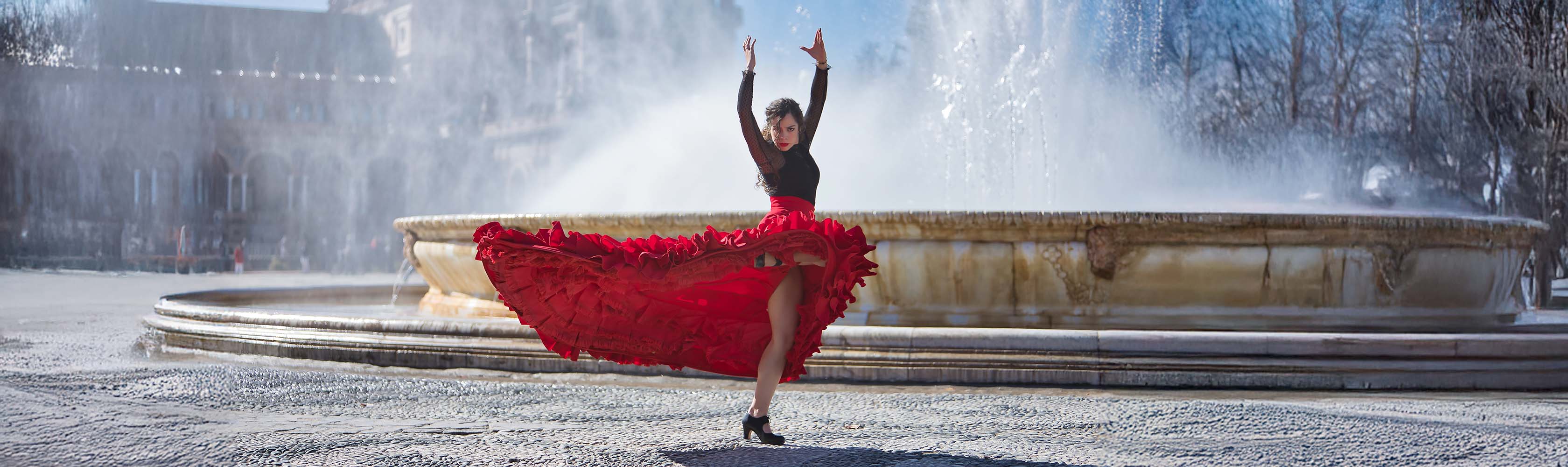
Spanish flamenco dancers

Spanish flamenco dancers. Discover the most important figures in Spain traditional dance flamenco and how they rose to stardom in flamenco.

Spanish flamenco dancers

If Spain is known internationally for anything, it is for flamenco. Although it is a dance that is mainly practiced in Andalusia and not by all Spaniards, outside our borders it is a major attraction for tourists.

Flamenco dancing is one of the fundamental pillars of this Andalusian art, along with singing and guitar playing. Over the centuries, numerous Spanish flamenco dancers have left their mark with their technique, personality, and ability to transform this discipline into something magnificent.

That's why we at don Quijote want to introduce you to some of the essential figures who have shaped this dance from its origins to the present day.

Vicente Escudero (1888-1980)

Vicente Escudero was one of the great innovators of flamenco dance in the 20th century. In addition to being a virtuoso, Escudero conceived flamenco as a dance with its own artistic identity, developing his famous Decalogue of the Good Dancer.

He sought purity and sobriety, avoiding theatrical exaggeration in each performance. His interpretation of the farruca is remembered as one of the milestones of his personal style, austere and deeply expressive.

Faíco (Francisco Manzano Heredia, 1932-1993)

Francisco Manzano Heredia, better known as Faíco, stood out for his strength and elegance. This gypsy dancer belonged to the Pelaos family and was a leading figure in the tablaos during the middle decades of the 20th century. He also contributed new forms to the dance, especially in styles such as the farruca and the garrotín. His style combined great technical precision with an overwhelming stage presence.

Carmen Amaya (1913-1963)

Considered one of the greatest Spanish flamenco dancers in history, Carmen Amaya revolutionized this dance with her wild energy, her mastery of zapateado (footwork) and her way of moving across the stage.

Amaya broke gender stereotypes, dancing with the same power as the men, which led her to become an international figure who took flamenco to stages around the world. You can learn more about Carmen Amaya in this video: Carmen Amaya: The dancer who shook flamenco.

Antonio Gades (1936-2004)

Gades was a famous dancer and choreographer who played a key role in the professionalization of stage flamenco. He conceived dance as a narrative and theatrical art, creating productions that integrated dance, drama, and music, such as Bodas de Sangre, Carmen, and El Amor Brujo. He also brought flamenco to the cinema, introducing it to new audiences. His style was characterized by refinement, restraint, and a deep respect for the essence of flamenco.

Merche Esmeralda (b. 1947)

Merche Esmeralda represents the generation that took flamenco from the tablao to the academic stage. She was a member of the Spanish National Ballet and toured internationally extensively.

Her dancing combines elegance, technical precision, and musicality. She has also played an important role as a teacher, training new generations of Spanish flamenco dancers.

Pastora Imperio (1889-1979)

She was one of the first great stars of stage flamenco. Pastora Imperio is known for her elegance, majestic presence, and expressiveness. She also helped shape the stage style of flamenco in the first half of the 20th century. She influenced an entire generation and became a symbol of classical flamenco.

Eva Yerbabuena (b. 1970)

One of the most respected flamenco dancers today is Eva Yerbabuena. Her work combines deep tradition with a constant search for choreographic innovation. This Spanish flamenco dancer is known for her emotional intensity, expressiveness, and use of her entire body in her choreography. She has taken flamenco to international stages and influenced many contemporary artists.

Sara Baras (b. 1971)

Known for her impeccable technique and great sense of rhythm, Sara Baras has managed to popularize flamenco around the world without losing its roots. Her shows are large-scale productions that combine classical elements with modern staging, appealing to both specialists and new audiences. She has been instrumental in keeping flamenco alive and constantly evolving in the 21st century.

Rafael Amargo (b. 1975)

Rafael Amargo is a dancer and choreographer from Granada who trained in classical flamenco but soon began to mix it with contemporary dance and theater. His shows, such as Poeta en Nueva York, have been performed internationally. He is known for his great stage energy, charisma, and willingness to break the mold within flamenco.

Joaquín Cortés (b. 1969)

Joaquín Cortés began his career with the Spanish National Ballet and went on to become one of the world's most famous Spanish flamenco dancers. His style combines flamenco with contemporary dance, bringing spectacular stage presence, drama, and great technique. He has taken flamenco to major international theaters, bringing it to a wide range of audiences.

Farruquito (b. 1982)

A descendant of the Farruco flamenco dynasty, Spanish flamenco dancer Farruquito is considered one of the greatest exponents of pure flamenco today. His dancing is characterized by its power, technical mastery, and fidelity to the Andalusian gypsy tradition.

Antonio Canales (b. 1961)

Antonio Canales trained at the Spanish National Ballet and later founded his own company. Canales is renowned for his strength, character, and enormous stage presence. He has renewed the choreographic language of flamenco and has been part of seminal shows, as well as being internationally awarded and recognized.

All these artists share certain characteristics that define them as Spanish flamenco dancers: great technical mastery, a strong artistic personality, and an ability to convey emotion. Flamenco dance remains a living art form, in which tradition and innovation coexist. If you want to discover more about flamenco or improve your language skills, come to don Quijote to learn Spanish in Spain and fall even more in love with this dance.

Culture Art Spain History Spain Traditions Spain Spanish flamenco dancers. Discover the most important figures in Spain traditional dance flamenco and how they rose to stardom in flamenco. spanish flamenco dancers, spain traditional dance flamenco Off Marta Díaz

Spanish Culture: History of Spain | donQuijote's blog

Submitted by Anonymous (not verified) on Tue, 05/12/2020 - 16:41
Learn more about Spanish History in Spain. Discover important moments and leading personalities Spanish Culture: History of Spain The history of Spain is the one of Carthaginians, Romans, Arabs, and Catholic monarchs, among many other settlers. The Spanish Empire, which once ranged from the Philippines to the Americas, has a lot of interesting stories waiting to be rediscovered over time. Let us tell you some of them. spanish history in spain
spanish history in spain Spain Learn more important moments and personality of the spain history

History of Spanish literature | Spanish literature history

Submitted by analitica2 on Thu, 04/24/2025 - 10:44
History of Spanish literature

History of Spanish literature. A review of the history of Spanish literature. Discover how Spanish literature has evolved over the centuries in this article.

history of Spanish literature

The history of Spanish literature is one of the oldest and richest in Europe. Over the centuries, it has reflected social, political, and cultural changes, leaving its mark on the entire Spanish-speaking world. From the first written works in the Middle Ages to contemporary authors, the history of Spanish literature is full of unforgettable works and authors who have built a universal legacy.

Would you like to learn more about the history of Spanish literature and how it has evolved? This is the article for you! We'll tell you how Spanish literature has evolved over the centuries.

Keep reading! You can also change the language to Spanish, French, or Italian.

The Middle Ages: the first steps

Spanish literature began to take shape in the Middle Ages, between the 11th and 15th centuries, as texts had previously been transamitted orally. Although earlier texts existed in Latin, the birth of literature in this Romance language came with the “Cantar de mío Cid”, an anonymous epic poem written around the 12th century. This work, or cantar de gesta, recounts the exploits of the knight Rodrigo Díaz de Vivar and stands out for its sober and realistic style, unlike the fantastical tone of other European epics.

The Middle Ages also saw the flourishing of jarchas (short poems in Mozarabic) and religious and didactic texts such as those by the Archpriest of Hita, author of the Libro de buen amor, a fundamental work due to its mixture of genres and its festive and provocative tone.

Another key name in the Middle Ages was Don Juan Manuel, who wrote El conde Lucanor. This text is a collection of moralizing tales that reveal the author's early awareness.

Renaissance: the flowering of humanism

With the arrival of the Renaissance in the 16th century, Spain experienced a cultural boom that was reflected in its literature. During this period, human beings, beauty, and nature were exalted, influenced by classical thought.

One of the great names of this period is Garcilaso de la Vega, a poet who introduced Italian forms into Spanish poetry, such as the sonnet, and renewed poetic language with an elegant and harmonious tone.

In prose, Fray Luis de León stands out with his mystical prose and essays, and in theater, Juan de la Cueva and Lope de Rueda, precursors of Baroque theater. This period laid the foundations for what was to come during the Golden Age.

The Golden Age: literary splendor

Let’s continue with the Golden Age, which spans from the end of the 16th century to the 17th century. This was one of the most brilliant moments in Spanish literature. Here we find some of the greatest and most renowned authors in the history of Spanish literature.

The most universal is undoubtedly Miguel de Cervantes, author of “Don Quixote”, considered the first modern novel and one of the most important works of world literature. With a mixture of humor, social criticism, and philosophical depth, Cervantes presents us with an unforgettable portrait of the human condition.

In poetry, Luis de Góngora shines with his culteranista style, full of metaphors and formal complexity, and Francisco de Quevedo, representative of conceptism, with his sharp and satirical poetry.

In theater, the great name is Lope de Vega, who renewed the rules of drama and wrote more than 1,500 plays. His most prominent rival was Calderón de la Barca, author of “La vida es sueño”, a philosophical piece on free will and illusion.

Illustration and Neoclassicism: reason and order

The 18th century brought with it Illustration, a movement that valued reason and education above all else. Spanish literature became more rational and didactic, moving away from Baroque excess.

Notable authors include Benito Jerónimo Feijoo, an essayist who promoted critical thinking, and Leandro Fernández de Moratín, a playwright whose works include “El sí de las niñas”, which criticizes arranged marriages.

Romanticism and Realism: emotions and truth

In the 19th century, Spanish literature experienced two major trends: Romanticism, which gave prominence to emotions, and Realism, which focused on faithfully representing social reality.

Among the Romantics, Gustavo Adolfo Bécquer stands out with his “Rimas y leyendas”, a short but influential work due to its lyricism and melancholic tone. José de Espronceda, author of “El estudiante de Salamanca” and “El diablo mundo”, also stood out for his rebelliousness and expressive power.

Realism brought authors such as Benito Pérez Galdós, who masterfully portrayed Madrid society in novels such as “Fortunata y Jacinta” and “Episodios nacionales”. Alongside him, Leopoldo Alas “Clarín” wrote “La Regenta”, one of the best novels of the 19th century.

The Generation of '98 and '27: crisis and innovation

After the loss of the last colonies in 1898, a generation of writers emerged marked by a crisis of national identity. The Generation of '98 reflected on Spain from a critical and existential perspective with authors such as Miguel de Unamuno, Pío Baroja, Azorín, and Antonio Machado.

Shortly afterwards, in the 1920s and 1930s, the Generation of '27 emerged, with figures such as Federico García Lorca, Rafael Alberti, Luis Cernuda, and Pedro Salinas. These authors combined tradition and avant-garde, taking poetry to new aesthetic heights.

One of the most renowned authors in the history of Spanish literature is Federico García Lorca. Remembered as much for his poetry as for his theater, Lorca portrayed pain, injustice, and beauty in his works. His best-known titles are “Bodas de sangre” and “La casa de Bernarda Alba”.

Exile and post-war literature

After the Spanish Civil War, many writers went into exile or suffered censorship under Franco. Among the exiles were Max Aub, Ramón J. Sender, and María Zambrano. Within Spain, literature became more introspective and symbolic, as in the work of Camilo José Cela, author of “La Colmena”, and Carmen Laforet with “Nada”.

Democracy and contemporary literature to the present day

With the transition to democracy in the 1970s, Spanish literature experienced a period of openness and diversification. Female voices such as Rosa Montero, Soledad Puértolas, Ana María Matute, and Almudena Grandes emerged, bringing new perspectives on history and society.

Novelists such as Javier Marías, Arturo Pérez-Reverte, and Antonio Muñoz Molina also emerged, whose works have achieved great international renown. Contemporary narrative is characterized by its variety of styles and themes, from historical novels to urban realism and autofiction.

The history of Spanish literature is a mirror of the country's evolution, its struggles, hopes, and dreams. From the cantares de gesta to contemporary novels, through the Golden Age and the Generation of '98, each era has contributed unique voices that have enriched the language and thought.

With a living and constantly changing tradition, the history of Spanish literature remains an inexhaustible source of discovery and excitement. If you want to learn more about the history of Spanish literature and improve your command of the language so you can read these titles in their original version, don't hesitate to sign up for an intensive Spanish course. don Quijote helps you reach your desired level while you venture out to learn Spanish in Spain. Visit our website and start your journey!

Spain History of Spanish literature. A review of the history of Spanish literature. Discover how Spanish literature has evolved over the centuries in this article. Spanish literature, spanish language literature, literature of Spain, history of Spanish literature, what is Spanish literature, Castilian literature Off Marta Díaz

History of Spanish language | Origin of Spanish language

Submitted by analitica2 on Thu, 03/27/2025 - 11:30
History of Spanish language

Have you ever wondered what the origin of Spanish language is? don Quijote tells you the history of the Spanish language from its origins to the present day.

History of Spanish language

Have you ever wondered what the origin of Spanish language is? If you are a student and you are starting to learn Spanish in Spain, this question may have crossed your mind at some point. So, here at don Quijote, we are going to give you the keys you need to discover the history of the Spanish language.

A fascinating journey through the centuries that reflects linguistic, political and cultural influences, that is what the history of the Spanish language boils down to. All these factors have contributed to shaping Spanish as we know it today.

To be more precise, however, the origin of Spanish is to be found in Vulgar Latin, a spoken variant of Latin that spread with the domination of the Roman Empire in the Iberian Peninsula. However, the evolution of Spanish has not been linear, but rather a complex process of transformation and assimilation of various languages.

Origin of Spanish language

The origin of Spanish as a language dates to the 3rd century BC, when the Romans arrived in the Iberian Peninsula and imposed Latin as the official language. However, before Romanization, the peninsula was inhabited by various peoples with their own languages: the Iberians, the Celts, the Tartessians and the Vascones. These pre-Roman languages left traces in modern Spanish, especially in toponymy (the set of proper names of a country or region) and in some commonly used words, such as cerro (hill), which comes from Iberian, and camisa (T-shirt), of Celtic origin.

With the fall of the Roman Empire in the 5th century AD, the peninsula was invaded by the Visigoths, who spoke a Germanic language. Although their lexical influence was limited, they contributed terms such as guerra (war) and espía (spy). However, Vulgar Latin remained the predominant language and continued to evolve, giving rise to the Romance languages, including modern Spanish.

On the other hand, several co-official languages currently coexist on the Iberian Peninsula, euskera (Basque) being one of the most unusual cases. Euskera is the only pre-Roman language that has survived to the present day without having been replaced by a Romance language. Its origin is still uncertain, and unlike Spanish, it does not derive from Latin. Although its influence on Spanish has not been as extensive as that of Latin or Arabic, it has contributed some words and place names, such as izquierda (left), bacalao (cod) or aquelarre (coven).

Formation of medieval Spanish

Around the 9th century, Spanish began to take shape in the Kingdom of Castile as a distinct language. The Castilian dialect emerged in the north of the peninsula, in a mountainous region where contact with other Romance languages was frequent. Thus, with the territorial expansion of Castile during the Reconquista, Castilian prevailed over other dialects, such as Leonese or Aragonese, and began to consolidate itself as the dominant language.

One of the most important milestones in the history of Spanish was the work of Alfonso X el Sabio in the 13th century. Under his reign, Castilian became the official language of administration and culture, which allowed for its standardization. During this period, numerous scientific, philosophical and legal texts were translated into Castilian, enriching its vocabulary and establishing its grammar.

Another key figure in the consolidation of Spanish as a language was Antonio de Nebrija, who in 1492 published the Gramática de la lengua castellana (Grammar of the Castilian Language), the first grammar guide for a Romance language. This event marked the beginning of Spanish as a codified language with defined linguistic norms.

Influence of Arabic and phonetic evolution

During the period of Muslim rule (711-1492), Arabic had a significant influence on Spanish. It is estimated that around 4,000 words in modern Spanish come from Arabic, especially in fields such as agriculture, science and administration. Some examples of these words include alcohol, azúcar (sugar), ojalá (I hope) and almohada (pillow).

In addition to lexical enrichment, Spanish underwent significant phonetic changes in the Middle Ages. For example, the evolution of the Latin initial “f” into “h”, as in farina, which evolved into harina (flour). The palatalization of the “ll” and the loss of the final “e” in some words, for example, the word lupus became lobo (wolf).

These changes contributed to differentiating Spanish from other Romance languages such as French or Italian.

Spanish in the modern era

In the 15th and 16th centuries, with the expansion of the Spanish Empire, Spanish spread throughout the Americas, the Philippines and some regions of Africa. During this period, Spanish adopted numerous terms from indigenous American languages, including chocolate, canoa (canoe) and mate. This influence contributed to the lexical diversity of Spanish and the creation of regional varieties.

In the 18th century, the Real Academia Española or RAE (Royal Spanish Academy) was founded with the aim of standardizing the language. The publication of the Diccionario de Autoridades in 1726 and the establishment of spelling rules helped to unify Spanish and reduce dialectal differences.

Currently, Spanish is a language spoken by more than 500 million people worldwide and is the second most spoken language in terms of the number of native speakers. Its evolution is still ongoing, influenced by factors such as migration, technology and contact with other languages.

Therefore, Spanish is a Romance language since it originated in Rome, but it was also influenced by pre-Roman and Germanic languages. The history of the Spanish language is the result of centuries of linguistic and cultural changes.

If you are thinking of improving your Spanish and joining the more than 500 million people who speak the language, intensive Spanish courses can help you achieve your goal. The lexical richness and dialectal diversity of Spanish make it a living language in constant transformation that will allow you to communicate with thousands of people around the world. Don't hesitate any longer and start your adventure in the language!

Spain Have you ever wondered what the origin of Spanish language is? don Quijote tells you the history of the Spanish language from its origins to the present day. history of spanish language, spanish language history, history of the spanish language, history of spanish, origin of spanish language, spanish language origin, spanish origin language, origins of spanish, the origin of spanish Off Marta Díaz

10 Things You Didn’t Know About Spanish | donQuijote

Submitted by Anonymous (not verified) on Tue, 08/20/2019 - 02:00
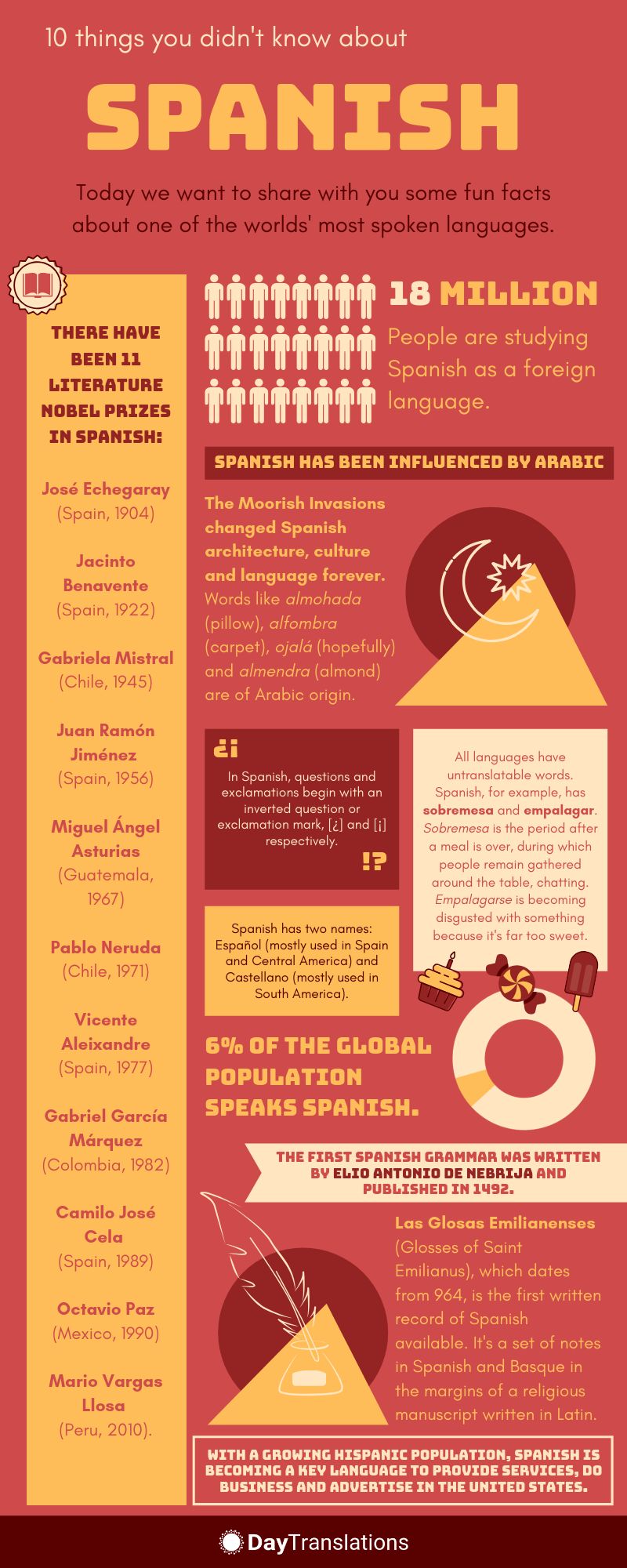
10 Things You Didn’t Know About Spanish 10 Things You Didn’t Know About Spanish

Spanish is one of the most widely spoken, influential and fastest-growing languages on earth

This member of the Romance family is the second most widely spoken language in the world, with approximately 400 million native speakers, as well as the third biggest language on the internet (after Mandarin Chinese and English). Click here to keep on reading in Spanish!


The Bank of Spain predicted that the country’s GDP will grow 2.4% this year. Meanwhile, according to research from BBVA, Latin America’s GDP is expected to grow 2.6% in 2020, and Statista projects that the United States’ Hispanic population will be of 99.8 million people in 2050.


These are just three of the many reputable sources that estimate a growth in the economic power, commercial and cultural relevance of Spanish-speaking countries and communities.


With enterprises from all regions working to expand to the Spanish-speaking world or targeting Spanish-speakers at home, quality Spanish translation services are becoming a primordial need across industries, and being bilingual in Spanish is, now more than ever, a competitive advantage.


As a widely spoken language with international influence and history in several continents, there’s a lot to learn about the past, present and future of Spanish.


For instance, did you know that, in 2013, the Pew Research Center estimated that 2.8 million non-Hispanic Americans speak Spanish at home?

How about the fact that 20% of Tagalog words have a very clear Spanish origin?


In the following infographic by language services provider Day Translations, we’ll look into 10 interesting facts about Spanish that you probably didn’t know, from its Arabic influences to its unique food-related words.

Culture Spain These 10 things you didn't know about Spanish will surprise you! Find here curious facts about Spanish as a language and discover the Spanish language. Off <!-- Revive Adserver Etiqueta JS asincrónica - Generated with Revive Adserver v5.0.2 --><ins data-revive-zoneid="7" data-revive-id="ec923599c3fad9b044f22a6a73433428"></ins><script async src="//ads.iegrupo.com/www/delivery/asyncjs.php"></script> Patricia Mendez

Mysteries at the University of Salamanca | donQuijote

Submitted by Anonymous (not verified) on Thu, 08/17/2017 - 02:00
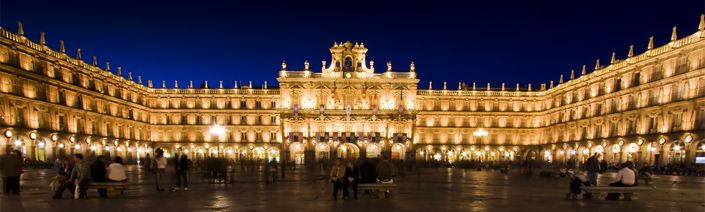
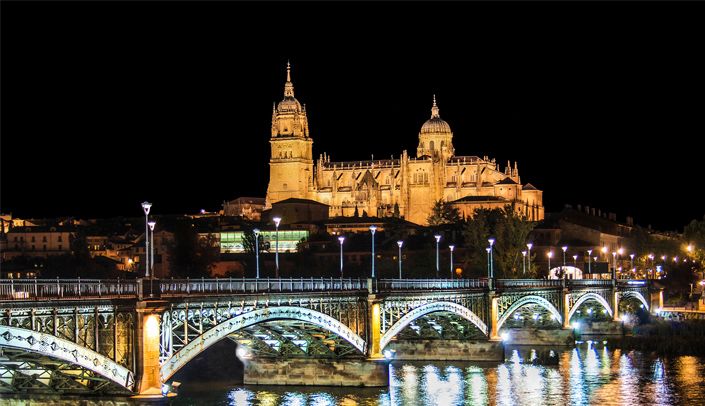
Mysteries at the University of Salamanca Eight centuries go a long way and if we keep in mind that this institution has seen a lot of periods, it’s only natural that numerous legends are contained within its walls. Here are just a few. Mysteries at the University of Salamanca

The University of Salamanca will soon celebrate its 800th year. Eight centuries go a long way and if we keep in mind that this institution has seen periods such as the Middle Ages, the Baroque, the Spanish Empire and Romanticism, it’s only natural that numerous legends are contained within its walls. Here are just a few.

Read the Spanish version

The first one, although it has to do with the university, takes place in the chapel of Santa Barbara, inside the Old Cathedral. Originally the students had their classes on the temple’s premises and this chapel served as a classroom in which to prepare and defend dissertations and doctoral theses. These days, a procedure like this would likely make your hair stand on end: the student would spend the night reviewing his books and notes in front of Bishop Lucero’s tomb in complete solitude, dimly lit by a few candles. The next morning, still in front of the bishop’s tomb, he would defend his work before the examining board. To pass the examination after a sleepless night in the sole company of a deceased dignitary must have been, at the very least, challenging.

Another legendary component that has to do with the fleeting nature of life is the famous frog which, to pass all courses, must be found on one of the skulls that adorn the facade of the university. It is not known who started this legend, but it is one of many: some say that the frog is the stonemason’s signature, others that it warns students of the danger of leading a careless life, still others that it is an uneasy message telling us that the dead will rise “when frogs grow hair” (a common Spanish saying).

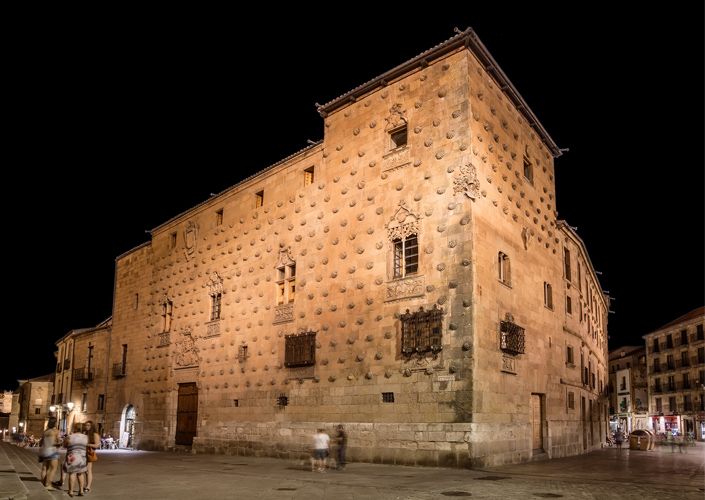
Let's move on from these dark and gloomy legends to a brighter, shinier one. Surely you have marveled at the beautiful architecture of the Casa de las Conchas (House of Shells), a true artistic treasure that was once the home of Rodrigo Maldonado, Professor of Law back in the sixteenth century. Well, some people say that each of the shells that decorates the facade hides a gold coin. Could this be the real reason for its recent restoration?

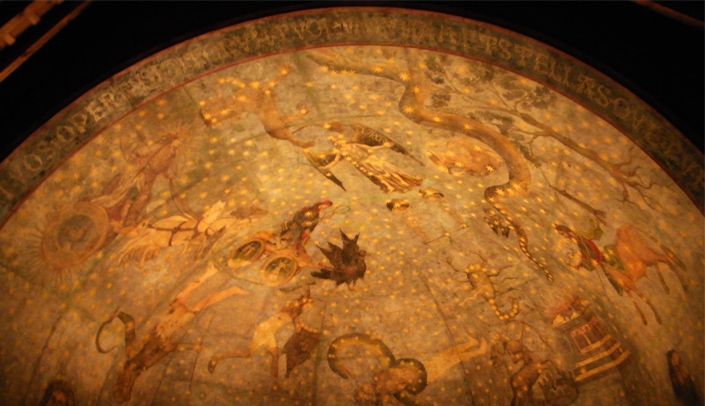
Another artistic detail full of mystery is the sky that can be seen in the Escuelas Menores (High School). It is a map of the firmament created between the fifteenth and sixteenth centuries which then occupied the ceiling of the University’s old library. These paintings were covered over when the library was renovated as a chapel. In the mid-twentieth century they were rediscovered and brought to light again in the Escuelas Menores. Imagining a multitude of wise men, researching ancient and secret knowledge under a map of the sky has its charm.

Several streets below there is a corner of Salamanca that, although it has nothing to do with the University, was a classroom ... or so they say. According to the legend, the Cueva de Salamanca (Cave of Salamanca) was used as a classroom where the devil himself taught magicians and wizards. They say the classes ended because one of the students deceived the teacher by selling him his shadow instead of his soul. But it is also said that there is no trace of a school, and what we see today are the remains of a medieval church.

We have many more to tell and invite you to come and learn Spanish with us and discover more. We can tell you with certainty that if you walk through its streets you will not only feel the legends. You will also be tempted to create your own.

Spain This institution has seen a lot of periods, it’s only natural that numerous legends are contained within its walls. Off <!-- Revive Adserver Etiqueta JS asincrónica - Generated with Revive Adserver v5.0.2 --><ins data-revive-zoneid="7" data-revive-id="ec923599c3fad9b044f22a6a73433428"></ins><script async src="//ads.iegrupo.com/www/delivery/asyncjs.php"></script> Trad by Mark
Subscribe to Spain

Manage cookie consent

Cookies on this website are used to personalize content and ads, provide social media features and analyze traffic. In addition, we share information about your use of the website with our social media, advertising and web analytics partners, who may combine it with other information you have provided to them or that they have collected from your use of their services. You can learn more in our Cookies policy

Always active

Necessary cookies help make a website usable by enabling basic functions such as page navigation and access to secure areas of the website. The website cannot function properly without these cookies.

Statistical cookies help website owners understand how visitors interact with websites by gathering and providing information in an anonymous form.

Preference cookies allow the website to remember information that changes the way the site behaves or looks, such as your preferred language or the region you are in.

Marketing cookies are used to track visitors on web pages. This is used to show ads that are more relevant and attractive to the individual user, and therefore more valuable to publishers and third-party advertisers.