Double Negatives in Spanish: Learn How to Use Them

Submitted by Anonymous (not verified) on Wed, 01/15/2020 - 01:00
Double Negatives in Spanish: Learn How to Use Them Double Negatives in Spanish: Learn How to Use Them

In other languages, such as English or French, when a sentence contains a negative expression (e.g. never or jamais), we don’t add the usual negative adverb (not in English or pas in French). Why? Because we would be creating a double negative sentence, which is incorrect in these languages. In Spanish, however, grammar works differently in this regard.

Do you want to know more? Don’t worry, after reading the explanation below you won’t be in doubt anymore. Keep on reading this article in Spanish or click here to switch to the Spanish version.

When not to use double negatives in Spanish

When words such as nunca or jamás (never), tampoco (neither), nadie (no one), and ninguno (none) precede a verb, then we don’t add the adverb no, as it occurs in other languages. For example:

Nunca hago deporte (I never do sports)

INCORRECT: Nunca no hago deporte*

Yo tampoco hago deporte (I don’t do sports either)

INCORRECT: Yo tampoco no hago deporte*

En mi familia nadie hace deporte (No one in my family does sports)

INCORRECT: En mi familia nadie no hace deporte*

Nada de lo que haces puede considerarse deporte (Nothing you do can be considered sports)

INCORRECT: Nada de lo que haces no puede considerarse deporte*

Ninguno de ellos hace deporte (None of them does sports)

INCORRECT: Ninguno de ellos no hace deporte*

double negatives in spanish


When to use double negatives in Spanish

On the contrary, when these negative words go after the verb, we must place the word no before the adverb. For example:

No hago deporte nunca (I never do sports)

INCORRECT: Hago deporte nunca*

Yo no hago deporte tampoco (I don’t do sports either)

INCORRECT: Yo hago deporte tampoco*

En mi familia no hace deporte nadie (No one does sports in my family)

INCORRECT: En mi familia hace deporte nadie*

No puede considerarse deporte nada de lo que haces (Nothing you do can be considered sports)

INCORRECT: Puede considerarse deporte nada de lo que haces*

No hace deporte ninguno de ellos (None of them does sports)

INCORRECT: Hace deporte ninguno de ellos*

In any case, the core message does not change. The only difference is a reinforced negative nuance.

Surely you won’t ever have any more doubts about double negatives in Spanish!

(Also: surely you will never have any more doubts about double negatives in Spanish!) ?

Thank you very much to Ignacio Sellés, Spanish teacher at don Quijote Alicante, for contributing to the blog with today’s article. Keep posted to continue receiving Spanish language tips and tricks weekly.

Grammar Double Negatives in Spanish: Learn How to Use Them Off <!-- Revive Adserver Etiqueta JS asincrónica - Generated with Revive Adserver v5.0.2 --><ins data-revive-zoneid="7" data-revive-id="ec923599c3fad9b044f22a6a73433428"></ins><script async src="//ads.iegrupo.com/www/delivery/asyncjs.php"></script> Patricia Mendez

8 Stops for the Best Road Trip Through Patagonia

Submitted by Anonymous (not verified) on Fri, 01/10/2020 - 01:00
To the End of the Earth: 8 Stops for the Best Road Trip Through Patagonia To the End of the Earth: 8 Stops for the Best Road Trip Through PatagoniaTo the End of the Earth: 8 Stops for the Best Road Trip Through Patagonia

As Mark Twain said, 'One must travel to learn’. At don Quijote, we are perfectly aware of the importance of exploring and discovering new cultures and ways of seeing the world, especially when we want to learn a foreign language and truly master it. For this reason, we want to dedicate today's blog post to propose a fascinating road trip through the Patagonia of Chile and Argentina, a trip to awaken all the senses, as well as a perfect opportunity to escape winter and learn Spanish in Latin America.

Continue reading or switch to the Spanish version and practice your reading skills.

We have designed this road trip for all those who want to have an unforgettable experience full of adventures and challenges to overcome, an experience full of paths to travel and landscapes to admire. We have prepared a travel itinerary with 8 stops in some of the best destinations to visit in the Patagonia of Chile and Argentina. It is highly recommended to take this trip at this time of year (between the months of December and March), since they are in summer and temperatures are much more pleasant.

But Chile and Argentina are huge, so it would be too long to take a road trip through all their territory. For this reason, we have focused our route on Patagonia. We will cross the borders of both countries on different occasions, being able to enjoy a great variety of scenarios: from inhospitable places with majestic glaciers, to bustling metropolises and wonderful mountain landscapes.

1. Buenos Aires, Argentina
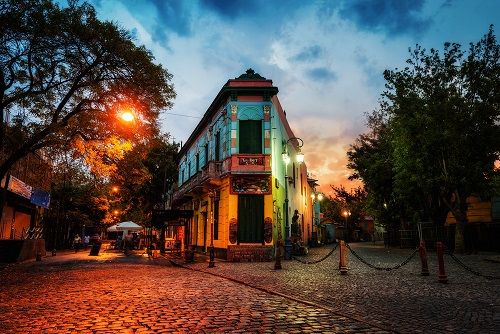
 

Buenos Aires, Argentina


Buenos Aires is the capital city of Argentina, a place that gives off a contagious energy, a city that spreads fascinating enthusiasm to the millions of people who visit it every year. It is the cultural heart of the country, but also the birthplace of tango and the world capital of theater. Take advantage of this stop to meet the sociable porteños —the “people of the port” in the Buenos Aires region— and enjoy a total immersion in the language and culture of this vibrant metropolis.


2. San Carlos de Bariloche, Argentina
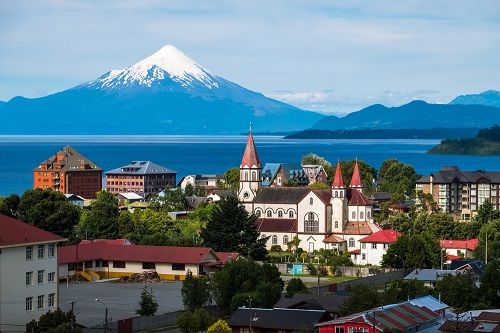
 

San Carlos de Bariloche, Argentina


After a long (but fascinating) drive from Buenos Aires, we will arrive in San Carlos de Bariloche. Located in the province of Río Negro and next to the Andes mountain range, it is the most populated and visited city in Patagonia. The main attractions of Bariloche are its incredible natural reserves, full of forests and lakes, and its well-known ski resorts. In addition, Bariloche was declared "world capital of adventure tourism" in November 2012 and has one of the most important scientific and technological centers of the American continent.


3. Puerto Varas, Los Lagos, Chile
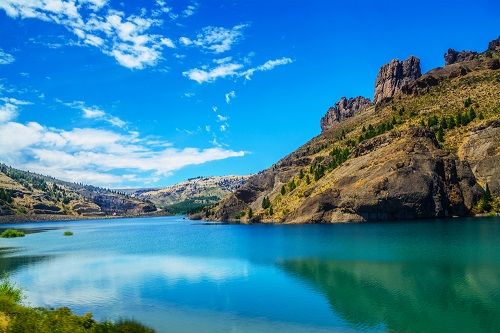
 

Puerto Varas, Chile


And, through the wonderful landscapes of the Puyehue National Park, we move to Puerto Varas, in the Los Lagos region, southern Chile. It is a beautiful city of German colonial style that is located on the banks of the great Llanquihue lake, and from which we can enjoy spectacular views of the still active Cabulco and Osorn volcanoes.


4. Chiloé Island, Los Lagos, Chile
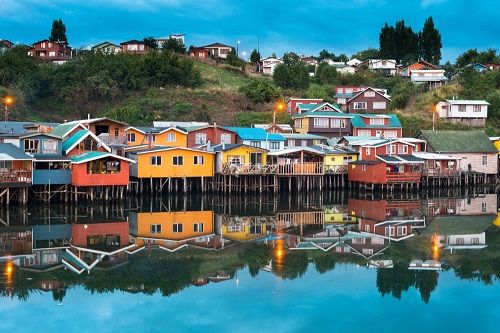
 

Isla Chiloé, Chile


Taking a ferry in Puerto Coronel, we will reach Chiloé Island, within the same region of Los Lagos, in Chile. Castro, its capital, offers a great group of churches that were declared World Heritage by UNESCO in 2000; as well as the characteristic palafitos, a type of construction carried out on a kind of wooden pillars by the sea.


5. Punta Arenas, Magallanes and Antártica Chilena, Chile
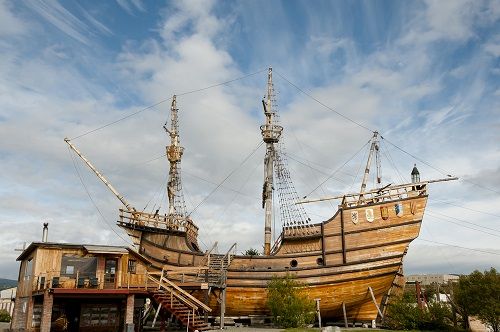
 

Punta Arenas, Chile


After one of the longest journeys on our route, we will arrive at Punta Arenas, very close to the so-called “end of the earth” (excursions are made to Antarctica and nearest deserts).  Located in the Strait of Magellan, where the Atlantic and Pacific Ocean meet, it is the southernmost point of Chilean Patagonia. You will admire the monument to Hernando de Magallanes, located in the famous Muñoz Gamero square; as well as the interesting Nao Victoria Museum, where you will contemplate a replica of one of the galleons of the Portuguese explorer and navigator.


6. Puerto Natales, Natales, Magallanes and Antártica Chilena, Chile
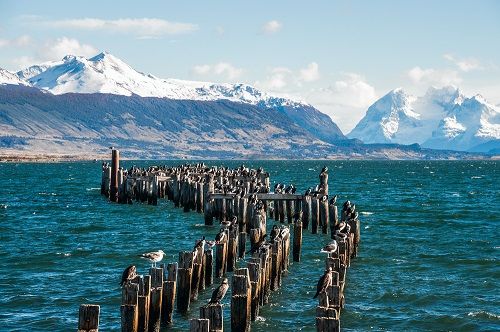
 

Puerto Natales, Chile


Puerto Natales is a port city located in the southern part of Chilean Patagonia, on the banks of the Señoret channel. In the city, we can visit the Municipal Historical Museum, where some history and tools of the indigenous population of the area are exposed. In the northern area, we can explore the impressive Milodon Cave, an important settlement during prehistory. In addition, Puerto Natales is the main entrance giving access to Torres del Paine National Park, as well as the port from where ferries crossing the Patagonian fjords leave.


7. Torres del Paine National Park, Chile
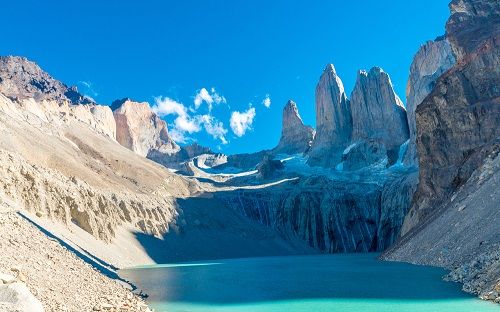


It is a National Park known for its impressive mountains; its turquoise blue lakes; its majestic glaciers; and its golden-colored meadows, home to different endemic species of South America (such as the guanaco, a kind of alpaca typical in the area). Some of the main attractions in Torre del Paine are the construction composed of three white granite towers giving name to the park, and the popular horn-shaped peaks, known as “Cuernos del Paine”.


8. El Calafate, Santa Cruz Province, Argentina
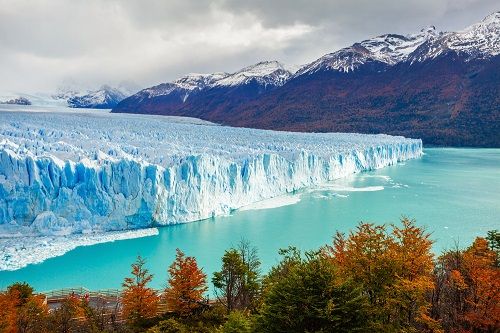
 

El Calafate, Argentina


Once again, we cross the border, this time to reach Calafate, in the Argentine region of Santa Cruz. It is a city near the Southern Patagonian Ice Field, the gateway to Los Glaciares National Park. In this park, you will admire the impressive Perito Moreno glacier. In addition, you will have the opportunity to explore the interpretive center called Glaciarum, which serves as an introduction and presentation for the numerous glaciers of the place.


As you can see below, in the route that we have designed especially for you, we have marked the path to return to the city of Buenos Aires, place from which we started this wonderful trip. We hope you love today's blog post, and, above all, that you are fortunate enough to make this exciting road trip through the Patagonia of Chile and Argentina. Just don't forget to share all your experiences!


 

Argentina To the End of the Earth: 8 Stops for the Best Road Trip Through Patagonia Off <!-- Revive Adserver Etiqueta JS asincrónica - Generated with Revive Adserver v5.0.2 --><ins data-revive-zoneid="7" data-revive-id="ec923599c3fad9b044f22a6a73433428"></ins><script async src="//ads.iegrupo.com/www/delivery/asyncjs.php"></script> Maria Martin
Want more information? Get in touch with us for personalized attention
For a more personalized proposal, please fill in the following fields:
Want more information? Get in touch with us for personalized attention
For a more personalized proposal, please fill in the following fields:
Want more information? Get in touch with us for personalized attention
For a more personalized proposal, please fill in the following fields:
Want more information? Get in touch with us for personalized attention
For a more personalized proposal, please fill in the following fields:
Want more information? Get in touch with us for personalized attention
For a more personalized proposal, please fill in the following fields:
Want more information? Get in touch with us for personalized attention
For a more personalized proposal, please fill in the following fields:
Want more information? Get in touch with us for personalized attention
For a more personalized proposal, please fill in the following fields:
Want more information? Get in touch with us for personalized attention
For a more personalized proposal, please fill in the following fields:
Subscribe to

Manage cookie consent

Cookies on this website are used to personalize content and ads, provide social media features and analyze traffic. In addition, we share information about your use of the website with our social media, advertising and web analytics partners, who may combine it with other information you have provided to them or that they have collected from your use of their services. You can learn more in our Cookies policy

Always active

Necessary cookies help make a website usable by enabling basic functions such as page navigation and access to secure areas of the website. The website cannot function properly without these cookies.

Statistical cookies help website owners understand how visitors interact with websites by gathering and providing information in an anonymous form.

Preference cookies allow the website to remember information that changes the way the site behaves or looks, such as your preferred language or the region you are in.

Marketing cookies are used to track visitors on web pages. This is used to show ads that are more relevant and attractive to the individual user, and therefore more valuable to publishers and third-party advertisers.