The white villages of Andalusia. Los pueblos blancos | donQuijote

Submitted by Anonymous (not verified) on Mon, 02/10/2014 - 01:00
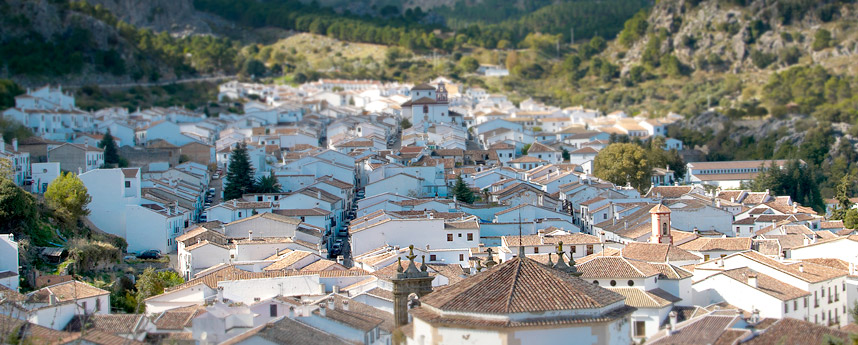
The white villages of Andalusia These cottages are made for the climate of Andalusia. You find them mostly in the Sierra de Grazalema Natural Park but also in the region of Cadiz and Málaga. pueblos blancos andalusia

In Spanish they are called Los Pueblos Blancos, the white villages of Andalusia. They are characterized by the little houses with white walls and red/brown roofs on high ground in the areas of Cadiz and Malaga. But what is behind this? Why are they all white and why are they all located in the mountains? The white villages of Andalusia have their own story.

  • All the details of the cottages have their own purpose. The small windows, the bright white paint and the thick walls. The cottages in Andalusia are built this way for very logical reasons.
  • The area has been populated by many peoples, yet one people has left the biggest mark that makes the white villages in Andalusia the way they are today.

Everything is done for a reason. This is also true of the white villages of Andalusia. All the houses are built with thick walls, small windows and bright white paint. This is typical of the houses in this region. The thick walls are good insulation for both heat and cold. If in winter keeping heat in is essential, in summer keeping cool air in is essential. In addition, the small windows keep too much sunlight from entering the house. Too much sunlight will heat up the house in the summer, which is exactly what is not intended. The bright white paint of the houses reflects the sunlight back, preventing it from penetrating the house. By the way, the reason the walls stay so white is very simple: every spring, each house gets a new paint to usher in spring.

These cottages are made for the climate of Andalusia. You find them mostly in the Sierra de Grazalema Natural Park, but also in the region of Cadiz and Malaga. They are a real tourist attraction. Yet you must not forget that this oasis of beauty is also simply a habitat of people; although perhaps that makes it even more beautiful. The villages bring with them a special Arabic feeling because of their narrow streets and cozy squares. The squares of the white villages, where old men sit quietly in the shade playing cards and where the women keep the flowers beautiful. It is a picture. Despite the Arab feeling you get with the villages, each village has at least one Roman Catholic church that completes the picture.

The Moors in Spain

That the cottages have only a climatic reason for construction was not always true, by the way. The area has been inhabited since prehistoric times. Several caves can be found with rock paintings. Although many peoples have lived in this area, there has been one people who have been hugely influential to the villages; the Moors. They lived and ruled large parts of Spain beginning in the 13th century. When at one point the Spanish reclaimed their land, the Moors fled into the mountains and built white houses with thick walls and small windows. So initially it was also a kind of protection from the Spaniards. From the high mountain the Moors could soon see them coming and so they could defend themselves in time against the Spaniards. Today, the people in the villages only have to protect themselves from all the tourists who want to see this beautiful place up close.

Spain These cottages are made for the climate of Andalusia. You find them mostly in the Sierra de Grazalema Natural Park but also in the region of Cadiz and Málaga. malaga, cadiz, moors, andalusia Off <!-- Revive Adserver Etiqueta JS asincrónica - Generated with Revive Adserver v5.0.2 --><ins data-revive-zoneid="7" data-revive-id="ec923599c3fad9b044f22a6a73433428"></ins><script async src="//ads.iegrupo.com/www/delivery/asyncjs.php"></script> Daphne Nossels

Celebrating New Year in Spain | donQuijote

Submitted by Anonymous (not verified) on Mon, 12/30/2013 - 01:00
Celebrating New Year in Spain One of the most famous Spanish traditions: On New Year's Eve, 12 grapes are eaten that are supposed to bring good luck in the coming year. Celebrating New Year in Spain

Spanish holidays

Spain has an enormous number of holidays. Most of these Spanish holidays are celebrated according to tradition every year. So is New Year's Eve in Spain. Spain has some pretty distinct traditions, customs and practices that are celebrated during New Year's Eve. New Year's Eve is celebrated big and elaborately in Spain, and in Spanish fashion, New Year's Eve celebrations also start relatively late.

New Year's Eve in Spanish is called "Noche Vieja," the old night. On New Year's Eve, most Spaniards stay home with the whole family until noon. In Spain, New Year's Eve begins with a very elaborate dinner with the whole family. After dinner, most Spaniards move to one of the city squares. The most famous square in Spain to celebrate New Year's Eve is Puerto del Sol in Madrid. As such, this is the centerpiece of Spanish New Year's Eve. Around noon, all eyes are on the clock on the Puerta del Sol. This clock is also shown on television so everyone can join in with "Las Uvas de La Suerte" tradition.

Spanish traditions

'Las Uvas de La Suerte' is a Spanish tradition that originated in 1909 when grape growers in Alicante could not get rid of their grapes and shared them out. At noon, grapes are hawked. One grape per chime, for 12 chimes. If you manage to eat twelve grapes before the 12 chimes are over, you will have good luck and prosperity in the coming year. Each grape equals one month of the year.

After the grapes are duly processed, everyone wishes each other a Happy New Year and, as in the Netherlands, champagne is toasted. Increasingly popular is cava, which is a Spanish champagne. Different grapes are used for cava than for champagne. And because it is made domestically, cava is often cheaper than champagne.

Besides "Las Uvas de La Suerte," for women, wearing red underwear such as a bra or socks would also ensure happiness in love in the coming year. However, this underwear must be gifted.

Unlike in the Netherlands, fireworks are not used in Spain as in the Netherlands specifically for New Year's Eve. In Spain, fireworks can be bought all year round, and fireworks are therefore more something for summer celebrations than just for New Year's Eve. After wishing each other a "Feliz Año Nuevo," a happy New Year, the younger generation goes into town. As in the Netherlands, they party until the early hours. And what could be tastier than typical Spanish churros with hot chocolate.

Spain One of the most famous Spanish traditions: On New Year's Eve, 12 grapes are eaten that are supposed to bring good luck in the coming year. new year's eve, holidays spain, spanish culture, spanish holidays, celebrate new year, spanish tradition Off <!-- Revive Adserver Etiqueta JS asincrónica - Generated with Revive Adserver v5.0.2 --><ins data-revive-zoneid="7" data-revive-id="ec923599c3fad9b044f22a6a73433428"></ins><script async src="//ads.iegrupo.com/www/delivery/asyncjs.php"></script> Samentha Geerts

Metro Madrid, Spain

Submitted by Anonymous (not verified) on Mon, 12/16/2013 - 01:00
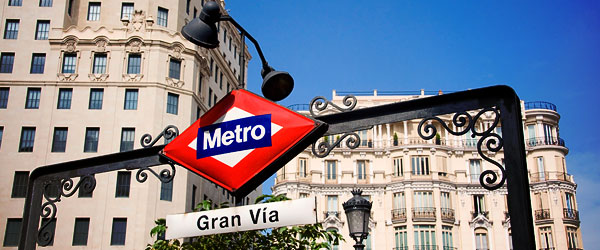
Metro de Madrid Madrid's metro network includes 12 metro lines and is the 6th largest metro network in the world. Learn all about Spain and Madrid with the dQ language school blog. madrid metro gran via

Madrid metro network

The easiest way of public transportation in Madrid is the metro. The underground in Madrid is the second largest metro network in Europe. Not only tourists like to use the metro in Madrid, the Madrilenians themselves are also big fans of the metro.

The first metro lines in Madrid were built at the beginning of the 20th century. On October 17, 1919, the Madrid metro was opened by King Alfonso XIII. During the Spanish Civil War, Madrid's metro stations served as shelters for the Madrilenians.

The Madrid metro has a narrow network profile and a wide network profile. Metro lines 1 to 5 feature subways that are 2.30 meters wide. Metro lines 6 to 12 have subways that are 2.80 meters wide. Another difference between a narrow and wide network profile is the depth at which the subway lines are located. The narrow metro network profiles are located up to 20 meters below the surface and the wide network profiles are located deeper.

Line 9 was the first metro line in Madrid, passing through the suburbs of Madrid and ending in the suburbs of Rivas-Vaciamadrid and Arganda del Rey. At the beginning of this century, the Madrid airport was connected to the city center thanks to the metro. The entire Madrid metro network is underground with the exception of a small section of lines 9 and 10.

Europe's longest metro line opened on April 11, 2003. Metro Sur, metro line 11, has 41 kilometers of tunnels and the metro line has no fewer than 20 stations. This metro line is the most important metro line in southern Madrid because it connects 5 villages. Line 11 connects with line 10 making the center of the city accessible by metro as well.

A clear difference can be seen between the older and newer metro stations in Madrid. The older metro stations are more compact and and narrower than the new metro stations. Also, the old metro stations often only have a platform next to the tracks while the new stations have multiple platforms. Thus, the busy interchanges have central platforms which makes it easier for travelers to transfer quickly.

Madrid's subway lines are open Sunday through Thursday from 6 a.m. to 1:30 a.m.. On Fridays and Saturdays, the metro is open an hour longer, until 2:30 a.m.. A single trip on the metro costs €2 but there are also 10-ride tickets available that cost €12. These 10-ride passes with a Madrid metro map will make your stay in Madrid even more convenient and fun.

Spain Madrid's metro network includes 12 metro lines and is the 6th largest metro network in the world. madrid, madrid metro, underground madrid Off <!-- Revive Adserver Etiqueta JS asincrónica - Generated with Revive Adserver v5.0.2 --><ins data-revive-zoneid="7" data-revive-id="ec923599c3fad9b044f22a6a73433428"></ins><script async src="//ads.iegrupo.com/www/delivery/asyncjs.php"></script> Samentha Geerts

The Spanish lottery | donQuijote

Submitted by Anonymous (not verified) on Mon, 09/16/2013 - 02:00
The Spanish lottery Spain may be the country with the most lotteries in the world! Spanish culture and Spanish traditions with don Quijote Spanish language schools! The Spanish lottery

Spaniards love lotteries, and there are dozens of lotteries to mention. Spain has several daily, weekly, monthly and annual lotteries. Also, "the fattest" lottery in the world is a Spanish lottery! Every Christmas, the Loteria Nacional has the biggest jackpot in the world. This special Christmas draw is called "El Gordo," meaning "the fat one" or "the fat one. It is not remarkable when the prize money of this lottery reaches up to 66 billion euros!

Let's start with the cheapest lottery in Spain. This is the Bonoloto, the draw takes place Monday through Wednesday and on Friday. Lottery tickets can be bought from €0.59 cents per day. However, one can also buy a lottery ticket valid for the whole week, which costs €2.37. The prize money can reach up to 66 million euros. However, this prize money is divided among all Bonoloto draws that take place in the same week.

In Spain, you can also play EuroMillions, which is a European lottery in which several international lotteries work together into one big lottery. The EuroMillions draw is every Tuesday and Friday. The big advantage of this lottery is that the prize money from all the countries is added together, giving you a huge jackpot. Also, if the top prize does not fall, then this amount is added to the jackpot of the following draw.

The Loteria Nacional is a lottery in Spain similar to the Staatsloterij in the Netherlands. It is a state lottery and therefore tax-free. There are several variants of this lottery. One is the "El Gordo de la Primitiva," which is a weekly lottery. Also in this lottery, the prize money can reach up to 66 million euros. However, the tickets for this lottery are a bit more expensive than the Bonoloto. Lottery tickets are sold in 10 parts, each part is called a "décimo. Each décimo costs €20 and a whole lot costs €200. The prize money is therefore divided among the 10 winning lots. Many Spanish groups of friends or families therefore buy a whole lot together to reduce the cost and in this way the money is divided within the circle of friends or family.

Spain Spain may be the country with the most lotteries in the world! Spanish culture and Spanish traditions with don Quijote Spanish language schools! typical spanish, spanish traditions, spanish lottery, lottery in spain Off <!-- Revive Adserver Etiqueta JS asincrónica - Generated with Revive Adserver v5.0.2 --><ins data-revive-zoneid="7" data-revive-id="ec923599c3fad9b044f22a6a73433428"></ins><script async src="//ads.iegrupo.com/www/delivery/asyncjs.php"></script> Samentha Geerts

Running of bulls in Pamplona | donQuijote

Submitted by Anonymous (not verified) on Mon, 09/09/2013 - 02:00
Running of bulls in Pamplona The bullfights in Pamplona are Spain's most famous bullfights. It is also an important city on the pilgrimage route to Santiago de Compostella. san-fermines

Spanish bullfights

Pamplona is a city located in northern Spain and is the capital of the province of Navarre. The city was founded by the Romans and is best known for its bull runs and bullfighting. It is also an important city on the pilgrimage route to Santiago de Compostella.

The San Fermín fiestas

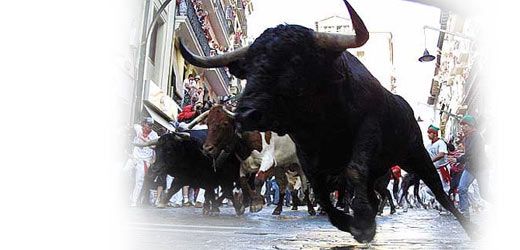
Bull runs in Pamplona take place during Las fiestas de San Fermín. This fiesta is held in honor of the patron saint San Fermín. The San Fermín fiestas used to take place in October, but due to the often bad weather, the fiestas were moved to the month of July. One of the most famous parts of the San Fermín fiestas San Fermín fiestas are the running of the bulls.

Every morning 'encierros' take place, which are bull runs where people run in front of the bulls. Bull runs originated because in the past the bulls had to be moved from the stables to the bullring, so they ran through the streets of the city. The distance from the stables to the bullring is a street 900 meters long that is very narrow in some places. In 8 days, 48 bulls are let loose in the streets, so per day this is 6 bulls. Along the route there are two rows of fences. The first row is for the riders who want to get out of the way of the bulls or for the riders who are injured, and the second row is for the spectators. Behind the first row are also the emergency workers in case medical attention is needed.

When the bulls are released from their stalls, one flare is fired. A second flare is then fired when all the bulls are in the street. The bull run lasts no more than a few minutes, but due to the adrenaline in the spectators and riders, it seems to last much longer. How dangerous these runs are depends on the number of participants; if there are many riders participating, there is little room for the bulls to get out of the way. Once all the bulls are in the arena, a third flare is agreed upon. Finally, a fourth flare is fired when all the bulls are in their stalls.
Daily bull runs are concluded with a bullfight. After the bull runs, a 'corrida' takes place every day at 6:30 pm.

Photo by www.environmentalgraffiti.com

Spain The bullfights in Pamplona are Spain's most famous bullfights. It is also an important city on the pilgrimage route to Santiago de Compostella. pamplona, spain, running bulls spain Off <!-- Revive Adserver Etiqueta JS asincrónica - Generated with Revive Adserver v5.0.2 --><ins data-revive-zoneid="7" data-revive-id="ec923599c3fad9b044f22a6a73433428"></ins><script async src="//ads.iegrupo.com/www/delivery/asyncjs.php"></script> Samentha Geerts

Spanish Sangria | donQuijote

Submitted by Anonymous (not verified) on Mon, 09/02/2013 - 02:00
Sangria Besides sangría, Spain also produces many red and white wines and cava, drinks that are also becoming increasingly popular in the Netherlands. sangria spain

Spain is best known for its many varieties of sangría. But Spain has more to offer than just sangría. For example, Spain is the third largest wine country by area in the world. Besides sangría, Spain also produces many red and white wines and cava, drinks that are also becoming increasingly popular in the Netherlands.

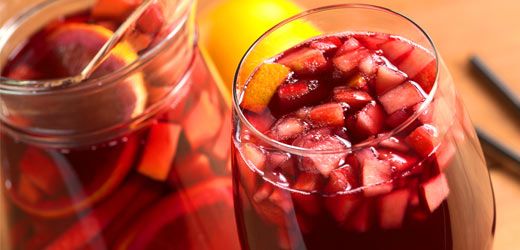
The most famous drink coming from Spain is sangría. Everyone who has been on vacation to Spain has had a glass of sangría. The origins of sangría can be traced back to the 18th century. The British brought a drink called "sangaree" to Spain. There they consumed this drink with food, and to make it less strong for the children, a carbonated beverage was added. However, the adults wanted the drink stronger, so liqueur or brandy was added.

Sangria recipes

Several sangría recipes can be found. Sangría can be made to anyone's taste. However, the main ingredients for traditional sangria are red wine, carbonated liquor, fruit juice and fruits. There is also a white version of sangria, it consists of carbonated water, fruits, a liqueur of your choice or even vodka for those who love it. In Catalonia, white sangría is also often made with cava as the main ingredient. Sangría is tastiest if you make it several hours or even a day in advance and refrigerate it. This allows the flavors to mix well. After the sangria comes out of the refrigerator, ice cubes are added and the sangría is served in a transparent decanter with a wooden spoon in it to remove the fruit from the bottom.

Spanish wine

Sangría is not the only popular drink in Spain. Red wine is also very popular. The Romans began making wine, however, by the end of the Roman era, Spanish wines were declining. In the Middle Ages, monks began making new wine. However, lack of knowledge caused mainly red wines to be made. However, it wasn't until the end of the 19th century that Spain became internationally known for its red table wines.

Cava

In the last century, cava has become increasingly well known. Cava is also known as the Spanish version of French Champagne. Cava is an effervescent white wine produced in Catalonia. There are 7 categories; brut nature, extra brut, brut, extra seco, semi seco and dulce, in order from very dry to sweet. According to connoisseurs, brut nature is the highest quality variety, as it is the purest form of cava. The recognized cava can be identified by the cork, where a four pointed star can be found.

Spain Besides sangría, Spain also produces many red and white wines and cava, drinks that are also becoming increasingly popular in the Netherlands. sangria, spanish wine, wine spain, sangria recipe, cava Off <!-- Revive Adserver Etiqueta JS asincrónica - Generated with Revive Adserver v5.0.2 --><ins data-revive-zoneid="7" data-revive-id="ec923599c3fad9b044f22a6a73433428"></ins><script async src="//ads.iegrupo.com/www/delivery/asyncjs.php"></script> Samentha Geerts

Spanish Stereotypes: True or false?

Submitted by Anonymous (not verified) on Thu, 08/08/2013 - 02:00
Spanish Stereotypes: True or false? About the Spanish language, bullfighting in Spain, flamenco and other stereotypes. Read the point of view of a young Briton living in Spain. Spanish Stereotypes: True or false?

What Spanish stereotypes exist and are they true?

Every country is known for a particular stereotype, it doesn’t matter if it is actually true or not. Whether it’s a cup of tea, fish and chips or brussel sprouts in England, to cheese, wine, snails and frogs in France. The question is though what are the Spanish stereotypes and are they actually true? I am British and this might be a completely biased point of view but this is what I think when it comes to Spanish stereotypes:

Do Spaniards work less hard than other European countries?

Something that I have found to be completely misconstrued is that the Spanish work less hard than other Europeans, truth be told it depends on what your definition of working hard is. According to statistics they actually have the longest average working week, at 38.4 hours. You could go out to the country to find people doing 3am shifts and napping all day, to people putting in 50 hour shifts in city centres or businesses etc. People are adamant that because there appears to be a holiday nearly every day that the Spanish don’t work. This has grown more so post economic recession, with the uninformed blaming the Spanish unemployment and financial crisis on this misinformed idea. This is something that is
false through and through. 

What time is it? Siesta time!

The siesta is supposed to be a short nap or a quick shut eye after lunch. Most places in Spain give you 2 hours for lunch, from 14.00 to 16.00, and then you carry on working. Although some people have a siesta,  most people use this time to pick up their kids, go home, cook, eat, drop their kids, and go back to work. Not much time for siesta in reality is it…
Some truth.

They love bullfighting

This is not true. Bullfighting is no longer classed as a sport but rather a cultural tradition. In a lot of communities bull fighting has been banned and is considered quite controversial. It might be a tradition but it is one fighting a losing battle.
Not true.

They only speak Spanish

It might be the second most spoken language in the world and something definitely worth learning, but they do speak Euskera, Catalan and Galego in different areas of Spain. Places like Benidorm, Marbella, Madrid and Valencia have a massive amount of tourism and in all likelihood you can go around just speaking English. Unlike the English, waiters, receptionists and service staff are usually very proficient at speaking a multitude of other languages.  
Wrong.

Tacataaaa, livin la vida loca, salsa and flamenco

Especially when in it comes to music the majority of Europe tend to believe that music, dance and culture all roll into one. Contrary to popular belief Ricky Martin is not Spanish, you are not born with the ability to dance flamenco, and Spain is not Mexico with mariachi bands on every corner. Flamenco is a very difficult dance and needs a lot of practice; it is not something you can improvise.  Truth be told though from what I have seen Spain does play Euro top 10 trash in clubs and bars nearly all night.
Some truth.

They are loud

I’ll admit that when you are in England you can tell there is a Spanish family there from a mile away. They do sound quite loud, but whereas in England we would raise our voice if we are angry, it’s not the same for Spaniards who may quickly raise their voice when discussing something but this clearly does not imply anger.
This one might be true.

Dark hair, dark eyes, dark skin

I won’t bother go into detail but although the majority tend to be brunette and slightly darker, you still get blonde Spaniards with blue eyes so
it’s not true.

Sun, Sea and Beach

Geography seems to go right out of the window when people think of Spain. It somehow becomes invincible to winter or the cool chill it might bring. To be clear, summer is hot, winter is cold. Again the Mediterranean is really nice to swim in and generally is quite warm, but not all year round.
False

Spain About the Spanish language, bullfighting in Spain, flamenco and other stereotypes. Read the point of view of a young Briton living in Spain. spanish language,bullfighting in spain,traditions in spain,customs in spain,flamenco in spain,spanish stereotypes Off <!-- Revive Adserver Etiqueta JS asincrónica - Generated with Revive Adserver v5.0.2 --><ins data-revive-zoneid="7" data-revive-id="ec923599c3fad9b044f22a6a73433428"></ins><script async src="//ads.iegrupo.com/www/delivery/asyncjs.php"></script> Freddie Savundra

Tapas and Paella | donQuijote

Submitted by Anonymous (not verified) on Mon, 07/01/2013 - 02:00
Tapas and Paella: Spanish food Tapas and paella are the most famous dishes of Spanish cuisine. Spanish culture with the don Quijote language school! Tapas and paella

Spanish food culture

Spanish food culture has many typical Spanish dishes. Including tapa dishes and the Spanish paella. Tapas and paella are the most famous dishes of Spanish cuisine. These dishes are both easy to make yourself at home.

Tapas

Tapas is a collective name for all small tapas appetizers that are eaten in Spain mainly in bars and cafes. Spaniards often eat these tapas between their breakfast and lunch or between their lunch and dinner. In Spain, people have lunch around 2 p.m. and most people don't have dinner on the table until around 10 p.m., so you can imagine that a tapas in between is delicious.

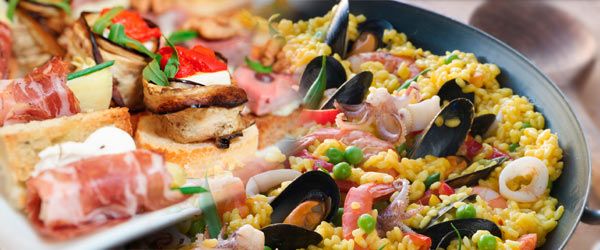
There are as many as a hundred different types of tapa. Almost every region in Spain has its own specialties. An example of a well-known tapa in northern and inland Spain are "pintxos. These are small slices of bread topped with anything and everything. Some other examples of tapas are patatas bravas (baked potatoes in spicy tomato sauce), tortilla de patatas (potato omelet), shrimp, melon and ham and pinchos.

Tapas appetizers are fairly simple snacks and are easy to make at home. Tapas are also ideal as a snack during a party. With one of the many tapas recipes available online, you can have a table full of tasty appetizers in no time.

Paella

Another typical Spanish dish is paella, which is an originally Valencian dish. Paella is a rice dish that has a different method of preparation per region. The advantage of paella is that there are so many different varieties that almost everyone likes paella. The main main ingredient is the rice, and according to your own preferences, you can then choose to use fish and shellfish or chicken and rabbit.

Paella is also a Spanish dish that is easy to make yourself at home. As told, you can choose the ingredients yourself. The only other important thing is the ratio of rice to liquid. Paella rice is usually cooked in fish or chicken stock to create a stronger flavor. The rule of thumb is that 3 parts broth equal 1 part rice. But even this varies with each variation of the dish.

Tapas and paella are just two of the many Spanish dishes that are easy to prepare yourself at home, and you don't have to be a professional cook to do so!

Spain Tapas and paella are the most famous dishes of Spanish cuisine. Spanish culture with the don Quijote language school! tapas,paella, spanish tapas, valencia spain, spanish dishes, spanish cuisine Off <!-- Revive Adserver Etiqueta JS asincrónica - Generated with Revive Adserver v5.0.2 --><ins data-revive-zoneid="7" data-revive-id="ec923599c3fad9b044f22a6a73433428"></ins><script async src="//ads.iegrupo.com/www/delivery/asyncjs.php"></script> Samentha Geerts

Spanish recipes from Castilla y Leon | donQuijote

Submitted by Anonymous (not verified) on Thu, 05/30/2013 - 02:00
Spanish Recipes from Castilla y Leon Learn Spanish by cooking Castilian dishes! Find out more about Spanish Cuisine from Castile and Leon. Spanish Recipes from Castilla y Leon

Castilla y León

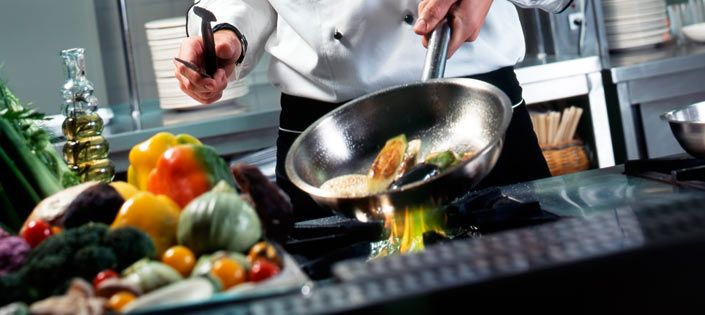
The local government of the Spanish autonomous community Castile and Leon has recently released a recipe book that showcases the most celebrated dishes of the region, an area with a reputation for pleasing the palates of even its most food-fussy visitors. The book, entitled Jornadas Gastronómicas de Castilla y León, offers anyone planning a trip there a tantalizing sneak preview of the rich culinary landscapes they can expect to explore. Spanish cooking has in very general terms grown in popularity around the world, and there is no better way to find out why than by journeying to its place of origin.  If you haven’t already booked your trip to Spain, the succulent creations sumptuously displayed throughout this handsome book seem to beg the question “what are you still waiting for?”

The book’s introduction presents cooking in the region as a cultural aspect of “enormous” value, and goes on to point out that Castile and Leon includes great culinary diversity and varied cooking traditions. Delve deeper into the book’s interior and prepare for generous rations of appetizing images to leave your tummy craving western Spain’s yummiest entrees, sides, and desserts. Nineteen carefully selected recipes are broken down into five categories: main dishes, meals eaten with a spoon, fish, meats, and desserts.

The cover feature is Castilian soup served up piping hot in an earthenware pot, garnished with a slice of jamón ibérico. This, along with other hearty offerings such as Judiones de La Granja estofados con escabeche de pavo (a butter bean stew with pickled turkey and a dash of saffron) are designed to warm chilly eaters during Castile and Leon’s cool months. Flip ahead to the desserts and check out Burgos-style cheese cake flanked by red berry sauce and sweet chestnuts. Also find here Crema de arroz con leche en texturas (rice cream with milk in textures), a zesty zinger of a sweet treat that calls for lemon and orange peels and cinnamon.

If you’re planning on preparing some of these Castile and Leon offerings, finding the ingredients at your neighborhood supermarket may prove an impossible challenge. You’ll likely have to substitute items such as Ribera del Duero red wine and Valladolid olive oil with more generic varieties or brands specific to different regions.

A modern twist on traditional Castilian dishes

Many of these recipes put a modern twist on traditional Castilian dishes and capture the historical flavor of this region splashed with an updated edge; fresh new takes on firmly established classics that will appease the demanding appetites of a wide array of diners, from picky gourmets to easy to please foodies.

The book closes by suggesting that in one getaway to Castile and Leon you’ll see the world, a statement nearly as bold as the 19 recipes presented in this feastival of fantastic flavors. That declaration is accompanied by scenic images of each one of the autonomous community’s provinces, where the crenulated parapets of Avila’s medieval city wall and the tiered arches of Segovia’s Roman aqueduct remind many readers that their experiences enjoying traditional Castilian dining concepts in Spain will be back-dropped by spectacular panoramas of monument studded Spanish landscapes. 


Spain Learn Spanish by cooking Castilian dishes! Find out more about Spanish Cuisine from Castile and Leon. learn spanish,spanish recipes,spanish cuisine,spanish cooking,recipes from spain,castilla y leon Off <!-- Revive Adserver Etiqueta JS asincrónica - Generated with Revive Adserver v5.0.2 --><ins data-revive-zoneid="7" data-revive-id="ec923599c3fad9b044f22a6a73433428"></ins><script async src="//ads.iegrupo.com/www/delivery/asyncjs.php"></script> Tyson

Spanish customs | donQuijote

Submitted by Anonymous (not verified) on Mon, 05/13/2013 - 02:00
Spanish customs Spanish culture has many different customs and traditions. spanish customs

Spanish culture has many different customs and traditions. The siesta, the special division of the day with no less than 4 meal times and then there are the dozens of different types of Tapas. There are many other special, "crazy" customs from the Spanish culture. For example, what about the bullfights in Pamplona or La Tomatina in Buñol. Below is a small selection of the sometimes very unusual customs of Spanish culture.

Siesta

Many stores, supermarkets and other public places in Spanish towns and cities close between 2 and 5 p.m. To many people, siesta is known as the afternoon nap of those who work in Spain. However, this is by no means the case. Only a small part of the Spanish population actually takes an afternoon nap. Since the time of siesta is also sometimes the time when lunch is eaten in Spain, many Spaniards choose to spend this time with family or in a café for a sumptuous lunch. The Spanish lunch that takes place between 2 and 3 p.m. is similar to the evening meal eaten in the Netherlands. Large hot dishes that are often eaten with the whole family. After the Spaniards finish their afternoon nap or their extensive lunch, they return to work until 7 or 9 pm.

Tapas

After the extended lunch, tapas is often eaten between 6 and 7 p.m. with colleagues. Almonds, olives, ham, chorizo and shrimp are just a few examples of tapas. These small bites are mainly used to whet the appetite, because around 10 p.m., the people of Spain will begin their last meal of the day, dinner. Dinner is much lighter than the Spaniards' lunch. This is why tapas are eaten between lunch and dinner.

La Tomatina

Finally; La Tomatina this is a festival celebrating the harvesting of new ripe tomatoes from the land. The festival begins every last Wednesday of August at 10 a.m. with a ham being hung on a greased pole. The start of the tomato fight takes place as soon as someone manages to get the ham off the greased pole. At that moment, trucks full of tomatoes enter the Plaza del Pueblo and the fight can begin! After exactly one hour, the final signal will be given and all locals and tourists make their way to the nearest garden hose to get rid of the tomato residue. Since 1957 the tomato fight was officially authorized and since 1980 tomatoes have even been handed out by the municipality. The next tomato fight will take place on Wednesday, Aug. 28, 2013. During a Spanish course, Buñol is definitely worth a visit.

Photo by renotahoe

Spain Spanish culture has many different customs and traditions. tapas, siesta, working in spain, tapas spain, spanish culture, tomatina Off <!-- Revive Adserver Etiqueta JS asincrónica - Generated with Revive Adserver v5.0.2 --><ins data-revive-zoneid="7" data-revive-id="ec923599c3fad9b044f22a6a73433428"></ins><script async src="//ads.iegrupo.com/www/delivery/asyncjs.php"></script> Samentha Geerts
Subscribe to Spain

Manage cookie consent

Cookies on this website are used to personalize content and ads, provide social media features and analyze traffic. In addition, we share information about your use of the website with our social media, advertising and web analytics partners, who may combine it with other information you have provided to them or that they have collected from your use of their services. You can learn more in our Cookies policy

Always active

Necessary cookies help make a website usable by enabling basic functions such as page navigation and access to secure areas of the website. The website cannot function properly without these cookies.

Statistical cookies help website owners understand how visitors interact with websites by gathering and providing information in an anonymous form.

Preference cookies allow the website to remember information that changes the way the site behaves or looks, such as your preferred language or the region you are in.

Marketing cookies are used to track visitors on web pages. This is used to show ads that are more relevant and attractive to the individual user, and therefore more valuable to publishers and third-party advertisers.