Summer camps in Spanish - international summer camp in Barcelona
Our international summer camp in Barcelona has it all: Spanish classes without giving up the beach and in the atmosphere of a big city like Barcelona.
Barcelona Beach Summer Camp
FROM 5 TO 14 YEARS OLD
JUNE 29 TO AUGUST 23
Olympic Champions
Our rising stars take on new challenges as they maneuver across the sparkling waters of the Olympic Channel, a holdover from the '92 Barcelona Games. Besides adventurous water sports, campers take part in engaging games and activities that promote multicultural team building and personal growth.
OUR BARCELONA CAMP
Just a 15-minute car ride away from the lively city of Barcelona, Castelldelfels, which has been officially recognized as a Sports Tourism Destination by the Catalan Tourist Board, is the perfect place for those who love the great outdoors, sports, and nature. Its ideal location between the green landscapes of Garraf Natural Park and the warm waters of the Mediterranean offers more than 3 miles of beautiful beaches as well as an Olympic canal where students can go kayaking.With downtown Barcelona just half an hour away by train, your children can get to know the city's unique architecture and fascinating culture first hand. When classes are done for the day, they'll enjoy playing sports and participating in other fun activities as they continue to speak Spanish in everyday situations with other international students.
WHAT TO EXPECT
After productive mornings dedicated to language learning, your children will continue building friendships with other students from Spain and around the world as they spend their days, afternoons, and evenings taking part in fun activities, sports, and excursions. Students will have to put their heads together and communicate to make it to the end of the treasure hunt, and coming up with a strategy for capture the flag will put their language skills to the test.Relaxing afternoons spent playing games on the beach offer a nice change of pace, while dances and theme parties pick things up again at different times in the week. Your children will have plenty of opportunities to cultivate their love for the outdoors, and excursions will take them either into the city for adventures with a more urban flavor or to nearby beaches and natural parks.
OPTIONAL SPORTS AND ACTIVITIES
- Soccer
- Tennis
- Sailing
- Water Sports
Sorry, there are no available programs in this destination
WHERE WOULD YOU LIKE TO STUDY?
Choose your destination ‹
Want more information?
Get in touch with us for personalized attention
Prices for the Barcelona Summer Camp
You can personalize your summer camp with optional activities and extra services
Get your price


Other Summer Camps

The Dorm
If you think having an international roommate is a great way to open your mind and see the world from a different perspective, imagine how much you'll learn in the dorm! Each mix-gender room sleeps up to 4 people, so you'll always have someone to study or explore the neighborhood with.
Our dorms are easy on the wallet so you can prioritize travel and focus on experiencing everything your destination has to offer while still having a cozy place to call home.
The facilities are located near the school to minimize your commute and maximize your free time. The neighborhood is full of cafés, bars, restaurants, and picturesque city squares where you can live the Spanish lifestyle and practice your new language skills.
How October 12 Is Celebrated Around the World | donQuijote
How October 12 Is Celebrated Around the World
October 12th. Some Latin American countries that once commemorated the day as el Día de la Raza have in recent years changed the name to honor diversity.
 Spain
Mexico
Costa Rica
Argentina
Bolivia
October 12th. Some Latin American countries that once commemorated the day as el Día de la Raza have in recent years changed the name to honor diversity.
columbus day,dia de la raza,october 12,native american day,dia de la hispanidad,october 12th
Off
<!-- Revive Adserver Etiqueta JS asincrónica - Generated with Revive Adserver v5.0.2 --><ins data-revive-zoneid="7" data-revive-id="ec923599c3fad9b044f22a6a73433428"></ins><script async src="//ads.iegrupo.com/www/delivery/asyncjs.php"></script>
Redacción don Quijote
Spain
Mexico
Costa Rica
Argentina
Bolivia
October 12th. Some Latin American countries that once commemorated the day as el Día de la Raza have in recent years changed the name to honor diversity.
columbus day,dia de la raza,october 12,native american day,dia de la hispanidad,october 12th
Off
<!-- Revive Adserver Etiqueta JS asincrónica - Generated with Revive Adserver v5.0.2 --><ins data-revive-zoneid="7" data-revive-id="ec923599c3fad9b044f22a6a73433428"></ins><script async src="//ads.iegrupo.com/www/delivery/asyncjs.php"></script>
Redacción don Quijote
Christopher Columbus arrived to the Americas for the first time on October 12, 1492. The historic event marks an important change in the course of the history of the Western world, as it lead to permanent contact between Europe and the Americas. The day is officially observed in a variety of ways and called a variety of names in much of Latin America, the US and Spain.
October 12 in Spain
Spanish law establishes it as the Fiesta Nacional de España, or the national day of Spain, although many Spaniards continue referring to it as Día de la Hispanidad, which was the former name of the Spanish holiday. The law goes on to explain that the day is commemorated because it symbolizes the expansion of Spanish language and culture beyond European borders. Spanish is spoken by 414 million native speakers, of which only 46 million live in Spain.
When the day was first celebrated in Spain in 1914, it was originally called “fiesta de la raza” in the hopes of creating a holiday that would celebrate unity between Spain and Ibero-America. Just a few years later, the Spanish priest Zacarías de Vizcarra proposed replacing the term raza with hispanidad, a new term coined for the occasion.
October 12 in Latin America
October 12 is still known as el Día de la Raza in some Latin American countries including Mexico. Other Latin American countries however, that once commemorated the day as el Día de la Raza have in recent years changed the name to honor diversity or to celebrate indigenous heritage. In Costa Rica, the day is known as the Día de las Culturas (Day of the cultures), in Argentina it’s Día del Respeto a la Diversidad Cultural (Day of respect of cultural diversity), in Venezuala Día de la Resistencia Indígena (Day of Indigenous Resistance), and in Bolivia Día de la Descolonización (Day of decolonization). In Cuba it is not observed as a holiday.
Many US states also observe October 12 as a holiday, where it is usually referred to as Columbus Day, but not always; attitudes about how the day should be defined are changing there also. The state of South Dakota for example now celebrates Native American Day on the second Monday of October, and the city of Los Angeles has replacing Columbus Day with Indigenous Peoples Day.
October 12 - Spanish Language Day
In 2010, the United Nations declared October 12 Spanish Language Day to celebrate cultural diversity and to encourage the “equal use” of all 6 of the UN’s official languages throughout the organization.
October 12 is observed in different ways in the US and around the Spanish speaking world, where it has been redefined throughout history. Today, Spanish is the second most spoken language in the world in terms of native speakers and it is spoken as an official or main language in 21 different countries.
WE ARE CELEBRATING THE DIVERSITY OF SPANISH. HAPPY "DÍA DE LA HISPANIDAD"!
enforex_pages_dest_expl_block_f31b48ae-e105-4e1c-ace4-f75c5dc305b4
Discover Cadiz
 Quick facts about Cadiz
Cadiz is a city you can enjoy in any season. Thanks to its popularity with tourists, many events are scheduled throughout the year, from museum and art exhibitions to concerts and sports activities. No matter when you decide to study Spanish in Cadiz, you'll find everything you need to enjoy the city to the fullest and put what you've learned into practice outside the classroom.
Quick facts about Cadiz
enforex_pages_des_engage_block_dd63eb34-f169-4379-9382-aec13428b3ac
Travel Through Cadiz
Cadiz is a city to see in person. In just over 5 square miles you will find more than 30 castles from different periods along with monuments and historic sites such as the Roman theater and the Cathedral. The city is home to museums with works by world-famous artists, such as El Greco, Murillo, Goya, and Zurbarán, as well as a delicious gastronomy in which tuna and good wine feature prominently. And, if you are a sports person, the coasts of Cadiz are considered the best place in Europe for windsurfing, although you can also scuba dive, fish, or practice the water sport you like best. There's nothing better than walking to the beautiful beaches of the city with your new friends after your Spanish course in Cadiz.
#donQuijoteCadizenforex_pages_dest_learn_block_c2d21d79-00ec-4691-968b-9882dbbdb371
Spanish courses Cadiz
Our Spanish courses in Cadiz are designed to help you learn quickly and effectively, making the most of your time. Depending on your schedule, choose an Intensive Spanish program with 20, 25, or 30 Spanish classes per week. This way, you can combine your Spanish classes with cultural routes and activities around the city. With our interactive Spanish lessons, you will learn the tools you need to communicate in Spanish at all times if you're just starting to study the language, or you will consolidate what you already know and iron out the details you have left to learn if you have a higher level. If you prefer, you also have the opportunity to do an internship to improve your Spanish in a professional environment or take part in our Gap Year program in Cadiz.
Quick facts about our schoolLearn Spanish in Cadiz - Spanish courses in Cadiz
Learn Spanish in Cadiz in our partner school, where we offer Spanish courses in Cadiz for all levels, our internship and our Gap Year program.
Cadiz
 Hop from city to city
Spanish courses Cadiz
Our Spanish courses in Cadiz are designed to help you learn quickly and effectively, making the most of your time. Depending on your schedule, choose an Intensive Spanish program with 20, 25, or 30 Spanish classes per week. This way, you can combine your Spanish classes with cultural routes and activities around the city. With our interactive Spanish lessons, you will learn the tools you need to communicate in Spanish at all times if you're just starting to study the language, or you will consolidate what you already know and iron out the details you have left to learn if you have a higher level. If you prefer, you also have the opportunity to do an internship to improve your Spanish in a professional environment or take part in our Gap Year program in Cadiz.
Discover our Spanish Courses
Quick facts about our school
Travel Through Cadiz
Cadiz is a city to see in person. In just over 5 square miles you will find more than 30 castles from different periods along with monuments and historic sites such as the Roman theater and the Cathedral. The city is home to museums with works by world-famous artists, such as El Greco, Murillo, Goya, and Zurbarán, as well as a delicious gastronomy in which tuna and good wine feature prominently. And, if you are a sports person, the coasts of Cadiz are considered the best place in Europe for windsurfing, although you can also scuba dive, fish, or practice the water sport you like best. There's nothing better than walking to the beautiful beaches of the city with your new friends after your Spanish course in Cadiz.
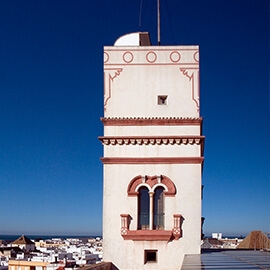
Torre Tavira
At almost 150 feet above sea level, this tower is the highest point of the city. Located in the old town, it was built to monitor all the movement in the Port of Cadiz, and today you can go inside to feel what it was like to be an 18th-century watchman.
At almost 150 feet above sea level, this tower is the highest point of the city. Located in the old town, it was built to monitor all the movement in the Port of Cadiz, and today you can go inside to feel what it was like to be an 18th-century watchman.
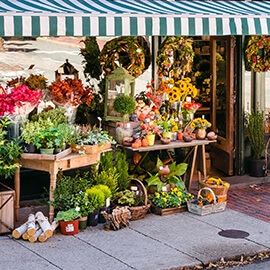
Plaza de las Flores
This square stands out in the city of Cadiz for several reasons. One is that, during carnival, it becomes one of the key points around the city, hosting a good part of the street performances. Another is that it's where building number 1 is located, which was built in 1746.
This square stands out in the city of Cadiz for several reasons. One is that, during carnival, it becomes one of the key points around the city, hosting a good part of the street performances. Another is that it's where building number 1 is located, which was built in 1746.
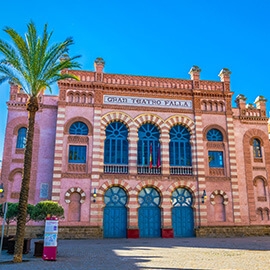
Gran Teatro Falla
This theater is worth seeing inside and out. Construction on the building began in 1885 and wasn't finished until 1910. At first it was called Gran Teatro de Cadiz, but the name was changed to honor the great musician Manuel de Falla. During carnival, the venue is home to the chirigotas contest.
This theater is worth seeing inside and out. Construction on the building began in 1885 and wasn't finished until 1910. At first it was called Gran Teatro de Cadiz, but the name was changed to honor the great musician Manuel de Falla. During carnival, the venue is home to the chirigotas contest.
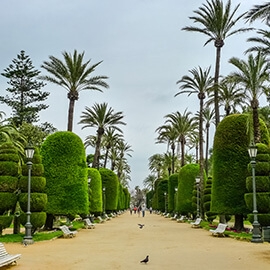
Genovés Park
This park from the late 18th century is surrounded by Cadiz's ancient city walls. Ideal for a leisurely stroll, it's lined with perfectly trimmed cypresses and full of trees and plants of different species, sizes, shapes, and origins, both native and imported.
This park from the late 18th century is surrounded by Cadiz's ancient city walls. Ideal for a leisurely stroll, it's lined with perfectly trimmed cypresses and full of trees and plants of different species, sizes, shapes, and origins, both native and imported.
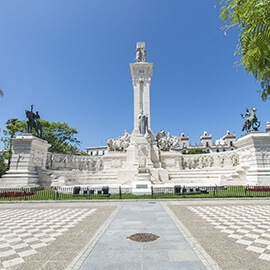
Plaza de España
This square was built with the idea of being the entrance to the sea since it originally opened to the Bay of Cadiz. It contains a monument to the famous Constitution of 1812, Spain's first constitution. You can see sculptures, fountains, and many plant species here.
This square was built with the idea of being the entrance to the sea since it originally opened to the Bay of Cadiz. It contains a monument to the famous Constitution of 1812, Spain's first constitution. You can see sculptures, fountains, and many plant species here.
Hop from city to city
Would you like to learn Spanish in multiple destinations?
Contact us, we are happy to help!
Tell us where you want to goDiscover Cadiz
Cadiz is a city you can enjoy in any season. Thanks to its popularity with tourists, many events are scheduled throughout the year, from museum and art exhibitions to concerts and sports activities. No matter when you decide to study Spanish in Cadiz, you'll find everything you need to enjoy the city to the fullest and put what you've learned into practice outside the classroom.
CARNIVAL - March 28 to April 10
Music and costumes are the protagonists of a very satiric and enjoyable carnival.
HORSE RACES - August
After more than 165 years, San Lúcar beaches continue to host these spectacular horse races.
HOLY WEEK - April 5 to 12
The passion, death, and resurrection of Jesus are represented in processions, which take to the streets.
MOORS AND CHRISTIANS - August
Go back to the Nasrid Kingdom and watch the Moors and Christians battle for the land.
CORPUS CHRISTI - June 11
Zahara de la Sierra covers its streets with carpets made of plants and embellishes its balconies with flowers.
Quick facts about Cadiz
 in Spain

Always active


