Epiphany in Spain | donQuijote

Submitted by Anonymous (not verified) on Mon, 01/05/2015 - 01:00
Epiphany in Spain Sinterklaas in Spain? Whereas in the Netherlands all children look forward to the arrival of Sinterklaas, the children in Spain look forward to January 5.  Epiphany in Spain

St. Nicholas in Spain...?

The feast of the "Three Kings" is an important holiday in Spain. Whereas in Holland all children look forward to the arrival of Sinterklaas, children in Spain look forward to January 5. For on this day, los Reyes Magos, the three kings arrive.

The story of Epiphany has its origins in a Bible story by the apostle Matthew. He describes the story of three Wise Men from the East, who, by following a bright star in the sky, go in search of the newborn King of the Jews. They eventually arrive at a stable in Bethlehem and find Mary here, with her newborn baby Jesus. The three kings - Melchior, Caspar and Balthasar offer Mary and the baby 3 gifts: gold, frankincense and myrrh.

As in the Bible story, the three kings also bring gifts for the children in Spain. Every year children write "la carta a los Reyes Magos," a kind of wish list of gifts they wish for. On the night of Jan. 5-6, children put their shoe on the balcony, under the Christmas tree or in front of the window so the kings can see them clearly. Some candy is also often laid out for the kings and some hay and sugar cubes for the camels. That night the three Kings go around all the houses and the next morning the candy and hay are gone and presents are waiting. But of course if the children have been nice all year, because those who have not been nice initially receive some carbón dulce, sweet candies that look like black coal. These are a warning for naughty children and can be compared to the roes or the sack of Sinterklaas with us in the Netherlands.

On January 5, parades called "la Cabalgata de los Reyes Magos" are organized in many places in Spain. The parade in the Spanish town of Alcoy in Alicante is considered the oldest Epiphany parade in Spain and descriptions of it have been found as far back as 1866. During the parades, the streets are filled with Christmas lights and music and are packed with parents and children. During the parade, floats move through the streets and on one of these floats are the three Kings. Sometimes the Magi are also on camels and horses march in the parade. From the floats, candy is often thrown to the children during the parade and sometimes small gifts. On the day of the entry, all schools are closed and every year Spanish television broadcasts the parade live, each year from a different city.

During the days before Epiphany, you can find specially baked wreaths everywhere, in a round shape and decorated with candied fruit and sugar, called "rosca de reyes" or "roscón de reyes" (the king's ring). Traditionally, this king's wreath is eaten for breakfast on Jan. 6. Often a bean is hidden in the wreath and the person who finds the bean is the king on that day and gets to decide what is done and eaten that day.

Spain Sinterklaas in Spain? Whereas in the Netherlands all children look forward to the arrival of Sinterklaas, the children in Spain look forward to January 5. reyes magos, sinterklaas spain, roscón de reyes, spanje sinterklaas, epiphany spain Off <!-- Revive Adserver Etiqueta JS asincrónica - Generated with Revive Adserver v5.0.2 --><ins data-revive-zoneid="7" data-revive-id="ec923599c3fad9b044f22a6a73433428"></ins><script async src="//ads.iegrupo.com/www/delivery/asyncjs.php"></script> Wendy

Most Famous New Year's Tradition in Spain

Submitted by Anonymous (not verified) on Wed, 12/31/2014 - 01:00
Spain's Most Famous New Year's Tradition How did the Spanish tradition of eating 12 grapes on New Year's Eve come into being? Many believe that the tradition dates back to the early 1880s. Spain's Most Famous New Year's Tradition

Madrid's Puerta del Sol

New York has the glass ball, Paris has the Eiffel Tower, Rio de Janeiro has fireworks on the beach and Tokyo has Shibuya crossing. In Madrid, we have the Puerta del Sol—Spain's kilometer zero where all highways radiate from reaching all of the areas of the country. Located in what is Madrid's Times Square, is a stately baroque Post building with a landmark clock tower called the Reloj de la Gobernación or the Clock of the Government in English. When twelve o'clock strikes in Madrid, all of the country tunes in to the Puerta del Sol and listen to the distinctive chimes of the clock striking twelve which is called the Campanadas de fin de año or the last bell tolls of the year. Curiously, the chimes of the stately clock are not the main attraction. Instead the tolling of the bell marks the rhythm for what really matters—eating 12 grapes to welcome in the New Year.

But how did this tradition of eating 12 grapes come into being? It isn't known for sure, but many believe that the tradition dates back to the early 1880s when upper class Madrileños began to imitate the French aristocratic tradition of dining with grapes and champagne on New Year's Eve.  To mock this practice, the people of Madrid gathered at the Puerta del Sol, as usual, to celebrate the New Year in the company of other but with a twist. They would now eat grapes as a derisive gesture towards their upper crust neighbors while they celebrated the end of one year and the entrance to another.

In 1909, the tradition would now become more established and the grapes that are used today were then introduced into the ceremony that we now recognize today. This is because growers in the Vianlopó Valley in the region of Alicante had a bumper crop of grapes that they needed to unload any way possible. Thankfully, the timing of the harvest was such that they would be able to sell their grapes to people in Madrid in need of this fruit in time for New Year's.  An added benefit this grape afforded people, in addition to its availability, was its thin skin which made this grape easier to eat within the 12 bell strikes at midnight.  For those people that are able to eat the 12 grapes before the last bell sounds, they will enjoy a new year full of success and good luck.

Today the grapes are grown specifically for this purpose and they are grown in a very peculiar way. Today these coveted grapes have the protected Denominación de Orígen which strictly regulates how these grapes are grown and handled.  One of the biggest peculiarities of this grape is that it is grown wrapped in Paper bags on the vine. For over 100 years, the best grape clusters are chosen on the vines and wrapped in paper bag that has an opening in the bottom. This was due to a plague of cochylis moths that devasted the grape crop at the turn of the last century. With their crops ruined, a farmer named Manuel Bonmatí Abad decided to try out the paper bag. As it turns out, his invention worked and not only had the bags protected the grapes from the bugs, but they also protected the grapes from inclement weather, birds and (over) exposure to pesticides.

Today, the grapes are still grown in this time consuming and costly growing process but the result is a unique and tasty culinary treat. Curiously, one inconvenience that these grapes have for people searching for good luck on New Year's Eve is that these grapes have three to four seeds  which can complicate the task of trying to eat 12 in a about 15 seconds. The thin skin is helpful but the seeds make the endeavor of eating these grapes in time a difficult task. For this reason there are some shortcuts that people take prior to chime of the bells. The most common trick is for people to peel and remove the seeds from the grapes. A laborious task but effective in helping people get as lucky as possible for the coming year. Another way of cheating the bells is to buy tins with exactly 12 peeled and seed free grapes; this more expensive option is also the most convenient—no cleaning, peeling or removing seeds.

However or wherever you plan on celebrating your New Year's, be sure to have 12 grapes handy and, tune your computer, tablet or smartphone to rtve.es and watch the campanadas live from the Puerto del Sol.


Spain How did the Spanish tradition of eating 12 grapes on New Year's Eve come into being? Many believe that the tradition dates back to the early 1880s. spanish traditions,puerta del sol madrid,new year's traditions,spanish grapes,spanish tradition,madrid puerta del sol,new year in spain Off <!-- Revive Adserver Etiqueta JS asincrónica - Generated with Revive Adserver v5.0.2 --><ins data-revive-zoneid="7" data-revive-id="ec923599c3fad9b044f22a6a73433428"></ins><script async src="//ads.iegrupo.com/www/delivery/asyncjs.php"></script> John Bascombe

Similarities in the Spanish and Dutch languages | donQuijote

Submitted by Anonymous (not verified) on Mon, 12/29/2014 - 01:00
Similarities in the Spanish and Dutch languages Dutch and Spanish together are Indo-European languages. This is a large language group consisting of as many as more than 400 related languages. similarities spanish and dutch

Dutch and Spanish together are Indo-European languages. This is a large language group consisting of as many as more than 400 related languages. Although both languages are not descended from the same subgroups they do show some similarities. In fact, the alphabet is virtually the same except for a few additions to the Spanish alphabet, such as the Ñ and the LL. The Dutch have the advantage of being able to imitate Spanish sounds more easily because almost all sounds are also found in Dutch itself. Sounds such as the rolling R and the hard G also appear in Spanish as double RR and J. This is one of the reasons why the Dutch are generally quicker to master another language and thus automatically have a head start in learning this beautiful Romance language.

  • The Spanish language has its origins in Latin because it is a Romance language. Because Latin used to be used in the Netherlands as a lingua franca (main language of communication between countries that do not share the same language) mainly in writing, this Germanic language of origin also shows similarities derived from Latin.
  • Just as Dutch has loan words from Spanish, there are also loan words that the Spanish language has adopted from Dutch. Many of these words are due to past shipping.
  • While learning Spanish, there is a chance of false friends. These are words from the Dutch language that show many similarities with the Spanish language, but have completely different meanings.

The Spanish language comes from a subset of Indo-European languages and is considered a phonetic language. This means that you pronounce what you read. This Indo-European language group consists of as many as 400 related languages and is divided into four subgroups, Germanic languages, Indo-Iranian languages, Romance languages and Slavic languages. Spanish falls under the Romance languages along with Portuguese, French, Italian and Romanian. These languages are so named because they derive from the Latin of Ancient Rome and therefore share similarities in sound and grammar.

That being said, Dutch has no similarities at all; indeed, Dutch is in possession of quite a few loanwords from Spanish. Loan words that are most common in the Dutch language come from French, German, English and Spanish. This is due to the fact that France, Germany and the United Kingdom are neighboring countries with which the Netherlands always maintained a close relationship. In addition, the population close to the border often spoke two languages, creating more clustering. In the case of Spanish loanwords, things were slightly different because Spain, of course, is not a direct neighboring country. This language comes directly from Latin. Partly because the Netherlands used to use Latin primarily in writing and as a lingua franca. Because of this, among other things, similarities can be found in Spanish and Dutch. The origin of some loan words, mostly ship words from Dutch comes from history. As a country, the Netherlands was known for its colonization and many voyages of discovery around the world. This created a lot of trade and cultural exchange which in addition led to language exchange. Nowadays, more and more loan words from Spain are being used due to globalization and an ever-growing Spanish-speaking population.

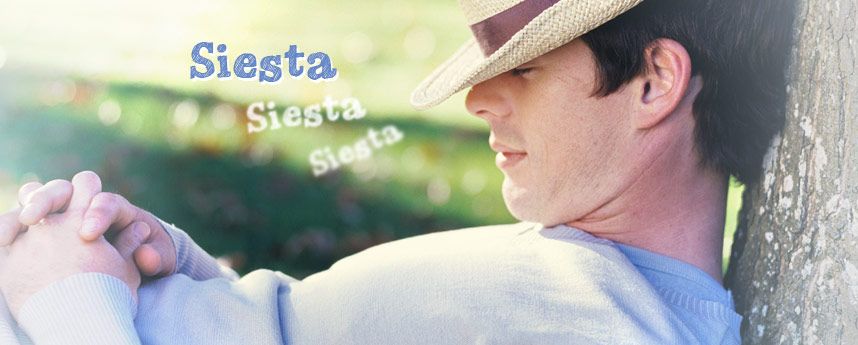
Certain words that are written exactly the same and mean the same thing in both languages are often the somewhat shorter words, such as bar (bar) and photo (photo). Words that Dutch has adopted from Spanish are also present. In fact, the Spanish word for party, fiesta is already fully integrated into the Dutch language. The same goes for the words siesta (small nap), tapas (small Spanish snacks), macho (tough guy) and lasso (round piece of string). Conversely, Spanish has also borrowed certain words from the Dutch language. While these words have been slightly adapted to Spanish, they still have the same meaning. Loan words like dike (dique), freebooter (filibustero) and words like starboard and bakboard that have been translated to estribor and babor are some examples..

Not always do Dutch words that are very similar to Spanish mean the same thing. Occasionally, one must also look out for the well-known false friends of a language. False friends are words that have similarities in some other language, but have a totally different meaning. Examples of some false friends you may encounter while learning Spanish are pan, cara, aceite and carta. At first you would think that these words mean pan, car, vinegar and card, but nothing could be further from the truth. The actual meanings of these words are bread, face, oil and letter. This can occasionally lead to certain laughable situations.

Language Dutch and Spanish together are Indo-European languages. This is a large language group consisting of as many as more than 400 related languages. spanish, spanish language, rolling r, spanish alphabet, roman language, hard g, spanish loan words Off <!-- Revive Adserver Etiqueta JS asincrónica - Generated with Revive Adserver v5.0.2 --><ins data-revive-zoneid="7" data-revive-id="ec923599c3fad9b044f22a6a73433428"></ins><script async src="//ads.iegrupo.com/www/delivery/asyncjs.php"></script> Natasja Baas

The Spanish Turrón | donQuijote

Submitted by Anonymous (not verified) on Mon, 12/22/2014 - 01:00
The Spanish Turrón According to Spanish tradition, turrón is eaten only at Christmas. From mid-December to early January, Spaniards eat about 30,000 tons of turrón.  The Spanish Turrón

There are some wonderful stories about the origin of turrón. One of the most fascinating is perhaps the story about a king of the Spanish town of Jijona. He was eager to make his new Scandinavian wife, who was homesick for the snow-white landscape of her homeland, happy, so he planted thousands of almond trees around the castle. When the trees bloomed, the beautiful white blossoms reminded his wife of the snow of home. Despite the wonderful romantic story, it is still more likely that the turrón is a derivative of Moorish traditions from the 15th century in Jijona. Over the years, the turrón continued to evolve into the form in which we know it today.

According to Spanish tradition, turrón is eaten only at Christmas. This simple concoction of only three ingredients (honey, almonds and egg white) is one of the most popular Christmas treats in Spain. Every year from mid-December to early January, Spaniards eat about 30,000 tons of turrón.

Three Types of Turron

Today, there are three types of turrón that have earned the ´Protected Geographical Indication´ (PGI) status. This status recognizes the quality of the products, as well as the geographical, cultural and historical connection they have with the area where they are made and with the ingredients that make them up. These three types are the Turrón de Alicante, the Turrón de Jijona and the Turrón de Agramunt.

Turrón de Alicante

This is the original recipe that consists only of honey, almonds and egg whites, but can sometimes contain sugar. In the area around Jijona (and Alicante) it has been made at least since the 15th century. It is prepared by boiling honey and then adding sugar and beaten egg whites, and finally toasted and peeled almonds are added to the mixture. The result is a mixture that is mixed with large wooden spoons until the master turrón maker decides it is ready. The mixture is then poured into molds, covered with a thin wafer, cut into strips, cooled and then packaged.

Turrón de Jijona

This recipe is slightly younger than the version from Alicante. It appeared around the 16th century and is believed to have been developed as a sweeter alternative for children and the elderly or as an answer to the then very popular marzipan. The preparation of this turrón is similar to that of Alicante turrón. First the honey is boiled then sugar and beaten egg whites are added and mixed together. Then the toasted and peeled almonds and the honey and egg white mixture are ground in a mill and all the ingredients are turned into a kind of dough. This dough is then transferred to another mill, called a boixet, which is heated from below and has a large rod that moves up and down in the grinder. The time spent doing this creates the rich flavor of the turrón. When this is done, the creamy and soft dough is put into molds to cool for one or two days, then it is cut into strips and packaged.

Turrón de Agramunt

This type of turrón comes from Catalonia and traces its origins back several hundred years. It is prepared by boiling honey and adding stiffly beaten egg whites, with or without sugar. Then toasted and shelled hazelnuts (or sometimes almonds) are stirred into the mixture until evenly mixed. The mixture is then spooned onto a table dusted with flour and formed into round tablets that are pressed between wafers.

The turrón tradition and its creators ensure that new flavors are invented every year. The new recipes are both exciting and innovative. For example, the turrón de Alicante can be covered entirely or partially with chocolate or contain candied fruit and/or other nuts or flavored with coconut, truffle, etc. The turrón de Jijona sometimes also contains egg yolk or marzipan and also the turrón de Agramunt can be covered with chocolate or candied fruit slices or they are filled with brownie, cherries soaked in kirsch or pralines. All combinations are possible, which is why many of the famous turrón makers are also called artistic, culinary geniuses.

Because of the short turrón season, companies are trying to expand their business activities by marketing their products beyond the Spanish and Latin American borders. This has led to some success in countries such as Britain, Germany, France and the Far East. In an effort to also convince Spaniards to buy the off-season treat, companies are coming up with different ideas for marketing their precious turrón. For example, the company Pablo Garrigós Ibáñez has opened a boutique that sells cupcakes, muffins, ice cream and cookies, all flavored with turrón. Another company, Almendra y Miel, also opened a store focused on selling their best turrón in luxuriously elegant black boxes and as gift sets. At one event, drinks are introduced that contain turrón as an ingredient; for example, how about a ´Chocolate Jijona Turrón´ with turrón truffle foam and a hint of pineapple, or perhaps the ´Red Fruit Fusion´ with white chocolate, turrón truffle foam and coconut?

The turrón companies are indeed creative and innovative, so they will certainly continue to introduce new flavors and ideas until they succeed in spreading the popularity of this delicious treat around the world. In the meantime, we just enjoy this simple but amazing treat.

Spain According to Spanish tradition, turrón is eaten only at Christmas. From mid-December to early January, Spaniards eat about 30,000 tons of turrón. turron, christmas treats, christmas in spain, jijona,turrón, turron de jijona Off <!-- Revive Adserver Etiqueta JS asincrónica - Generated with Revive Adserver v5.0.2 --><ins data-revive-zoneid="7" data-revive-id="ec923599c3fad9b044f22a6a73433428"></ins><script async src="//ads.iegrupo.com/www/delivery/asyncjs.php"></script> Wendy

The best Christmas markets in Spain | dQ

Submitted by Anonymous (not verified) on Wed, 12/17/2014 - 01:00
Christmas Markets in Spain Christmas markets in Spain might not be as grand as the northern European ones, but they are nevertheless an important Spanish Christmas tradition. Christmas Markets in Spain

Christmas markets in Spain might not be as grand as the northern European ones found in for example Germany, but they are nevertheless important for the Spanish people as a Christmas tradition. Another important tradition in Spain involves the nativity scene, belén, and in Spain these vary from very simple and small ones for your home to much elaborated and life-sized ones which decorate the cities and provide a true Christmas feeling.

There are markets in every Spanish city, but some of the best Christmas markets can be found in the following cities:

Christmas markets in Madrid

There are markets in almost every square in the city e.g. Plaza España and Plaza de Santo Domingo, however the largest and most popular one is located at Plaza Mayor. This market is around 150 years old and includes more than 100 stalls of different handicraft, Christmas decorations, food, jewelry, candles, sweets etc. The market normally opens sometime in the end of November and stays open until the end of December in Madrid. It's frequently visited by both tourists and locals. Close by, at Plaza Santa Cruz, there's a carnival-like market that sells wigs and costumes for El Día de los Santos Inocentes (Fool's day) which is celebrated on the 28th of December by dressing up in these items.

Christmas markets in Barcelona

The most well-known and traditional Christmas market in Barcelona is the Fira de Santa Llúcia. Like in Madrid this market also opens in the end of November but it closes just before Christmas. Fira de Santa Llúcia has been a tradition for 228 years and contains more than 200 stalls. Here you can find traditional Christmas decorations, handicraft, food and such, but also the traditional Catalan Caga Tío, which is a small log with a painted, happy face and a small red hat. This market is located close to the cathedral at Plaza de la Seu.  

Fira de Nadal a la Sagrada Familia is a smaller market with stalls selling similar products to the ones at Fira de Santa Llúcia. You can find it at Plaza de la Sagrada Familia. Mercat Gótic is another small market but this one focuses mostly on antiques. This is an all year round market that is actually overtaken by the Fira de Santa Llúcia during Christmas. It's located at Avenida Portal de l'Angel. Col.lectiu d'Artesans de l'Alimentació is also an all year round market, however it is more popular during Christmas. Vendors here sell honey, cheeses, herbs, wine, chocolate etc. You can find it at Plaça del Pi.

Christmas markets in Seville

This 2000 year old city has a lot of history that shows in its Christmas markets. Vendors sell everything necessary to make an  unforgettable Christmas. Feria del Belén de Sevilla is a market almost completely devoted to the very Spanish tradition of nativity scenes. Since this is important stuff in Spain these may range from a few Euros to a few hundred. It's located at Archivo de Indias. Exposición y Venta de Dulces is a kind of market taking place during the first week of December. The local convents start selling their sweets such as marzipan and yemas in the city  and there's always a huge line with people waiting to get their hands on these treats. If you're not interested in hustling with all the people a visit to the convents is recommended. In the city the treats are sold at the palace Real Alcazar.

Christmas markets in Granada

During December and until the 5th of January there is a Christmas market held in Granada in Plaza Bib-Rambla. Like the other Spanish Christmas markets its vendors sell all kinds of handicraft such as Christmas decorations, leather- and ceramic products, jewelry, candles, flowers and sweets from the convents.

After exploring the Spanish Christmas traditions the most important things around the Spanish holidays seem to be the nativity scenes and the sweet treats. The nativity scenes decorate both the homes and cities of the Spanish people and it's not uncommon to see life-sized ones with real animals and actors. They are an important part of the Spanish Christmas tradition and something the people are willing to spend a lot of money on. Also the Christmas treats are important, like assumedly they are in most countries. In Spain you can spoil yourself with treats such as Roscón de Reyes -a sweet donut-shaped cake filled with cream and topped with candied fruits and/or sugar. According to tradition the cake is supposed to contain a hidden fava bean as well as a small figure of baby Jesus. The person who finds baby Jesus in their piece of cake is crowned "king" or "queen" of the evening, whereas the one who finds the fava bean has to pay for next year's cake.

Turrón is another popular treat which is a kind of nougat made of honey, sugar and egg whites filled with roasted almonds or other types of nuts. It comes in a great variety of flavors and shapes and is definitely one of the real favorites for Christmas, along with Polvorón which is a type of Spanish shortbread made of flour, sugar, milk and nuts. It crumbles very easily, thereby its name (polvo is powder in English). Another treat that should not be forgotten this time of year is the roasted chestnuts. All over Spain you can find vendors at the markets or on the streets selling freshly roasted chestnuts to go.

Of course you need to visit a Spanish Christmas market if you're in the country at this time of year. It's a perfect way to get to know the traditions and the people, and if you have a sweet tooth (like myself) it's worth going just for the treats.

Christmas markets in Spain might not be as grand as the northern European ones, but they are nevertheless an important Spanish Christmas tradition. best christmas markets, christmas markets in spain Off <!-- Revive Adserver Etiqueta JS asincrónica - Generated with Revive Adserver v5.0.2 --><ins data-revive-zoneid="7" data-revive-id="ec923599c3fad9b044f22a6a73433428"></ins><script async src="//ads.iegrupo.com/www/delivery/asyncjs.php"></script> John Bascombe

Spanish Photography | donQuijote

Submitted by Anonymous (not verified) on Mon, 12/15/2014 - 01:00
Spanish Photography Photography in Spain. Spain is a true source of inspiration for photographers and those interested in photography. spanish fotography

Art and culture abound in Spain. However, photography is still sometimes forgotten. This is a pity since Spanish photography possesses some exceptional photographers as well as an internationally recognized photo exhibition called "PhotoEspaña. Tourism-wise, photography is also very popular in Spain. This is partly due to the many views and varied landscapes that make photography so interesting. Spain is a true source of inspiration for photographers and those interested in photography.

  • Spanish photography began on Nov. 10, 1839 when 'Ramón Alabern y Casas' took the very first photograph in Barcelona, Spain.
  • 'Chema Madoz' is a well-known Spanish photographer of this century. His style is characterized by surrealistic black and white photographs of everyday objects that he tries to capture in a curious and amazing way.
  • 'PhotoEspaña' is one of the most famous international photo exhibitions in the world with more than 600,000 visitors each year.

To fully understand the photography of Spain requires a dive into history. This begins early in the year of1826 when Frenchman "Joseph Nicéphor Niépce" invented the process of heliography. Heliography means drawing with the sun. It is a process in which a copper plate is smeared with light-sensitive asphalt in a camera obscura that then captures sunlight and projects it onto the plate. This produced the very first photograph in history. This photograph was taken from the window of his study and has an overall exposure time of up to 8 hours! In the year 1829, 'Joseph Nicéphor Niépce' came into contact with 'Louis Daguerre' and from then on photography made real leaps and bounds.

t is therefore safe to say that the beginnings of photography are due to them. When 'Joseph Nicéphor Niépce' died in 1833 'Louis Daguerre' continued his experimentation and with success! So in August of the year 1839 he presented his invention for the first time: daguerreotype. Daguerreotype is a method in which you have developed a photograph within only half an hour. Using this method, "Louis Daguerre" also created his first self-portrait. The daguerreotype method was first used in Spain on November 10, 1839 by 'Ramón Alabern y Casas' in Barcelona. It is a photograph depicting the buildings 'La Lonja' and the house 'Xifré'. Eight days later, a second daguerreotype was made in Madrid of the Royal Palace.

Over the years, thanks to many developments in photography, several styles of photography have emerged. These developments have also come through in Spain. An example of a photography style of the last century can be seen in the well-known Spanish photographer Chema Madoz. His photography style is best known for his surrealistic black and white photographs and focus on photographing objects from everyday life. His photographs are original and give the viewer a curious and amazing look at these objects. One of his most famous photographs is that of a spoon from which the shadow of a fork is visible. In addition, the photograph depicting a burned match as a liquid thermometer is also very well known.

Besides 'Chema Madoz,' there is another well-known Spanish photographer who takes almost exclusively black and white photographs. Her name is 'Isabel Muñoz' and she mostly represents bullfighters, dancers and parts of the human body in her photographs. Other well-known photographers are "Ramón Masats," "Ouka Leele" and "Kike Calvo," each of Spanish descent and the recipient of several photography awards.

PhotoEspaña

Some of these awards are presented at the international festival "PhotoEspaña. For example, in recognition of the contribution and development of photography by Spanish photographers, there is the "Bartolomé Ros Award. This festival annually showcases photography and fine art. It takes place in Madrid during the months of June and July and attracts more than 600,000 visitors each year. The festival is known as one of the most prestigious international venues for the representation of photography. The heart of the exhibition is located around "Paseo de la Castellana," but there are exhibits throughout the city. In total, more than 74 exhibits can be found during this period in various museums such as 'Museo Nacional Centro de Arte Reina Sofía,' 'Museo Thyssen-Bornemisza' and 'Círculo de Bellas Artes. 'PhotoEspaña' has an overarching theme each year in which all the exhibitions together showcase the latest trends in the world of photography and visual arts to the public and to subject matter experts.

Spain Photography in Spain. Spain is a true source of inspiration for photographers and those interested in photography. chema madoz, spanish art, spanish artist, festival madrid, spanish photographer, photoespana Off <!-- Revive Adserver Etiqueta JS asincrónica - Generated with Revive Adserver v5.0.2 --><ins data-revive-zoneid="7" data-revive-id="ec923599c3fad9b044f22a6a73433428"></ins><script async src="//ads.iegrupo.com/www/delivery/asyncjs.php"></script> Natasja Baas

Birds in Costa Rica | donQuijote

Submitted by Anonymous (not verified) on Mon, 12/08/2014 - 01:00
Birds in Costa Rica For many birders, Costa Rica is paradise on earth, due to the fact that Costa Rica faces different ecosystems and climate zones. birds in costa rica

Birdwatchers spotted in Costa Rica!

Every year thousands of Dutch people travel abroad in search of the most unusual, colorful and exotic birds. These people, better known as birders or Bird-Watchers are interested in observing and studying wild birds. One of the goals of birdwatchers is to spot as many birds as possible. This form of tourism is very popular these days and this is partly due to the growing awareness of sustainability and environmentally conscious living. Costa Rica then quickly comes to mind as a country that seems almost made for birders with over 850 species of birds! It is also one of the countries with the highest biodiversity and boasts many natural parks and breathtaking landscapes.

  • There are many species of birds in Costa Rica thanks to the different ecosystems and climate zones in the country that have provided different habitats.
  • The bird that has been declared a national bird and can bear this title with honor is the grays thrush, also called Yigüirro.
  • Well-known national parks in Costa Rica are "Parque Nacional de Piedras Blancas," "Parque Nacional Corcovado" and "Parque Nacional Manuel Antonio.

That Costa Rica has high biodiversity is partly due to its geographical location between the Pacific and Atlantic Oceans and the two continents of North and South America. The country consists of a relatively small land area of 51,100 km2 of which 38% is forest and jungle. Of this again, more than 25% is protected area with many national parks and reserves. For many birdwatchers, this is paradise on earth because Costa Rica faces different ecosystems and climate zones. These differences in moisture and temperature have created different forests such as mangrove forests and tropical rainforests. These zones in turn have formed into different habitats and thus automatically attract different birds to Costa Rica.

Besides the bird species that live only in certain areas of Costa Rica, there are also more than 220 migratory birds in transit, wintering, resting or feeding themselves. These birds migrate mainly over the eastern side of Costa Rica. When the migratory birds come from long distances, this is considered by many to be the best time to visit Costa Rica.

Birds soaring gracefully and jauntily, almost weightless through the air and reaching far over the treetops. Every bird has something unique. For example, Costa Rica alone has more than 50 species of hummingbirds and 20 species of parrots. Some special birds that birders can spot with a little luck are the king vulture, harpy and black gooan. With their magnificent appearance and full plumage, these birds are among the species that represent and highlight Costa Rica as a unique birdwatching destination. Surely the most famous bird is the grays thrush, also known as the Yigüirro. This has been the national bird of Costa Rica since 1977. This bird gets its title from the song that resounds at the beginning of the rainy months during the breeding season between March and May. The grays thrush often appears in songs, stories and Costa Rican literature and symbolizes fertile ground. The bird has a clay-colored plumage and is unmistakable in the wilds of Costa Rica.

This wilderness is further home to many natural parks in Costa Rica where these birds and more can be admired in all their glory. One such park is "Parque Nacional de Piedras Blancas" and is located in southern Costa Rica on the Pacific Ocean. The park consists of mountains and rivers and is covered with a thick layer of evergreen forest where you will encounter other animals and plants extraordinaire besides birds. Besides the national park 'Piedras Blancas', there are other famous national parks such as 'Parque Nacional Corcovado' and 'Parque Nacional Manuel Antonio'. If you want to enjoy the birds here in peace then it is best to get up early to avoid any streams of tourists.

In short: plenty of birds in Costa Rica to spot! What makes Costa Rica special is not only the spotting of all these birds, but also the landscape in which these birds live and move is one out of thousands.

Costa Rica For many birders, Costa Rica is paradise on earth, due to the fact that Costa Rica faces different ecosystems and climate zones. costa rica,corcovado costa rica,exotic birds,birds costa rica,costa rica nature,birds in costa rica Off <!-- Revive Adserver Etiqueta JS asincrónica - Generated with Revive Adserver v5.0.2 --><ins data-revive-zoneid="7" data-revive-id="ec923599c3fad9b044f22a6a73433428"></ins><script async src="//ads.iegrupo.com/www/delivery/asyncjs.php"></script> Natasja Baas

Orange County and the United Languages of America

Submitted by Anonymous (not verified) on Thu, 12/04/2014 - 01:00
Orange County and the United Languages of America The US is a multi-lingual country with no official national language, a place where 20% of the people speak a language other than English at home. Orange County and the United Languages of America

The US is a multi-lingual country with no official national language, a place where according to the 2011 census report, 20% of the people speak a language other than English at home.  In California that number is 44%. Orange County, located just south of LA, is California’s second most densely populated county, a place that reflects changing language trends across the country.

Legions of TV fans around the world recognize the sunny county from the Fox series The O.C. (2003-2007) which aired in over 50 countries and spawned an anxious flurry of copy shows during the mid 2010’s with promising titles such as The Real Housewives of Orange County, and Laguna Beach: The Real Orange County. Despite the excited use of the word “real”, the shows offered a decidedly un-diverse on-screen image of the county compared to statistics from the latest census report.

This year marks the 125th anniversary of Orange County’s founding way back when a real estate boom in Southern California saw new towns established and communities expand all over the area. It had been covered by vast ranchlands just a few decades earlier. Towns continued growing, but no clearly defined urban center ever developed, and even today the county with over 3 million residents living inside a 790 square mile boundary still reflects its past as a region of many smaller communities that grew together over time within the shadows of Los Angeles. Famous attractions here include Disneyland and Huntington “Surf City USA” Beach.

Orange County is known as a place of staunchly conservative political views which ironically include anti-immigration attitudes; according to a report from the University of Southern California the county scored relatively high on a ranking that analyzed immigrant integration in terms of civic engagement, economic trajectory and other indicators. Despite the famous attitude, immigrants now make up 30% of the population, that’s nearly 1 million people, and as the population has diversified its political leanings have too. Over half of the children here have at least one parent who is from another country.

Half a million Asian American residents live in the county, a community that grew by 41% between 2000 and 2010, making it the third largest Asian American population in America. The county’s Little Saigon area is the largest Vietnamese community outside of Vietnam. Bangladeshi residents make up the county’s fastest growing community which grew by 118% during the same decade, followed by Fijans up 108%.

Nearly half of the residents speak a language other than English at home, and over half of these speak Spanish. Over 1 million residents are Latino. Spanish is nothing new here; the region had once belonged to the King of Spain and then to Mexico until 1848, when it was ceded to the US after the end of the Mexican War. California’s original constitution stipulated that “laws and provisions would be published in English and Spanish”. 

The OC Weekly recently published an informative and interactive albeit kind of confusing language map (there are a lot of different colors and if they’re shaded different they mean different things) of Orange County that shows the second most spoken languages in each of the county’s zip codes. The language that appears in most zip codes is unsurprisingly Spanish, followed by Vietnamese, followed by, perhaps most interestingly, English. English is the second most spoken language in 14 Orange County zip codes, and in some zip codes it’s even third behind Spanish and Vietnamese. In most of the zip codes in the county’s capital Santa Ana, over 80% of the residents speak Spanish as their primary language. Chinese, Korean, Persian, and Russian are also all on the map. 40,000 households speak Tagalog.

So how does all this reflect what’s happening in the rest of the country?

Languages in The US

According a 2013 US census report on language, eight languages including Russian and Persian more than doubled in usage nationwide between 1980 and 2010. Vietnamese increased by 599%. There were 24.9 million more Spanish speakers.  The report explained that “Fueled by both long-term historic immigration patterns and more recent ones, the country’s language diversity has increased over the past few decades”.

The numbers frighten some pro-English-only observers. Many say that the increase in rich language diversity compromises communication among Americans. The fears have inspired some of the most active to ban together to create citizens’ actions groups such as U.S. English, Inc. in attempts to assure the passage of English as the official language of the United States. 31 of the 50 states have amended their state constitutions to recognize English as the official language, California is one of them; if the hope was to discourage foreign language use there, the plan seems to be failing.  Ironically, amending the US constitution to define English only as the official national language could eliminate programs designed to help non-English speaking residents learn English, in other words English only initiatives could end up in a certain way promoting the use of other languages. Groups like The American Civil Liberties Union oppose establishing English as an official language, noting that these types of laws compromise the rights of non-English speaking communities. 

 Anyone thinking that legal measures need to be taken to preserve English use in America may also want to keep in mind conclusions from the latest US census report, which show that even as families increasingly speak languages other than English at home, the percentage of Americans who report that they speak English well has remained steady.

The debate over whether or not English should be somehow enforced as America’s only language goes back to the first few years of the country’s founding.

In 1780, during the middle of the American Revolution which sought independence from Britain, a time when the US was establishing itself as a nation, future president John Adams attempted to found an official English Academy but the idea was rejected as it was considered undemocratic.

As early as 1751, Benjamin Franklin complained about the Germans, wondering why “should Pennsylvania, founded by the English, become a colony of aliens, who will shortly be so numerous as to Germanize us instead of our anglifying them, and will never adopt our language or customs…” Needless to say, widespread use of German anywhere in the US was phased out pretty much on its own without much official legislation (I say much because there was actually some legislation: following World War I, some English-only laws were passed in the Midwest to keep people from speaking German, laws that the Supreme Court ruled as unconstitutional in 1923).

People have spoken a rich variety of languages in America since long before the drafting of the US constitution (according to Marriam-Webster, before 1492, people spoke over 300 languages north of Mexico). Places like Orange County suggest that language use will continue to diversify with or without laws attempting to guarantee the use of the language of the country America successfully gained independence from over 200 years ago. And that’s a closer look at the real Orange County, a closer look at the united languages of America.


Culture The US is a multi-lingual country with no official national language, a place where 20% of the people speak a language other than English at home. us official language,us national language,spanish in the us,spanish in america,spanish in the united states,languages in the us,languages of america,us languages Off <!-- Revive Adserver Etiqueta JS asincrónica - Generated with Revive Adserver v5.0.2 --><ins data-revive-zoneid="7" data-revive-id="ec923599c3fad9b044f22a6a73433428"></ins><script async src="//ads.iegrupo.com/www/delivery/asyncjs.php"></script> John Bascombe

Architecture of Valencia | donQuijote

Submitted by Anonymous (not verified) on Mon, 12/01/2014 - 01:00
Architecture of Valencia Architecture of Valencia. Valencia's modern architecture is visible in all its glory in the city of arts and sciences. Architecture of Valencia

For centuries, Valencia has managed to construct exceptional buildings that are a clear part of its history. Valencia is characterized by its mix of ancient and modern architecture that blends beautifully without losing its folklore. The city was really put on the map when the City of Arts and Sciences, ´Ciudad de las Artes y de las Ciencias´ was born. As such, Valencia is frequented by those who are interested and lovers of architecture. The Gothic building ´La Lonja de la Seda´, a 15th-century silk fair has even won a place on the World Heritage List. Now and in the future, Valencia will continue to pursue modern architecture. This will continue to change the image of Valencia and amaze people.

  • Valencian architecture is best known for its mix of various architectural styles.
  • Santiago Calatrava is an architect and engineer from Valencia. Much of his work is visible around the world. He draws inspiration from organic and human forms.
  • The City of Arts and Sciences is one of Valencia's main tourist attractions.

Valencia 's architecture and growth is in constant flux. This is reflected in the wide variety of architectural styles. From the historic downtown to the hip cosmopolitan neighborhoods. Throughout the city are buildings of Modern, Romanesque, Gothic,- Renaissance, Baroque, and many other architectural styles. The city is a mix of modern and futuristic styles such as the Bioparc zoo and the Valencia street circuit; these are paragons of modern architecture. These styles blend seamlessly with the combination of classical architectural styles such as Valencia City Hall. The best way to see these designs is to explore the city on foot. This way you can easily find the hidden gems in Valencia's small streets as well.

Spanish architecture is extraordinarily rich and distinctive. Therefore, Spain is also home to a number of great and famous architects. After Gaudí, the designer of the ´Sagrada Familia, comes Valencian architect and engineer Santiago Calatrava, the creator of the city of arts and science in Valencia. Calatrava was born July 28, 1951, in Benimàmet, formerly a municipality now fully integrated as an urban part of Valencia. He began his career by studying architecture at the Technical University of Valencia. He then moved to Zurich where he studied civil engineering at the Federal Institute of Technology Zurich.

Calatrava first received international acclaim through the bridge ´Bac de Roda´ in Barcelona. This was part of the 1992 Olympic Games. His designs are visible and recognizable all over the world because of his contemporary style. A style inspired by organic and human forms whose materials are selected with extreme care.

Valencia's modern architecture is visible in all its glory in the city of arts and sciences. Here there is a gigantic cultural center for culture and science that today is one of Valencia 's most spectacular sights. It is home to six unique and eccentric buildings designed by Santiago Calatrava. Entirely dedicated to the arts and sciences, it also functions as a stimulus for visitors' minds. They can thus learn more about the various aspects associated with science in a fun way. For example, here stands the center for music and drama, better known as ´Palacio de las Artes´. A building 75 meters high and 40,000 square meters wide that houses four different spaces for opera, music, ballet, and theater performances. It was built in the year 2005. This striking building is characterized by the different staggered heights of the floors, which are reunited by an enclosure of two symmetrical concrete shells. In addition to the center for music and drama, it houses a science museum, the largest oceanographic park in Europe and much more. Today the City of Arts and Sciences is one of the most famous places in Valencia and is largely the sight of innovation in architecture in Valencia.

Spain Architecture of Valencia. Valencia's modern architecture is visible in all its glory in the city of arts and sciences. valencia, santiago calatrava, city of arts and sciences Off <!-- Revive Adserver Etiqueta JS asincrónica - Generated with Revive Adserver v5.0.2 --><ins data-revive-zoneid="7" data-revive-id="ec923599c3fad9b044f22a6a73433428"></ins><script async src="//ads.iegrupo.com/www/delivery/asyncjs.php"></script> Natasja Baas

All about Ecuador | donQuijote

Submitted by Anonymous (not verified) on Mon, 11/24/2014 - 01:00
All about Ecuador Ecuador, the land of the Incas and the equator. It is a country with a rich history and a thriving culture. All about Ecuador

Ecuador, the land of the Incas and the equator. It is a country with a rich history and a thriving culture. With influences mainly from Hispanic cultures, Ecuador is vibrant and varied. Varied in culture, but also definitely in landscapes. Ecuador is the country with one of the greatest biodiversity and has much to offer.

  • Ecuador is located in the middle of the equator and owes its name to that as well.
  • It all started with the indigenous Indian tribes and the Incas.
  • From Indians with colored ponchos to rumbling volcanoes, Ecuador has it all.

Spanish Word for "Equator"

Officially, the country is called: República del Ecuador (Republic of Ecuador). It got this special name due to the fact that it is located in the middle of the equator. This has given it not only a high temperature throughout the year, but also the name of the country. In fact, the Spanish translation of equator is ecuador. Ecuador is located in western South America and borders Colombia to the north and Peru to the east and south. As many as 14 different languages are spoken in the country, but only one is an official language; 94% of Ecuador's population speaks Spanish, with the rest speaking vernacular languages. Like any country, Ecuador has a number of major cities. The largest city is Guayaquil, however the capital is Quito. With its historic cities and rich Inca history, among other things, Ecuador is now on UNESCO's World Heritage List. The current presidential republic has left a great trail in world history.

Ecuador's history goes back to before the 15th century. The Incas were very important to Ecuador, but before they arrived, the country was filled with different Indian cultures. Most of the tribes words on the coast and in the highlands. The two most important tribes were the Quitus and the Caras. When the Incas settled in Ecuador in the 15th century, the empire expanded rapidly. The center of the Inca empire was Cuzco. In the 16th century, Ecuador was conquered by Spanish conquistadores and was a Spanish colony for about 300 years. The first city to become independent was Guayaquil, yet not all of Ecuador became independent immediately and for a short time the country remained part of the Republic of Greater Colombia. It wasn't until 1830 that Ecuador gained full independence when the Republic of Greater Colombia fell apart. From this time on, the country was very unstable and had many different leaders. Today it is a thriving, presidential republic.

The small but oh so versatile country of Ecuador has it all. From living volcanoes to beautiful waterfalls in the Amazon and from indigenous Indian tribes with colorful ponchos to colonial cities. Plus through-the-mountains-walking llamas and a jungle with monkeys. Ecuador has something for everyone and you will never be bored. The country can be divided into four zones: the Galapagos Islands (which are also part of Ecuador), the coast in the west, the Andes mountains in the middle of the country and the Amazon rainforest in the east.

Ecuador is one of the poorest countries in South America. As many as 45% of the population lives below the poverty line. In addition, there is high illiteracy, despite free and otherwise compulsory schooling for children aged 6 to 14. Because of poverty, children leave school early to go to work, a problem found in many poor countries. But despite the poverty, it is a beautiful country with very friendly and hospitable people. Ecuador also has some great things to offer tourists; besides the big cities of Guayaquil, Quito (capital) and Cuenca, the Sangay National Park and the special Galapagos Islands are very popular. Ecuador is vibrant and alive! Ecuador has it all!

History Ecuador, the land of the Incas and the equator. It is a country with a rich history and a thriving culture. ecuador,equator,quito,amazon region,incas,cuenca ecuador,guayaquil ecuador,galapagos islands,countries of south America Off <!-- Revive Adserver Etiqueta JS asincrónica - Generated with Revive Adserver v5.0.2 --><ins data-revive-zoneid="7" data-revive-id="ec923599c3fad9b044f22a6a73433428"></ins><script async src="//ads.iegrupo.com/www/delivery/asyncjs.php"></script> Daphne Nossels
Subscribe to

Manage cookie consent

Cookies on this website are used to personalize content and ads, provide social media features and analyze traffic. In addition, we share information about your use of the website with our social media, advertising and web analytics partners, who may combine it with other information you have provided to them or that they have collected from your use of their services. You can learn more in our Cookies policy

Always active

Necessary cookies help make a website usable by enabling basic functions such as page navigation and access to secure areas of the website. The website cannot function properly without these cookies.

Statistical cookies help website owners understand how visitors interact with websites by gathering and providing information in an anonymous form.

Preference cookies allow the website to remember information that changes the way the site behaves or looks, such as your preferred language or the region you are in.

Marketing cookies are used to track visitors on web pages. This is used to show ads that are more relevant and attractive to the individual user, and therefore more valuable to publishers and third-party advertisers.