Spanish singers | Spanish famous singers

Submitted by analitica2 on Wed, 02/25/2026 - 10:46
Spanish famous singers

Spanish singers. Discover the definitive list of famous Spanish famous singers to improve your Spanish through music.
spanish singers

Music is one of the best tools for learning Spanish or any other language. Through songs, students can improve their listening comprehension, expand their vocabulary, and discover new cultural aspects.

In this article, don Quijote brings you a selection of the most famous Spanish singers of all time, so you can discover their international impact and importance, as well as songs that will help you improve your language skills and expand your vocabulary.

1. Julio Iglesias: the most international Spanish artist

We begin with an artist you have surely heard of: Julio Iglesias. He may be the most internationally recognized Spanish singer, having sold over 300 million records since the 1970s and sung in several languages.

Julio Iglesias is the singer of songs such as “Me olvidé de vivir,” “Hey,” and “De niña a mujer,” classics of romantic music.

His songs are very useful for training your ear and, since he vocalizes clearly, for understanding the simple grammatical structures he uses in his songs. That's why this Spanish artist is ideal for intermediate learners who want to work on vocabulary related to feelings and personal experiences.

2. Raphael Spanish singer

With a career that began in the 1960s, Raphael is a historical figure in melodic songs. Songs such as “Yo soy aquel” and “Mi gran noche” are still popular today and known by everyone.

Raphael has a clear and theatrical pronunciation that facilitates listening comprehension, especially for students who want to learn about classic Spanish music.

3. Camilo Sesto: romanticism in Spanish

One of the great icons of romantic pop in Spanish since the 1970s was Camilo Sesto. His song “Vivir así es morir de amor” is part of Spain's musical history.

In addition, his songs are useful for practicing simple structures and vocabulary related to love and emotions.

4. Enrique Iglesias: global Spanish pop

Since the late 1990s, Enrique Iglesias has been a key figure in international Latin pop. You've probably heard of him, as he is the son of fellow Spanish artist Julio Iglesias.

He has songs such as “Experiencia religiosa” and “Bailamos,” which established him in the international Spanish music market.

Enrique Iglesias' songs are particularly useful for students who want to familiarize themselves with contemporary Spanish and expressions commonly used in pop music. His lyrics tend to be repetitive, which makes it easier to memorize basic structures.

5. Rosalía: innovation and contemporary Spanish

Rosalía has revolutionized Spanish music since 2018, when she rose to fame with songs such as “Malamente” and “Despechá.” Her style mixes flamenco, urban music, and experimental pop.

Although she is not the best Spanish artist for understanding grammatical structures in Spanish, if you are an advanced student, her songs will allow you to explore contemporary, colloquial, and creative Spanish. However, some metaphors and cultural expressions may be complex for beginners. Even so, we invite you to listen to her and immerse yourself in the universe of Rosalía.

6. Alejandro Sanz: poetry and emotion in Spanish pop

Active since the 1990s, Alejandro Sanz is one of the most influential singer-songwriters in the Spanish-speaking world. “Corazón partío” and “Amiga mía” are some of his greatest hits.

Sanz's lyrics are rich in emotional vocabulary and varied verb tenses, making them an excellent resource for intermediate and advanced students.

7. Joan Manuel Serrat: singer-songwriter and culture

Since the 1960s, Serrat has been a leading figure in Spanish and Catalan singer-songwriting. “Mediterráneo” is considered one of the best songs in Spanish of all time.

His literary lyrics are especially recommended for advanced students interested in Spanish culture and poetry.

8. Paco de Lucía: universal flamenco

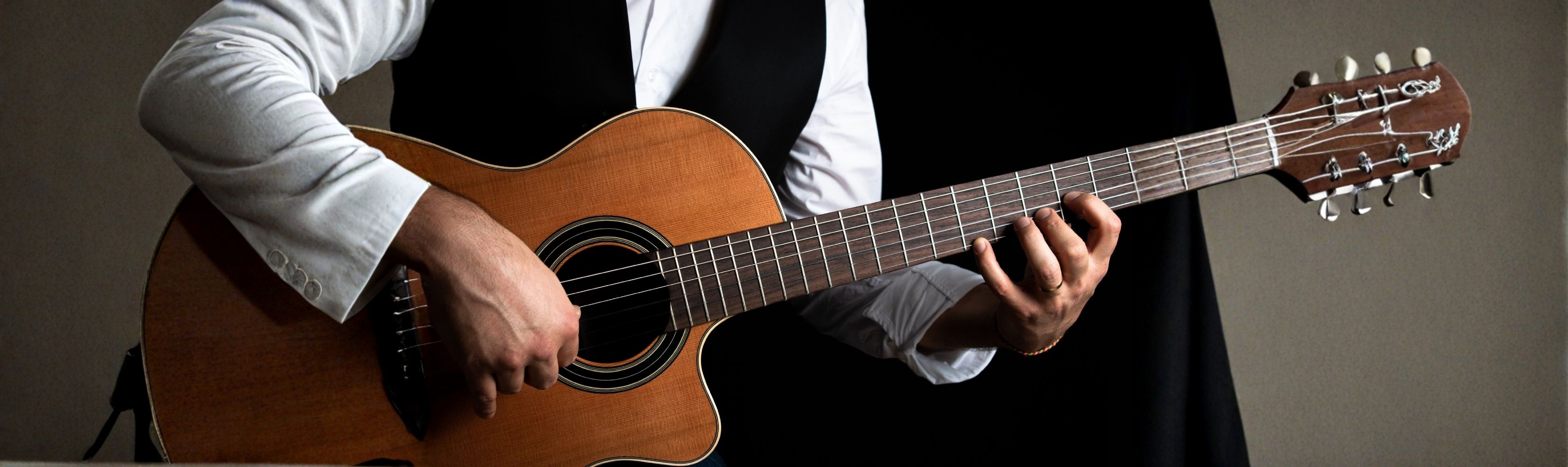
If Andalusia is known for anything, it is for flamenco and Spanish guitar, and this is where Paco de Lucía comes in, who brought flamenco guitar to international stages in the 1970s.

Although his music is mainly instrumental, it is essential for understanding Spanish musical culture. So, dare to listen to flamenco to familiarize yourself with the traditional rhythms and sounds of Spain.

9. Rocío Jurado and Lola Flores: icons of Spanish tradition

If there are iconic figures among famous Spanish-language singers, they are undoubtedly Rocío Jurado and Lola Flores. Both represent Spanish copla and folklore and became major cultural symbols of the 20th century.

Their influence went beyond music, as they helped spread a very recognizable image of Spanish culture both inside and outside the country.

Rocío Jurado, known as “La más grande” (The Greatest), developed her career in the 1960s and achieved great international fame, especially in Latin America. Songs such as “Como una ola,” “Se nos rompió el amor,” and “Ese hombre” stand out for their emotional intensity and powerful performances.

For her part, Lola Flores, nicknamed “La Faraona,” was a singer, dancer, and actress who stood out for her charisma and stage presence since the 1940s. Songs such as “A tu vera” and “Pena, penita, pena” are part of the history of Spanish copla.

10. Miguel Ríos: the pioneer of rock in Spanish

From the 1960s and especially in the 1980s, Miguel Ríos popularized rock in Spain with songs such as “Bienvenidos.” His direct style and everyday vocabulary can be very accessible for intermediate-level students.

11. Mecano: the most influential pop group

Mecano left its mark on an entire generation during the 1980s and 1990s with songs such as “Hoy no me puedo levantar,” “Hijo de la luna,” and “Mujer contra mujer.”

Their narrative lyrics, often telling complete stories, allow students to work on their comprehension of stories and the analysis of complex grammatical structures.

12. Héroes del Silencio: international Spanish rock

In the 1990s, Héroes del Silencio achieved international fame. Their poetic and symbolic lyrics are ideal for advanced students who want to delve deeper into the more literary Spanish found in rock music.

13. David Bisbal: 21st-century Spanish pop

David Bisbal has been one of the best-selling Spanish artists since he left the television program Operación Triunfo in 2000. His song “Ave María” is one of his greatest hits. But he also has songs with repetitive structures and catchy rhythms, which facilitate listening practice and vocabulary acquisition.

14. C. Tangana: the urban evolution of Spanish

C. Tangana represents the new Spanish music scene. With songs like “Tú me dejaste de querer,” he fuses tradition and urban sounds. This Spanish artist is recommended for students interested in current Spanish and contemporary expressions, especially at advanced levels.

More Spanish music artists you should know

In addition to the artists already mentioned, Spanish music has many other important figures who have marked different eras and styles. Getting to know them all is complicated, but among them you will find a wide variety of musical styles, different accents, registers, and forms of expression.

  • Manuel de Falla: 20th-century classical music
  • Plácido Domingo: opera and zarzuela tenor
  • Isabel Pantoja: copla
  • Estopa: mix of rumba and rock
  • La Oreja de Van Gogh: pop
  • El Canto del Loco: represents youth pop-rock
  • Vetusta Morla: indie/alternative
  • Malú: melodic pop
  • Aitana: contemporary Spanish pop
  • Pablo Alborán: pop ballads
  • Quevedo: urban / reggaeton
  • Amaral: combines pop and rock

As you can see, there are Spanish artists and singers for all genres. The enormous diversity of Spanish music offers you a unique way to improve your Spanish through different genres and eras.

Listening to Spanish songs to learn Spanish is an active way to improve your level if classes or intensive Spanish courses are not your thing. There are famous Spanish artists who offer varied styles and registers that can be adapted to different levels of learning. Music allows you to improve your pronunciation, expand your vocabulary, and better understand Spanish culture.

Culture Art Spain History Spain Traditions Spain Spanish singers. Discover the definitive list of famous Spanish famous singers to improve your Spanish through music. spanish singers, spanish famous singers, raphael spanish singer, rafael spanish singer Off to improve your level Marta Díaz

Horror films in Spanish | Horror movies in Spanish

Submitted by analitica2 on Wed, 02/04/2026 - 09:05
Horror films in Spanish

Horror movies in Spanish. Discover the definitive list of scary movies in Spanish to improve your vocabulary and get really scared. Horror films in Spanish.

horror movies in spanish

Spanish films can be a very effective way to improve your language skills while enjoying intense and exciting stories. Horror films in Spanish have a large following, which is why we bring you the best horror movies in Spanish to enjoy at home in this article.

This type of film combines strong emotions with realistic dialogue, which makes it easier to memorize vocabulary and common expressions.

Below, we recommend several scary movies in Spanish so you can learn without losing track of the story. Remember that you can also read this article in Spanish, Italian or Portuguese.

Horror movies in Spanish

For the basic-intermediate level (A2–B1), we recommend choosing scary movies with a slow pace, clear pronunciation, and situations that are easy to contextualize.

El orfanato (The Orphanage)

El orfanato is one of the best options to start with. The story centers on Laura, a woman who returns with her family to the orphanage where she grew up. As the film progresses, the viewer is immersed in an atmosphere of mystery linked to childhood, memories, and family.

The language used is clear and emotional, with a lot of vocabulary related to feelings, the past, home, and family relationships, which makes it easier for Spanish learners to understand.

Los otros (The Others)

Another excellent option is Los otros, a film set almost entirely in a large, isolated house. The protagonist lives with her children under strict rules due to a strange illness, which leads to quiet but tense conversations.

Here you will find very careful Spanish, with well-structured sentences and everyday vocabulary related to domestic life, routines, and coexistence, ideal for strengthening the foundations of the language.

Best horror movies in Spanish

At the intermediate level of Spanish (B1-B2), horror movies in Spanish feature more natural dialogue and varied communicative situations, but they are still accessible.

REC

The REC saga is a good example of scary movies with very realistic language. The story follows a reporter who accompanies firefighters during a nighttime intervention in an apartment building. From there, the film unfolds in real time, with spontaneous dialogue, orders, screams, and colloquial expressions.

It is perfect for familiarizing yourself with spoken Spanish, urban vocabulary, and the way people react in stressful situations.

Mientras duermes

In Mientras duermes, horror is more psychological. The film focuses on César, a building doorman who knows all the details of his neighbors' lives. The language is calmer but very descriptive, with vocabulary related to daily routines, work, thoughts, and emotions.

It is an ideal choice for students who want to expand their vocabulary and improve their comprehension of more profound texts without losing clarity.

La habitación del niño (The Child's Room)

Also noteworthy is La habitación del niño, a story about a young couple who move into a new house with their baby. Through seemingly normal situations, the film introduces a growing tension.

The Spanish used is very every day, with familiar dialogues and vocabulary related to home, sleep, worry, and life as a couple, making it very suitable for this level.

Best scary films in Spanish

If your level is advanced (C1-C2), these scary movies in Spanish will allow you to work with more complex language and varied registers.

Tesis

Tesis is a film that combines horror and social commentary. The protagonist is a university student who investigates violence in the audiovisual media and becomes involved in a disturbing plot. Throughout the film, there are academic conversations, ethical debates, and more formal vocabulary related to university, research, and the media, making it an excellent tool for expanding advanced vocabulary.

El día de la bestia

Finally, El día de la bestia offers a very particular mix of horror, black humor, and social criticism. The story follows a priest who is convinced that he has discovered the date of the end of the world.

The language is very varied, ranging from religious vocabulary to colloquial expressions typical of urban Spanish. This diversity of registers makes it especially interesting for students who want to better understand real Spanish in different contexts.

Learning with scary movies

Horror movies in Spanish are not only a great way to have a good time, but they are also an excellent tool for improving listening to comprehension, learning vocabulary in context, and becoming familiar with different accents and ways of speaking.

Choose movies that are appropriate for your level and turn on the Spanish subtitles to help you progress naturally and gradually. And if this experience isn't enough, come take an intensive Spanish course with don Quijote.

Culture Spain Spain Spain Spain Horror movies in Spanish. Discover the definitive list of scary movies in Spanish to improve your vocabulary and get really scared. Horror films in Spanish. horror movies in spanish, scary movies in spanish, horror films in Spanish, best horror movies in spanish Off Marta Díaz

Spanish flamenco dancers | Spain traditional dance flamenco

Submitted by analitica2 on Thu, 09/18/2025 - 11:53
Spanish flamenco dancers

Spanish flamenco dancers. Discover the most important figures in Spain traditional dance flamenco and how they rose to stardom in flamenco.

Spanish flamenco dancers

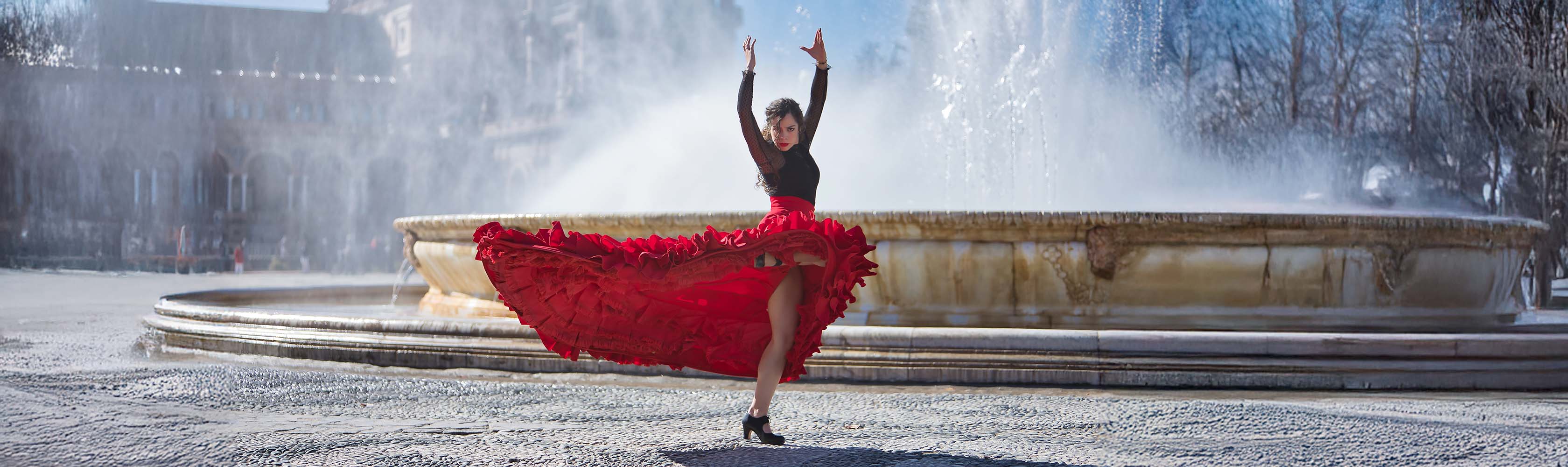
If Spain is known internationally for anything, it is for flamenco. Although it is a dance that is mainly practiced in Andalusia and not by all Spaniards, outside our borders it is a major attraction for tourists.

Flamenco dancing is one of the fundamental pillars of this Andalusian art, along with singing and guitar playing. Over the centuries, numerous Spanish flamenco dancers have left their mark with their technique, personality, and ability to transform this discipline into something magnificent.

That's why we at don Quijote want to introduce you to some of the essential figures who have shaped this dance from its origins to the present day.

Vicente Escudero (1888-1980)

Vicente Escudero was one of the great innovators of flamenco dance in the 20th century. In addition to being a virtuoso, Escudero conceived flamenco as a dance with its own artistic identity, developing his famous Decalogue of the Good Dancer.

He sought purity and sobriety, avoiding theatrical exaggeration in each performance. His interpretation of the farruca is remembered as one of the milestones of his personal style, austere and deeply expressive.

Faíco (Francisco Manzano Heredia, 1932-1993)

Francisco Manzano Heredia, better known as Faíco, stood out for his strength and elegance. This gypsy dancer belonged to the Pelaos family and was a leading figure in the tablaos during the middle decades of the 20th century. He also contributed new forms to the dance, especially in styles such as the farruca and the garrotín. His style combined great technical precision with an overwhelming stage presence.

Carmen Amaya (1913-1963)

Considered one of the greatest Spanish flamenco dancers in history, Carmen Amaya revolutionized this dance with her wild energy, her mastery of zapateado (footwork) and her way of moving across the stage.

Amaya broke gender stereotypes, dancing with the same power as the men, which led her to become an international figure who took flamenco to stages around the world. You can learn more about Carmen Amaya in this video: Carmen Amaya: The dancer who shook flamenco.

Antonio Gades (1936-2004)

Gades was a famous dancer and choreographer who played a key role in the professionalization of stage flamenco. He conceived dance as a narrative and theatrical art, creating productions that integrated dance, drama, and music, such as Bodas de Sangre, Carmen, and El Amor Brujo. He also brought flamenco to the cinema, introducing it to new audiences. His style was characterized by refinement, restraint, and a deep respect for the essence of flamenco.

Merche Esmeralda (b. 1947)

Merche Esmeralda represents the generation that took flamenco from the tablao to the academic stage. She was a member of the Spanish National Ballet and toured internationally extensively.

Her dancing combines elegance, technical precision, and musicality. She has also played an important role as a teacher, training new generations of Spanish flamenco dancers.

Pastora Imperio (1889-1979)

She was one of the first great stars of stage flamenco. Pastora Imperio is known for her elegance, majestic presence, and expressiveness. She also helped shape the stage style of flamenco in the first half of the 20th century. She influenced an entire generation and became a symbol of classical flamenco.

Eva Yerbabuena (b. 1970)

One of the most respected flamenco dancers today is Eva Yerbabuena. Her work combines deep tradition with a constant search for choreographic innovation. This Spanish flamenco dancer is known for her emotional intensity, expressiveness, and use of her entire body in her choreography. She has taken flamenco to international stages and influenced many contemporary artists.

Sara Baras (b. 1971)

Known for her impeccable technique and great sense of rhythm, Sara Baras has managed to popularize flamenco around the world without losing its roots. Her shows are large-scale productions that combine classical elements with modern staging, appealing to both specialists and new audiences. She has been instrumental in keeping flamenco alive and constantly evolving in the 21st century.

Rafael Amargo (b. 1975)

Rafael Amargo is a dancer and choreographer from Granada who trained in classical flamenco but soon began to mix it with contemporary dance and theater. His shows, such as Poeta en Nueva York, have been performed internationally. He is known for his great stage energy, charisma, and willingness to break the mold within flamenco.

Joaquín Cortés (b. 1969)

Joaquín Cortés began his career with the Spanish National Ballet and went on to become one of the world's most famous Spanish flamenco dancers. His style combines flamenco with contemporary dance, bringing spectacular stage presence, drama, and great technique. He has taken flamenco to major international theaters, bringing it to a wide range of audiences.

Farruquito (b. 1982)

A descendant of the Farruco flamenco dynasty, Spanish flamenco dancer Farruquito is considered one of the greatest exponents of pure flamenco today. His dancing is characterized by its power, technical mastery, and fidelity to the Andalusian gypsy tradition.

Antonio Canales (b. 1961)

Antonio Canales trained at the Spanish National Ballet and later founded his own company. Canales is renowned for his strength, character, and enormous stage presence. He has renewed the choreographic language of flamenco and has been part of seminal shows, as well as being internationally awarded and recognized.

All these artists share certain characteristics that define them as Spanish flamenco dancers: great technical mastery, a strong artistic personality, and an ability to convey emotion. Flamenco dance remains a living art form, in which tradition and innovation coexist. If you want to discover more about flamenco or improve your language skills, come to don Quijote to learn Spanish in Spain and fall even more in love with this dance.

Culture Art Spain History Spain Traditions Spain Spanish flamenco dancers. Discover the most important figures in Spain traditional dance flamenco and how they rose to stardom in flamenco. spanish flamenco dancers, spain traditional dance flamenco Off Marta Díaz

Spanish Culture: Art in Spain | donQuijote's blog

Submitted by Anonymous (not verified) on Tue, 05/12/2020 - 16:41
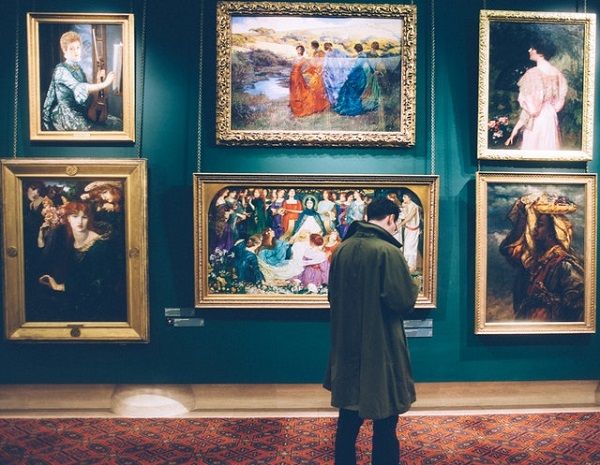
Learn more about Spanish art in Spain. Discover its bests museums, pictures and monuments Spanish Culture: Art in Spain From the cave paintings found in Altamira to the avant-garde movements in Spain, Spanish art has been influenced by the Romans, the Muslims and all kind of European artistic trends. Learn more about Goya, Dalí, Picasso, and the film industry representatives of Spanish art in Spain. spanish art in spain
spanish art in spain Spain Learn more best museums to visit in spain

12 Spanish series to improve your Spanish | don Quijote

Submitted by analitica2 on Wed, 10/25/2023 - 16:08
12 Spanish series to improve your Spanish level Improve your Spanish with these Spanish series. At don Quijote we recommend you 12 Spanish series to improve your Spanish level. spanish series to improve your level

Are you a fan of series and are you looking for a fun and effective way to improve your Spanish? You're in the right place! Because a different and fun way to learn Spanish is by watching series.

Learning Spanish can be a challenging journey, but with the right combination of entertainment and learning, the process becomes a fascinating adventure. In this article, we recommend you several Spanish series to improve your level of Spanish while enjoying a fun, mysterious or historical story.

Read this article in Spanish here.

La casa de papel (Money Heist)

One of the best-known series on the Spanish audiovisual scene. La casa de papel is a popular thriller that follows a group of robbers as they attempt to pull off an elaborate robbery of the Spanish National Mint.

This Spanish series is known for its fast-paced and exciting dialogue. It has 5 seasons full of action, romance and intrigue.

Vis a vis (Locked up)

This popular Spanish series is set in a women's prison and follows the story of Macarena Ferreiro, a woman who is imprisoned for money laundering. This story provides an opportunity to learn the Spanish language and colloquial expressions used in a prison.

Aquí no hay quién viva

One of the most recognised Spanish series in Spain, also known by the acronym ANHQV, which stands out above all in the comedy genre. The plot narrates the life of the neighbours of an old building in the centre of Madrid, with an ironic and humorous tone. Many of its phrases have gone down in the history of Spanish culture, so you can't miss this Spanish serie!

El ministerio del tiempo

A Spanish sci-fi/adventure series that follows a team of three agents who travel back in time to protect the history of Spain. The series is very interesting and presents a variety of historical contexts of the lives of artists, painters, and monarchy in Spain.

Merlí

This series focuses on a charismatic philosophy professor and his students. It is a good option for learning philosophical terms and exploring everyday life issues through philosophy. The original version of the series is in Catalan, but you can also enjoy it dubbed into Spanish.

Un paso adelante (One step forward)

This Spanish series about a dance academy caused quite a stir in France, where it is known as 'Une, deux, trois'. It tells the story of a group of young people who enter the prestigious School of Performing Arts. Follow the lives of these dancers and improve your Spanish by watching this series if you like the world of dance.

Las chicas del cable (Cable Girls)

Set in the 1920s, this Spanish series follows a group of female telephone operators who fight for their independence and rights. It is an interesting option to learn about Spanish history and the role of women in the society of the time.

Gran Hotel

A historical drama set in the early 20th century in a luxury hotel. The story follows a young man from a humble background who arrives at the idyllic Gran Hotel to visit his sister, who works there. When he arrives at the Grand Hotel, however, he discovers that no one has heard from his sister for some time.

The series offers a glimpse into the society and culture of the time, with plenty of intrigue, romance, and action.

Velvet

This Spanish series is set in the 1950s. The plot focuses on a high fashion department store in Madrid. The plot shows the transition from haute couture to prêt à porter fashion. A good option to learn about fashion and the style of the period in Spain.

El tiempo entre costuras (The time in between)

This Spanish series is based on the novel of the same name written by María Dueñas. The story follows the life of Sira, a dressmaker who leaves pre-Civil War Madrid for Tangiers for love. There she becomes embroiled in a plot of espionage and historical events during Spanish Civil War and World War II.

Los Serrano

A family comedy revolving around the life of Diego Serrano, a man with three children who remarries a woman who has two daughters from a previous marriage. The plot revolves around the new life of these 7 people and how they must cope with a very funny cohabitation. This Spanish series offers every day, colloquial situations.

Élite

Terminamos con esta popular serie de televisión española disponible en Netflix. Élite cuenta la historia de un grupo de estudiantes de un colegio privado ‘Las Encinas’, donde llegan tres nuevos alumnos becados. La diferencia entre clases da lugar a un asesinato, ¿serás capaz de averiguar quién es el culpable?

These Spanish series offer a wide range of genres, from historical dramas to contemporary comedies, allowing you to learn Spanish while improving your comprehension and vocabulary in different contexts.

As well as learning the language through Spanish series, another good way to improve your Spanish is to study Spanish in Spain. With don Quijote's intensive Spanish courses you can improve your level with native teachers in a unique environment. We have Spanish courses for all levels and ages.

Spain Improve your Spanish with these Spanish series. At don Quijote we recommend you 12 Spanish series to improve your Spanish level. Spanish tv series, Spanish series, Spanish series on Netflix, Spanish tv shows, best Spanish series Off Marta Díaz

Spanish History Through the Art of Painting | donQuijote

Submitted by Anonymous (not verified) on Mon, 03/09/2020 - 01:00
Spanish History Through the Art of Painting Spanish History Through the Art of Painting

The art of painting is a form of expression that has endured beyond time and space, a place where society has projected the lights and shadows of humanity, all that we admire and reject of ourselves. As it happens with historical narratives, the art of painting is the reflection of our actions, a perspective on the events that have shaped our collective and cultural imaginary.

From mythological images and landscapes that elevate the spirit, through illustrious portraits of high society and until the social and individual realities embodied in different scenes of the art of painting; Spanish history has been drawn through different paintings that left an important heritage at a time when we still did not have the faithful reflection of photography or tv.

Keep reading this article if you want to discover the history of Spain through the art of painting in English. Click here to read in Spanish this article.

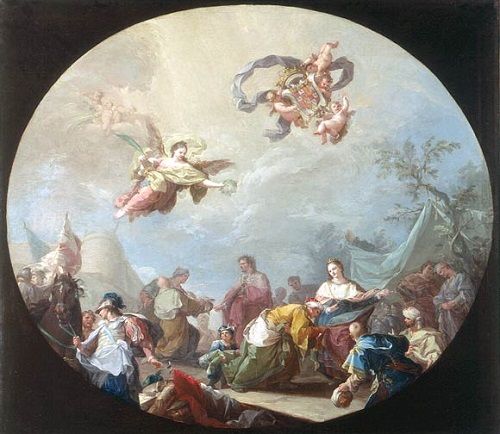
1. La rendición de Granada (English: The surrender of Granada)


La rendición de Granada


Although there is another painting —exhibited in the Conference Hall of the Spanish Senate and painted by the great Francisco Pradilla— with the same name and more famous, this other historical painting by the Spanish painter Francisco Bayeu y Subías. It served as a sketch for the fresco decorating in the former dining room of the Royal Palace of Madrid.

After several years of fighting against Arab influence, the Catholic Monarchs of Spain managed to conquer the ancient Kingdom of Granada in 1491, thus defeating the last Muslim kingdom of the Iberian Peninsula. The conquest of Granada marked the end of the so-called Reconquista, which lasted about 700 years and was one of the most important chapters in the history of Spain.

Virtual visit of the painting La rendición de Granada at the Prado Museum.

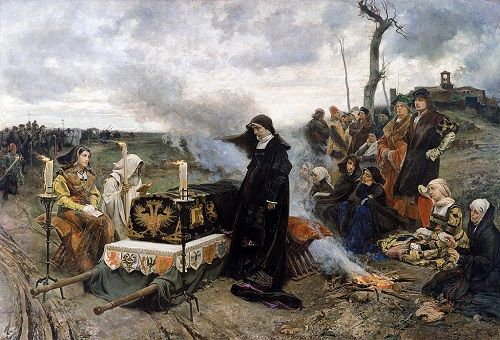
2. Doña Juana la Loca


Doña Juana La Loca


This work by Francisco Pradilla y Ortiz portrays a very important character in the history of Spain: Joanna of Castile. Better known as "Juana la Loca", Joanna of Castile was one of the great muses of the art of painting. Daughter of the Catholic Monarchs, she went down in history for her stormy marriage with her cousin, Philip the Handsome or the Fair. Although she never had any real power, she was Queen of Castile after the death of Isabel the Catholic in 1504. Her supposed mental illness caused her to be locked up in the Royal Monastery of Santa Clara, Tordesillas, from the year 1509 until her death in 1555. In this historical painting we can see her next to her husband's coffin, dressed in mourning and with an indifferent expression.

Virtual visit of Doña Juana la Loca at the Prado Museum.

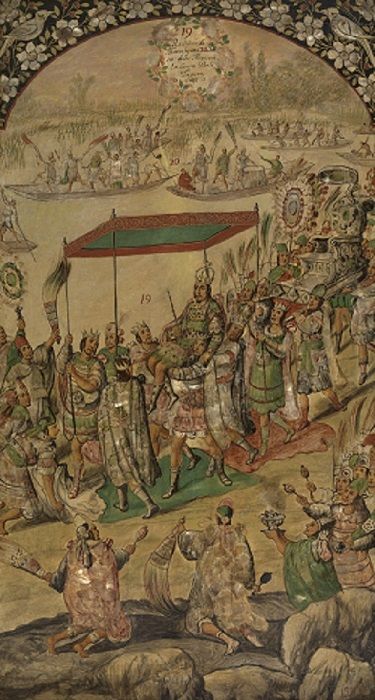
3. Conquista de México por Hernán Cortés —16 and 17— (English: Conquest of Mexico by Hernán Cortés)


La conquista de México


This is a historical painting by Miguel and Juan González. It belongs to a collection of 24 pieces created especially for King Charles II, "The Bewitched" of the Austrias’ dynasty. Hernán Cortés landed in Veracruz, Mexico, with a small army in April 1519, a fact that marked the beginning of the conquest of the Mexican territory. Thanks to the alliance with indigenous Tlaxcaltecas and Totonatas, the advance of the Spaniards reached the ears of Moctezuma II, the Aztec Tlatoani, and he presented the invaders with presents and riches in the hope that they would leave. This is the moment that immortalized this fantastic historical painting.

Virtual visit of La conquista de México por Hernán Cortés at the Prado Museum.

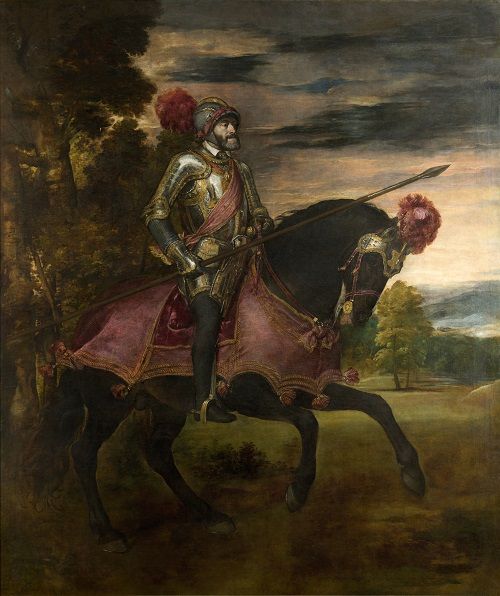
4. Carlos V en la Batalla de Mühlberg (English: Carlos V in the Battle of Mühlberg)


Carlos V en la batalla de Muhlberg


Both the power and the gallantry of Emperor Charles V, a great figure of the Spanish history, are reflected in this magnificent oil on canvas work of Titian or Tiziano, the great Italian painter of the Renaissance. This historical painting shows the victory of the young German emperor, son of Juana I of Castile, at the beginning of the 16th century at the Battle of Mühlberg. History says that the theories of religious Protestantism by Martin Luther had spread throughout central Europe. In the year 1530, several Lutheran nobles allied themselves in the so-called "Smalkalda League" and faced the Catholic Carlos V, who defeated his enemies with bravery.

Virtual visit of Carlos V en la Batalla de Mühlberg at the Prado Museum.

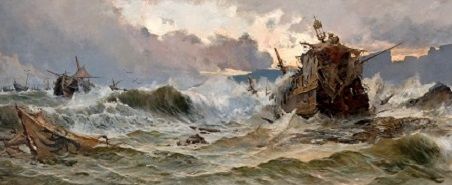
5. La Invencible (English: The Invincible)


La invencible


An enraged sea comes alive in this impressive painting by Spanish painter José Gartner de la Peña. Although in those years it was known as the Great Navy, the Invincible Navy was a powerful naval fleet sent by King Felipe II to the British Isles in 1588 - Spanish Golden Age - in order to take possession of them overthrowing Queen Elizabeth I. The support provided by the British to the independence of Flanders and the constant pirate approaches on Spanish ships led the king to try to end the Anglo-Spanish war once and for all. However, it was a great storm the main cause of the sinking of the Invincible Navy, becoming one of the greatest enemies in the history of Spain.

Virtual visit of La Invencible at the Prado Museum

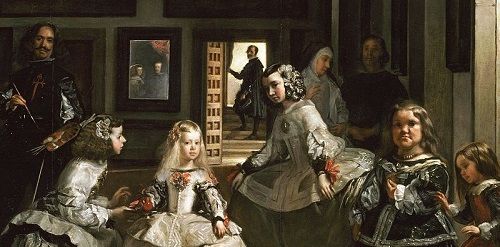
6. Las Meninas


Las meninas


Las Meninas is Velázquez's masterpiece, as well as one of the most studied paintings in the history of universal art. This is the portrait of the family of Felipe IV, in addition to a perfect example to illustrate the unique pictorial ability of this author, especially as regards his masterful use of perspective. While the historical painting reflects in detail the opulent isolation in which both the court and the royal family lived, the country was entering a stage of decline that would end the Austrian dynasty, one of the most important in the history of Spain.

Virtual tour of Las Meninas at the Prado Museum.

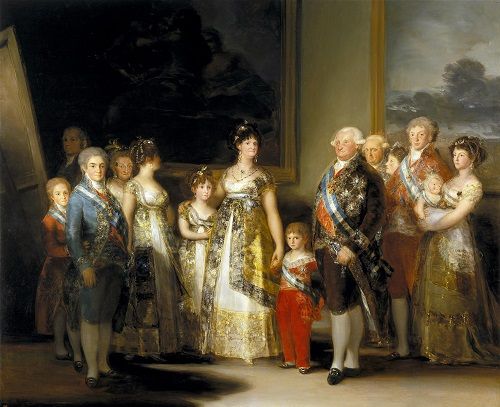
7. La familia de Carlos V (English: The family of Carlos IV)


La familia de Carlos V


This historical painting is a portrait of the royal family painted by Francisco de Goya. The painting hides some details that cannot be seen with the naked eye. The reign of Carlos IV passed to the history of Spain for its complete abandonment of the country's needs, which were left to Manuel Godoy while Carlos IV was engaged in hunting and other hobbies. Family and political tensions led his son, Fernando VII, to lead the famous Aranjuez mutiny in order to defeat Godoy and proclaim himself king of Spain. The family distribution in the painting is similar to that of Las Meninas by Velázquez. In addition, the fact that Queen Maria Luisa occupies the central position in the painting, normally reserved for the king, is considered a premeditated mockery by the Spanish painter towards the lack of command of the monarch.

Virtual visit of La familia de Carlos V at the Prado Museum.

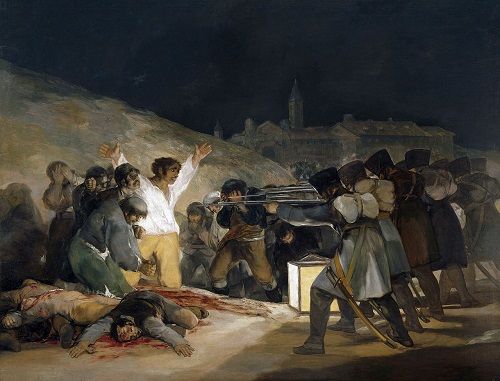
8. Los fusilamientos (English: The executions)


Los fusilamientos


Los fusilamientos are probably the most popular picture by the great Spanish painter of the Romanticism period: Francisco de Goya. This painting represents the massacre of the rebels by Napoleon's forces and the French repression against them in the Spanish War of Independence.

Virtual visit of Los fusilamientos at the Prado Museum.

At don Quijote, we hope you enjoyed reading this article. If you want to learn more about the art of painting in Spain, check out our video about these 5 Spanish painters you should know:

Spain Spanish History Through the Art of Painting Off <!-- Revive Adserver Etiqueta JS asincrónica - Generated with Revive Adserver v5.0.2 --><ins data-revive-zoneid="7" data-revive-id="ec923599c3fad9b044f22a6a73433428"></ins><script async src="//ads.iegrupo.com/www/delivery/asyncjs.php"></script> Maria Martin

5 Spanish Female Writers Who Adopted Pen Names | donQuijote

Submitted by Anonymous (not verified) on Fri, 03/06/2020 - 01:00
5 Spanish Female Writers Who Had to Adopt Pen Names Spanish Female Writers Who Had to Adopt Pen Names

"Why should they not add a supplement to History, giving it, for example, a very discreet name so that women could figure in it without impropriety?" Virginia Woolf, A Room of One's Own

This quote by the famous British writer Virginia Woolf (1882-1941) criticizes the lack of visibility suffered by women writers. The phrase is an excerpt from the essay work entitled A Room of One's Own, in which Woolf reflects on the fact that women have never been able to enjoy an own space that would allow them to participate in public, political, and social life; thus women had been forced to play a single role in life: the care of the home and the family. But were there women who exercised other roles in the shadow?

"For most of history, Anonymous was a woman." Virginia Woolf

When we say that a literary work is anonymous, we mean that there is no accurate information about its authorship. Many of the great works of the Spanish literature are anonymous, such as El Lazarillo de Tormes or El Cantar del Mío Cid. Similarly, we can find great examples in foreign literature, such as The Thousand and One Nights or The Saga of Erik the Red.

Although today it is impossible to know who is behind the authorship of these great masterpieces —saying that they were all written by women would be too reckless, but some of them surely were— we have enough data to determine the impact generated by women writers who decided to sign their works under a pseudonym in order to have more credibility and visibility. Data that, on a day like today, March 8, 2020, International Women's Day, we want to share with all of you.

Continue reading if you want to know the story behind these 5 Spanish female writers who used a pseudonym to publicize their literary work. If you prefer to do it in Spanish, click here.

1. Cecilia Böhl de Faber and Larrea (1796-1877)


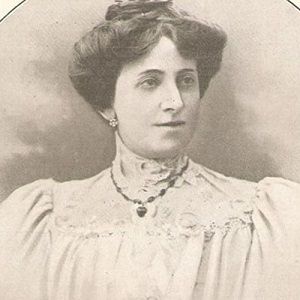
Cecilia Böhl de Faber and Larrea was a Spanish woman writer who, in order make a space for herself in a men’s wolrd, signed her works under the pseudonym of Fernán Caballero. Remember that we are talking about the Spain of the nineteenth century, a Spain where it was very complicated to be a woman with aspirations beyond getting married and forming a family.

It is curious that, in some way, it was his father who gave her the idea, when what he really intended was to dissuade her from her desire to be a writer. Apparently, he told her not to waste her time on such matters, as they were reserved for the male gender since women were not prepared nor skilled on an intellectual level.

However, it seems that Cecilia was really determined, and, hidden behind the male privilege provided by the pseudonym, she managed to fulfill her dreams, becoming one of the first Spanish female writers. She died in the city of Seville in 1877.

2. Matilde Cherner (1833-1880)


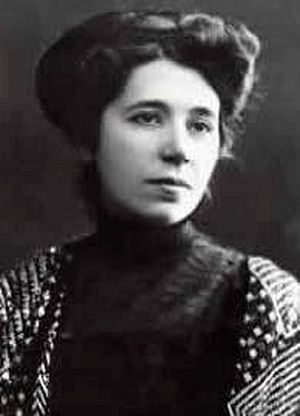
Matilde Cherner was a great Spanish female writer, although she also stood out in the area of ​​journalism. She was born in the city of Salamanca in the year 1833, and, under the pseudonym Rafael Luna, published her first narrative works —Novelas  que parecen dramas (1877), Las tres leyes (1878), Ocaso y aurora * (1878), and María Magdalena: estudio social (1880)— as well as a large number of critical reviews.

In addition, she wrote some theatrical works signed with her real nameDon Carlos de Austria and La Cruz— which, according to the writer, were rejected to stage El haz de leña (by Núñez de Arce) and Don Rodrigo (by Laserna) instead. In fact, these works dealt with topics and issues very similar to those included by Matilde Cherner in hers. She also wrote several reviews, such as Juicio crítico sobre las novelas ejemplares de Cervantes, and collaborated in La Ilustración de la Mujer —a Madrid magazine of the time that was one of the first adopting feminist perspectives—and in the Ilustración Republicana Federal. She did not hesitate to write about controversial issues such as women's education, prostitution or access to power.

Matilde Cherner has been described as a woman of clear progressive ideas and strong political convictions, and also as a convinced federal Republican. She died in Madrid in 1880 because of an aneurysm, according to different sources.

*It was a work thought to be a serial for the press. It deals with issues such as monarchy and patriotism, ocusing on the impact that historical events generate on the personal lives of the protagonists, especially women. With this novel, Matilde recovers her real name, eliminating the male pseudonym. Somehow, this fact led the writer to rescue her intellectual identity: Republican woman, progressive ideas and marked freedom of thought.

3. María Lejárraga (1874-1974)


María Lejárraga


María Lejárraga was a female novelist, essayist, translator and Spanish playwright. She was born in the late nineteenth century in a Riojan town called San Millán de la Cogolla, and, hidden behind the name of her husband —Gregorio Martínez Serra— became a brilliant writer, a great reference of the so-called Silver Age of the Spanish literature - period that covers from 1900 until the end of the Spanish Civil War. She died in exile in the city of Buenos Aires in 1974.

However, in these times when it seems that we are surpassing the canons established in times past, the figure of María Lejárraga has returned to stay. Today, it is well known, that, the works for which her husband took all the credit —such as the adaptations to theater of El sombrero de tres picos and El amor brujo, by Manuel de Falla— were actually written by María de la O Lejárraga. The recovery of her real identity on the covers of her literary works, returns her the recognition that she should never have lost.

4. Carmen Martín Gaite (1925-2000)


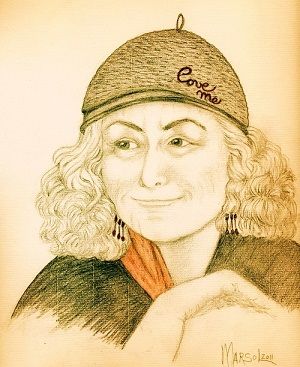
Carmen Martín Gaite was born in Salamanca in 1925. She graduated in Philosophy and Letters and, when she was only 25, she moved to Madrid to do her PHD. Carmen Martín Gaite belongs to the group of Spanish female writers who stood out in the so-called “first postwar period in literature”, along with other pioneers such as Ana María Matute, Carmen Laforet, Elena Soriano and Josefina Aldecoa.

She established herself as a famous writer with the novel entitled El balneario, which was first published in 1957 despite having received the Café Gijón Award three years before. Entre visillos is one of her most popular books. It is an exciting story about youngsters who lived in a small city similar to Salamanca. She won the Nadal Prize thanks to this novel under the pseudonym Sofía Veloso —the name of her grandmother. The reason why she did not use her real name was that her husband - the famous writer Rafael Sánchez Ferlosio— was also in the prize’s short list of that same year.

Carmen Martín Gaite has been one of the best Spanish female writers of all time, coming to reject an armchair at the RAE —Royal Academy of the Spanish Language. She won numerous awards and continue writing until her death in Madrid in 2000.

5. Teresa de Escoriaza y Zabalza (1891-1968) 


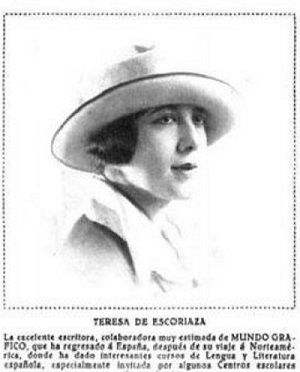
Teresa de Escoriaza y Zabalza was born in San Sebastián on December 7, 1891. She was a great Spanish journalist and writer who, in order to gain visibility, wrote under the male pseudonym Felix de Haro.

Teresa de Escoriaza and Zabala stood out above all as a correspondent during the Rif War, but also collaborated with various publications such as La Libertad, Mundo Gráfico or El Eco de Galicia. In addition, it is said that it was she who gave the first feminist speech in the history of the Spanish radio. She also wrote a large number of war chronicles such as Del dolor de la guerra (chronicles of the campaign of Morocco) or El cresol de las razas.

She lived a long time in the United States, where she moved before the Spanish Civil War and worked as a Spanish teacher. He decided to return to Spain a few years before she died in 1968.

At don Quijote, we hope you enjoyed today's article and we also take the opportunity to wish you a happy International Women's Day.


Spain Spanish Female Writers Who Had to Adopt Pen Names Off <!-- Revive Adserver Etiqueta JS asincrónica - Generated with Revive Adserver v5.0.2 --><ins data-revive-zoneid="7" data-revive-id="ec923599c3fad9b044f22a6a73433428"></ins><script async src="//ads.iegrupo.com/www/delivery/asyncjs.php"></script> Maria Martin

5 Spanish Painters You Need to Know | donQuijote

Submitted by Anonymous (not verified) on Mon, 03/02/2020 - 01:00
5 Spanish Painters You Need to Know (that are not Pablo Picasso) Spanish Painters You Need to Know (that are not Pablo Picasso)

Leon Tolstoy said that "Art is one of the means of communication between people." And he was right, because people live in society and communicate through different expressive elements such as words, movements, sounds, colors and shapes. Thus, in the same way that language did, the different artistic disciplines were born. Painters, for example, express themselves through the composition of shapes and colors.

Click here if you prefer to read this article in Spanish.

As we have stated on previous occasions, getting to know a language is also getting to know the context where it is articulated and developed. Language is the tool that human beings have to express what we feel, perceive, dream, believe or even know; the brush we have to paint our reality. Thus, language serves us as not only as the main instrument to decode the world around us, but also to describe and define ourselves as individuals.

Therefore, it is not surprising that the language of a pueblo —remember that there is no language without people using it— cannot be understood without the culture in which interaction is framed, since culture is only the reflection of the concerns and stories that make up a social reality. Similarly, different forms of cultural expression, such as art, have contributed to frame our language within a given social and historical context.

At don Quijote, we want to get you a little closer to the Spanish language through its cultural expression in the art of painting. Spain is a country with a broad historical and social tradition, so the different and major pictorial movements that have accompanied its history also reflect a vibrant and diverse reality.

While it is true that Pablo Picasso —the most international Spanish painter— marked a before and after in art worldwide, it is also true that there were other essential Spanish painters without whom we could not understand the current society of the Hispanic country. To publicize some of their names, we want to share with you 5 famous Spanish painters (that are not Pablo Picasso), as well as some of their fundamental works.


1. Francisco de Goya (Spain, 1746 - France, 1828)

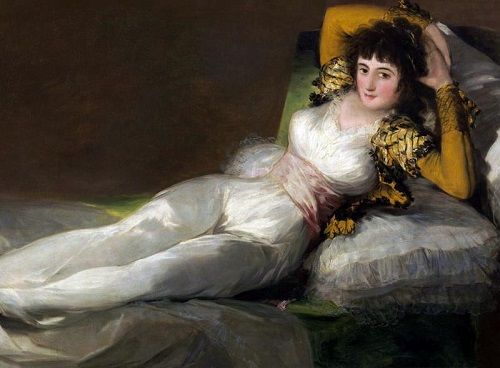
Francisco José de Goya y Lucientes was an 18th-century Spanish painter who produced mainly oil painting, drawings and an important collection of etchings. He was the greatest exponent of Spanish Romanticism and also the father of contemporary movements, such as modernism and impressionism. In addition, he had great influence on the works of other later painters such as Pablo Picasso and Édouard Manet.


Imagen del cuadro


2. Diego Velázquez (Seville, 1599 - Madrid, 1660)

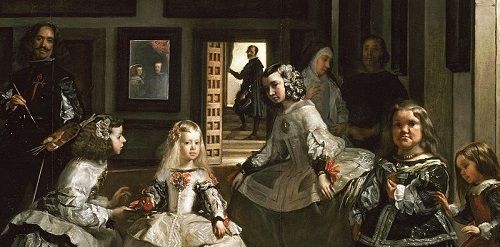
Diego Rodríguez de Silva y Velázquez, known as Diego Velázquez, was the most representative painter of the Spanish Golden Age. Although its great relevance was not recognized until 200 years after his death, Diego Velázquez was one of the most important figures in the history of Spanish painting, but also an authentic master internationally, even considered by many experts as the most talented painter of all time.

If you click on the title, you can enjoy a virtual view of one of his main works, exhibited at the Prado Museum: Las Meninas


Imagen del cuadro


3. Juan Gris (Spain, 1887 - France, 1927)

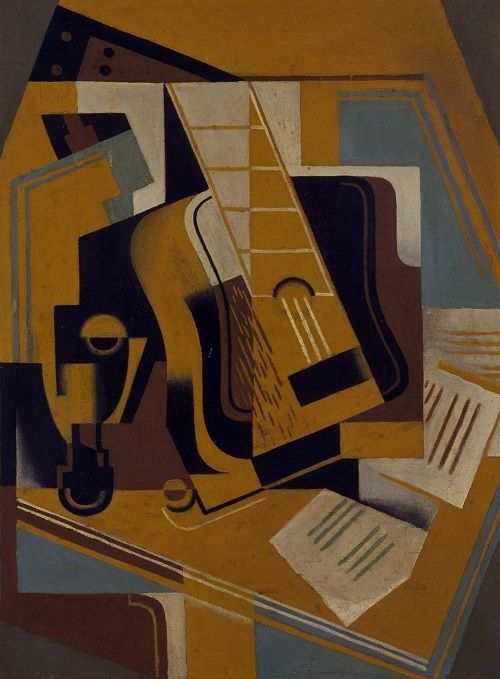
José Victoriano González-Pérez, better known as Juan Gris, was a Spanish painter of the 20th century who developed his activity especially in Paris. The great influence he received from artists such as Cézanne, Picasso and Braque led him to identify himself within Cubism, becoming one of the highest representatives of this artistic movement.

If you click on the title, you can enjoy a virtual view of one of his main works, exhibited at one of the most important Spanish museums, the Reina Sofía Museum: La guitare


Imagen del cuadro


4. Joan Miró (Barcelona, ​​1893 - Palma de Mallorca, 1983)

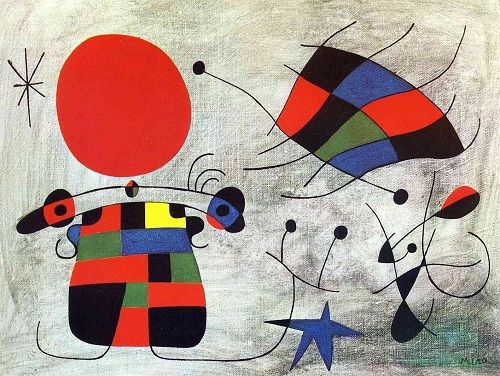
Joan Miró was one of the best Spanish painters of the 20th century. He was also a sculptor, engraver and potter, but his main role was in painting, becoming one of the most relevant figures of surrealism worldwide. In his works, we can see reflected the fascination he felt for the subconscious, the main theme of surrealism, as well as a style marked by parameters that make his art recognizable to the naked eye.


Imagen del cuadro


5. Salvador Dalí (Catalonia, 1904 - Catalonia, 1989)

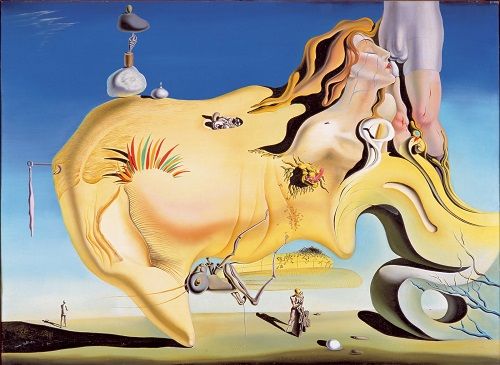
Together with Pablo Picasso, Dalí is one of the most popular and famous Spanish painters of all time. He was the most prominent artist of the Spanish surrealism and changed the way aesthetics and were understood worldwide. Dalí was an eccentric as no other, and he knew how to exploit that condition on a professional level. Both his personal image and his ideas are impregnated with its artistic sensibility, something unique of his kind. Salvador Dalí remains as an essential reference in arts nowadays.


Imagen del cuadro

Spain Spanish Painters You Need to Know (that are not Pablo Picasso) Off <!-- Revive Adserver Etiqueta JS asincrónica - Generated with Revive Adserver v5.0.2 --><ins data-revive-zoneid="7" data-revive-id="ec923599c3fad9b044f22a6a73433428"></ins><script async src="//ads.iegrupo.com/www/delivery/asyncjs.php"></script> Maria Martin

A Brief History of Spanish TV | donQuijote

Submitted by Anonymous (not verified) on Thu, 11/21/2019 - 01:00
World Television Day: A Brief History of Spanish TV World Television Day: A Brief History of Spanish TV

Grabbing your remote control and turning on the television is probably one of the activities you perform most frequently at home.

However, do you know how much work is actually behind this simple move? Keep on reading in Spanish to find out.

A Little Bit of History

Before television appeared as we know it today, many technological advancements took place. Some of those experiments led to the emergence of the modern TV.

Back in 1884, people managed to project the light objects issue using a metal disk and a light. However, it wasn’t until 1925 when they used these disks together to make up a real image. One of the disks worked as an issuer and the other one as a receptor.

Little by little, they kept on increasing the distance between both disks and repeating the same experiment, but through a telephone wire.

Five years after that test, in 1930, it took place the first simultaneous broadcasting: image plus audio. But what we know today as TV was still far from being achieved.

This broadcasting was the first of many of them, but they were all irregular and not scheduled.

In 1936, England started broadcasting with a consistent programming, and the United States began doing so in 1939. During the middle of the 20th Century, television started to spread throughout the world.

And What About Color Television?

During all this time there were a lot of scientists trying to achieve color images. But it wasn’t until 1970 when we finally got screens that could show the real color of objects.

Over the years and with a little help from the technological advancements, TV improved its quality and reached more and more houses.

The use of satellites helped broadcasting get faster. This way, TV got faster as well and reached more places around the world. Besides, satellites helped giving access to foreign TV shows.

And if you think that’s already a big improvement, wait to see what happened in the 80s. With digitalization, video production and broadcasting reached a whole different level of quality and speed rates.

As a consequence, TV started replacing the radio as the most popular medium for information.

However, these advancements didn’t arrive at the same time to all countries.

Television in Spain

While England’s first broadcasts took place around 1936, in Spain we had to wait 20 years more for that. The ordinary broadcasts at the time were mass ceremonies, official speeches, classic music concerts, etc. 


In 1959 it took place the very first TV broadcast in Spain: a soccer match. It was Real Madrid playing against Barcelona, causing TV sales to increase significantly before the game.

Until that point, all TV screens sold in Spain were imported. In 1960 they started being produced in the country and, as a consequence, they became cheaper. By the end of the decade, there was a television in almost 40% of the Spanish households.

The first color broadcasting that took place in Spain was the Eurovision Song Contest in 1969, live from Madrid. However, as the cameras and the rest of the equipment was provided by other countries, that was only an exception.

From 1973 on, black and white and color broadcasts shared space in Spain. But in 1978, color took over the power of TV.

World Television Day

And because such advancement should not be forgotten, since 1996 we celebrate World Television Day on November 21, commemorating the date on which the first World Television Forum was held.

The United Nations countries came to an agreement to make TV a broadcast medium for news and relevant information, promoting shows that were focused on peace, safety and social development, among other topics.

And what’s left of this story, you probably know it firsthand. DTT (Digital Terrestrial Television) made it possible to watch more channels with improved image quality and services. Nowadays, we talk about Smart TVs, apps and cutting-edge streaming platforms.

Culture Art Spain World Television Day. A brief history of Spanish TV in a simple article. Off <!-- Revive Adserver Etiqueta JS asincrónica - Generated with Revive Adserver v5.0.2 --><ins data-revive-zoneid="7" data-revive-id="ec923599c3fad9b044f22a6a73433428"></ins><script async src="//ads.iegrupo.com/www/delivery/asyncjs.php"></script> Patricia Mendez
Subscribe to Spain

Manage cookie consent

Cookies on this website are used to personalize content and ads, provide social media features and analyze traffic. In addition, we share information about your use of the website with our social media, advertising and web analytics partners, who may combine it with other information you have provided to them or that they have collected from your use of their services. You can learn more in our Cookies policy

Always active

Necessary cookies help make a website usable by enabling basic functions such as page navigation and access to secure areas of the website. The website cannot function properly without these cookies.

Statistical cookies help website owners understand how visitors interact with websites by gathering and providing information in an anonymous form.

Preference cookies allow the website to remember information that changes the way the site behaves or looks, such as your preferred language or the region you are in.

Marketing cookies are used to track visitors on web pages. This is used to show ads that are more relevant and attractive to the individual user, and therefore more valuable to publishers and third-party advertisers.